Introduction
Situated on a series of naturally elevated earth mounds, locally known as "gò," within the seasonally flooded wetlands of Đồng Tháp Province in southern Vietnam, Gò Tháp is one of the most significant archaeological sites associated with the ancient Funan Empire. Flourishing between the 2nd and 7th centuries CE, the site served as an important religious, ceremonial, and settlement center in the Mekong Delta. Its strategic location allowed the inhabitants to benefit from the region's extensive network of rivers and canals while minimizing the risks posed by annual flooding. Archaeological excavations have uncovered the remains of temples, shrines, canals, residential structures, brick tombs, gold ornaments, stone sculptures, inscriptions, ceramics, and ritual objects, revealing that Gò Tháp was both a thriving spiritual center and a hub of economic activity. The site illustrates how the people of Funan successfully combined sophisticated engineering with Hindu religious traditions to create permanent sacred architecture within one of Southeast Asia's most challenging wetland environments.
Phase 1: Wetland Pile Foundations (2nd–4th Century CE)
The earliest phase of construction at Gò Tháp demonstrates the remarkable adaptability of Funanese engineers to the Mekong Delta's flood-prone landscape. Because much of the surrounding terrain was submerged during the rainy season, builders first created raised earthen mounds that elevated important structures above the floodwaters. To strengthen these artificial platforms, they drove massive ironwood (sao) posts deep into the soft ground, forming stable pile foundations capable of supporting heavy timber buildings. Ironwood was selected because of its exceptional strength, durability, and natural resistance to decay in constantly wet conditions. Timber platforms constructed on these foundations provided secure spaces for religious ceremonies, residential buildings, and administrative activities while protecting them from seasonal inundation. This innovative engineering approach allowed permanent settlements to flourish in an environment where conventional construction methods would have been impractical.
Phase 2: Stone and Brick Shrines (5th–6th Century CE)
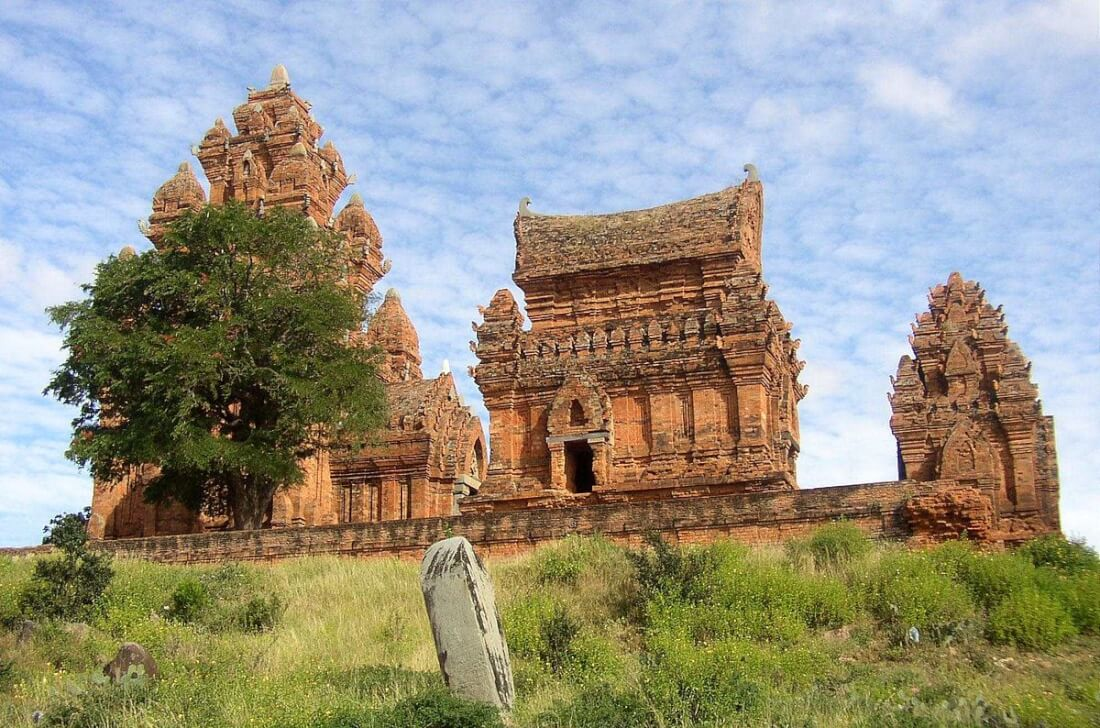
As the Funan Empire became increasingly prosperous and Hinduism spread throughout the Mekong Delta, Gò Tháp developed into an important religious center marked by the construction of more permanent stone and brick temples. During the 5th and 6th centuries CE, builders erected substantial brick temple foundations using carefully fired bricks arranged with remarkable precision. These shrines housed beautifully carved Vishnu statues, often distinguished by their characteristic mitred crowns, reflecting the growing influence of Indian religious traditions within Funanese society. Alongside these sculptures were sacred linga-yoni altars, symbolic representations of the divine union of Shiva and Shakti, which played a central role in Hindu worship. Devotees performed ritual lustration, pouring water over the linga so that it flowed through the yoni, symbolizing purification, fertility, prosperity, and the continuous cycle of creation. The presence of these shrines demonstrates that Gò Tháp was not only an architectural center but also an important destination for religious ceremonies and pilgrimage.
Phase 3: Mortuary Vaults (Late Funan Era)
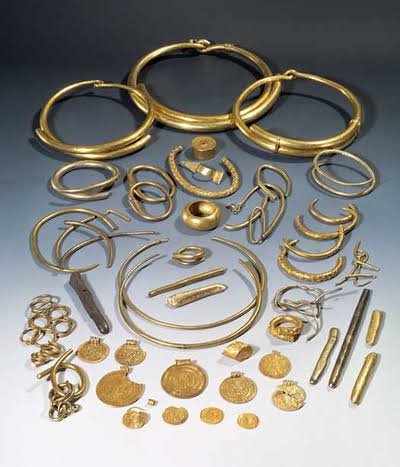
During the later period of the Funan civilization, Gò Tháp expanded its religious significance through the construction of elaborate subterranean brick-lined mortuary vaults. These underground tombs reflected increasingly sophisticated funerary practices and beliefs concerning death and the afterlife. Archaeologists have discovered numerous burial chambers containing valuable grave goods, including jewelry, ceramics, beads, and finely crafted gold-leaf sheets engraved with sacred motifs. Many of these delicate gold ornaments depict lotus flowers, revered throughout Indian religions as symbols of purity, spiritual enlightenment, and rebirth, while others portray sacred animals associated with divine protection and prosperity. The careful placement of these symbolic objects within the tombs suggests that they were intended to guide, protect, and bless the deceased during their journey into the next life. These discoveries provide important evidence for the religious beliefs, artistic traditions, and wealth of the Funanese elite.
Key Funan Takeaway
Gò Tháp demonstrates the extraordinary ability of early Funanese architects and engineers to adapt sophisticated Hindu religious architecture to the unique environmental conditions of the Mekong Delta. Rather than attempting to overcome the natural landscape, they worked in harmony with it by constructing buildings on elevated earthen mounds, reinforcing foundations with durable water-resistant ironwood piles, and designing permanent brick shrines capable of withstanding seasonal flooding. This combination of practical engineering and religious architecture illustrates the ingenuity of the Funan civilization and its successful integration of Indian cultural influences into local environmental conditions.
Conclusion
Today, Gò Tháp stands as one of the most important archaeological sites for understanding the history of the Funan Empire and the early development of civilization in the Mekong Delta. Its preserved remains reveal the evolution of settlement planning, hydraulic adaptation, religious architecture, and funerary traditions over several centuries. From the innovative pile-supported foundations that enabled construction in flood-prone wetlands, to the impressive brick Hindu shrines dedicated to Vishnu and Shiva, and finally to the carefully constructed brick-lined mortuary vaults containing beautifully engraved gold artifacts, Gò Tháp offers a comprehensive picture of Funanese engineering, spirituality, and material culture. The site not only highlights the remarkable resilience and creativity of its builders but also demonstrates how one of Southeast Asia's earliest civilizations successfully blended advanced construction techniques with enduring religious traditions, leaving behind a legacy that continues to enrich our understanding of the ancient Mekong world.