Introduction
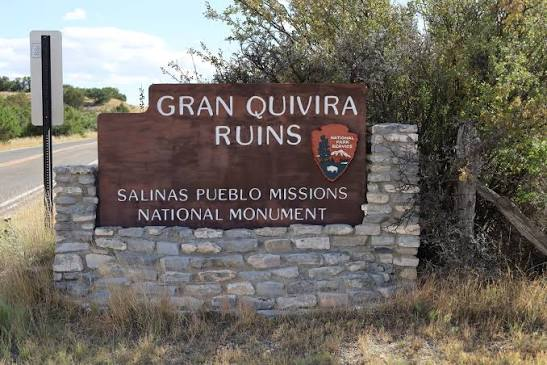
Gran Quivira is one of the most spectacular archaeological sites in central New Mexico.
Today part of Salinas Pueblo Missions National Monument, the site preserves the remains of a large Pueblo settlement and two Spanish mission complexes.
Before European colonization, Gran Quivira was a major regional center inhabited by Tompiro-speaking Pueblo people.
At its height, estimates place the population between approximately 1,500 and 3,000 people.
A Major Pueblo Center
Gran Quivira was not a small village.
It contained multiple pueblos, kivas, plazas, and associated structures.
Mound 7 alone contained 226 rooms and represents the largest fully excavated Pueblo structure at the site.
Regional Trade
Gran Quivira occupied a strategic location.
The settlement stood near the transition between the Pueblo world and the Great Plains.
Trade connected residents with communities from distant regions.
Goods could include food, stone, pottery, pigments, and other materials.
The site therefore functioned as a crossroads.
Salt
The Salinas Basin was economically important because of its salt resources.
Salt could be used for food preservation and dietary needs and could also function as an exchange commodity.
The relationship between settlement and salt resources contributed to the area's prosperity.
Spanish Colonization
Spanish colonization began to transform Gran Quivira during the late sixteenth and seventeenth centuries.
Franciscan missionaries established churches and convent structures.
The remains of these buildings stand alongside the Pueblo ruins.
Two Historical Landscapes
Gran Quivira therefore contains two architectural traditions.
The first is Indigenous Pueblo architecture.
The second is Spanish colonial mission architecture.
Their physical proximity provides a powerful record of cultural encounter.
Abandonment
By the late seventeenth century, Gran Quivira had been abandoned.
The National Park Service identifies a combination of disease, drought, famine, and Apache raiding among the factors involved.
This reminds us that historical events rarely have a single cause.
Environmental stress could intensify political conflict.
Disease could reduce populations.
Economic disruption could make settlements increasingly difficult to maintain.
Archaeological Preservation
Gran Quivira was designated a national monument in 1909 and later became part of Salinas Pueblo Missions National Monument.
Archaeological excavation and stabilization have revealed portions of the Pueblo and mission complexes.
Conclusion
Gran Quivira was one of the great Pueblo centers of the Salinas Basin.
Its size, architecture, trade networks, salt resources, and colonial history make it one of the most important archaeological landscapes in New Mexico.
The ruins preserve not only architecture but also the history of cultural interaction, conflict, resilience, and transformation.