Introduction
Haapsalu Castle is one of Estonia's most important medieval architectural complexes and a major reminder of the political transformation that occurred in the eastern Baltic during the thirteenth century.
The fortress developed as a major center of the Bishopric of Ösel-Wiek. Unlike a purely military stronghold, Haapsalu served as a religious center, episcopal residence, administrative headquarters, and defensive complex.
Its ruins preserve evidence of centuries of political competition, religious transformation, military development, and urban growth.
Medieval Haapsalu
Haapsalu developed during the medieval period in an area that offered access to the Baltic Sea and regional transportation routes.
Its location made it valuable for both administration and trade.
The establishment of Christian political authority created new centers of power, and Haapsalu became one of the most important of these.
The Bishopric of Ösel-Wiek
The bishopric controlled territory across western Estonia.
Its rulers required fortified residences from which they could administer lands, collect revenues, conduct religious activities, and organize military defense.
Haapsalu became a principal episcopal center.
The castle therefore functioned as part of a larger territorial system rather than as an isolated fortress.
Architectural Development
Construction began during the thirteenth century and continued over subsequent generations.
The complex incorporated religious and defensive structures.
Its walls enclosed substantial areas, while towers strengthened vulnerable points.
The cathedral church was especially important because it demonstrated the religious role of the site.
The combination of cathedral and fortress architecture is one of Haapsalu's defining characteristics.
The Cathedral
The cathedral was the spiritual heart of the complex.
Its presence demonstrates that Haapsalu was more than a military installation.
Religious ceremonies, ecclesiastical administration, and the activities of clergy all formed part of the site's daily life.
The cathedral's architecture also reflected the wealth and authority of the bishopric.
Defensive Functions
The surrounding walls provided protection against armed attack.
During periods of political instability, fortified episcopal centers could become essential refuges.
Medieval warfare in the Baltic involved raids, sieges, territorial disputes, and struggles between competing political powers.
A strong fortress therefore represented a substantial political advantage.
The Castle as a Residence
The bishop and his household required suitable accommodation.
The complex included spaces for administration, storage, domestic activities, and religious life.
High-status medieval residences were designed to communicate authority.
Visitors entering the castle would encounter architecture that demonstrated the resources and organizational capacity of the bishopric.
Political Context
Haapsalu existed within a complicated political environment.
The eastern Baltic was contested by local communities and external powers including Danish, German, Swedish, and later other regional authorities.
The establishment of castles helped these powers maintain control over strategically important territories.
Haapsalu consequently became part of the broader history of medieval Baltic state formation.
Urban Development
The fortress influenced the development of Haapsalu itself.
Settlements commonly grew around medieval castles and religious institutions because these sites generated demand for craftsmen, merchants, food suppliers, and services.
The castle therefore contributed to the development of a wider urban economy.
Archaeological Evidence
Archaeological investigation of Haapsalu has uncovered artifacts and structural evidence that reveal aspects of medieval life.
Objects recovered from the site can provide information about:
diet;
trade;
craftsmanship;
religious practice;
warfare;
domestic life.
Architectural analysis also helps identify different construction phases.
Later History
Haapsalu's importance continued after the Middle Ages, although changing political circumstances altered the castle's functions.
Military technology also transformed.
The introduction and increasing use of gunpowder artillery reduced the effectiveness of traditional medieval fortifications.
Parts of the complex eventually fell into ruin.
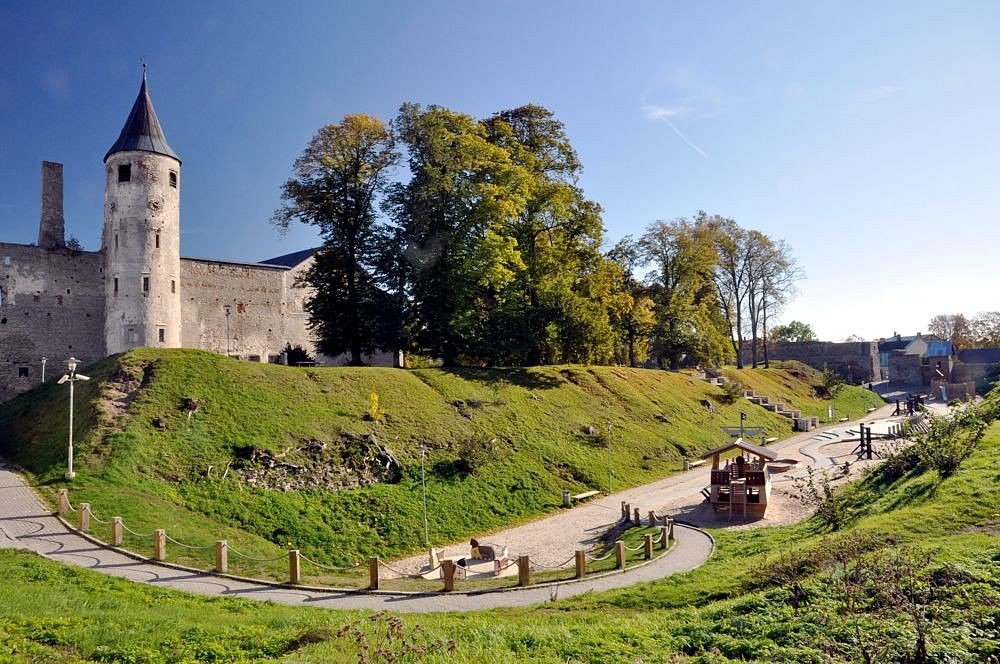
Yet the surviving remains preserve the medieval plan and architectural character of the site.
Conclusion
Haapsalu Castle represents the complex relationship between religion, government, and military power in medieval Estonia.
Its cathedral, walls, towers, and residential structures demonstrate how an episcopal center could serve several purposes simultaneously.
Today, the ruins provide an unusually valuable window into the medieval eastern Baltic and the centuries when Christian institutions became central to political organization.
Haapsalu is therefore not merely a picturesque ruin. It is a physical record of the transformation of Estonia.