Introduction
Rising from the shores of Saaremaa in western Estonia, Kuressaare Castle is one of the most impressive surviving medieval fortifications in the eastern Baltic. The castle developed as an important center of ecclesiastical and political authority under the bishops of Ösel-Wiek, whose territory encompassed Saaremaa and neighboring regions.
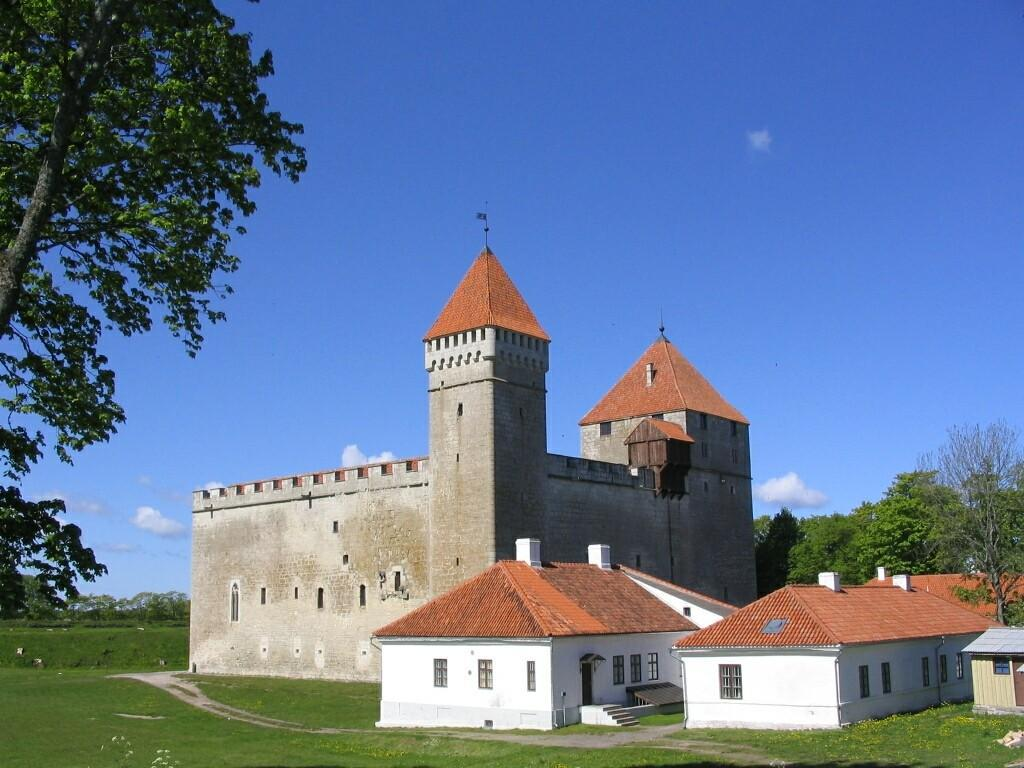
Today, the fortress is one of Estonia's best-preserved medieval castles. Its massive stone walls, towers, courtyard, and defensive architecture provide an unusually clear picture of how religious authority, military power, and territorial administration were combined during the Middle Ages.
Kuressaare is particularly fascinating because it was not simply a military fortress. It was also a residence, administrative center, religious institution, and symbol of episcopal authority.
Saaremaa in the Medieval Baltic
Saaremaa occupies a strategic position in the Baltic Sea.
The island lies close to important maritime routes connecting Estonia with Latvia, Sweden, Finland, and other parts of northern Europe. Long before the castle was constructed, Saaremaa communities participated in Baltic commerce and maritime activity.
During the medieval period, however, the island became increasingly incorporated into the political and religious structures of Christian Europe.
The conquest and Christianization of the eastern Baltic during the thirteenth century transformed Saaremaa's political landscape.
The Bishopric of Ösel-Wiek
Kuressaare's history is closely connected with the medieval Bishopric of Ösel-Wiek.
The bishop was both a religious leader and a territorial ruler. This combination of spiritual and secular authority was common in medieval Europe.
The bishop required fortified centers from which territory could be governed and defended.
Kuressaare eventually became one of the most important episcopal centers on Saaremaa.
Construction of the Castle
The stone fortress visible today developed over several stages.
Earlier defensive structures existed before the great stone complex reached its mature form. Construction and modification continued over generations as military technology and political circumstances changed.
The castle's design reflects the evolution of medieval fortress architecture.
Its thick walls were capable of resisting attacks using contemporary siege equipment, while towers provided elevated positions for defenders.
The Square Fortress
One of the most recognizable features of Kuressaare Castle is its strong geometric organization.
The central courtyard is surrounded by substantial defensive walls and buildings.
This arrangement created a protected internal space where residents could live and work while remaining inside the fortified complex.
The castle's architecture demonstrates the importance of controlled access.
A hostile force could not simply enter the central residential areas without first overcoming multiple defensive obstacles.
Religious and Secular Authority
Kuressaare illustrates an important characteristic of medieval political organization: religion and government were deeply interconnected.
The bishop's authority was religious, but he also exercised political and administrative power.
The castle therefore represented both:
ecclesiastical authority;
territorial government;
military power;
economic administration;
aristocratic residence.
Its architecture communicated this authority to the surrounding population.
Daily Life Inside the Castle
Life within a medieval castle was not exclusively military.
Residents would have included clergy, administrators, servants, guards, craftsmen, and other personnel.
The castle needed food storage, kitchens, water supplies, heating systems, workshops, and areas for religious activities.
During periods of peace, the fortress functioned as a working administrative center.
During periods of conflict, its defensive architecture became much more important.
Saaremaa and the Baltic Crusades
The establishment of Christian rule in Saaremaa occurred within the broader context of the Northern Crusades.
German, Danish, Scandinavian, and local powers competed for influence across the eastern Baltic.
The Christianization of the region was therefore not simply a religious process.
It involved conquest, political restructuring, economic change, and the establishment of new systems of landholding.
Kuressaare became part of this transformed political order.
Military Importance
The castle's defensive strength was particularly valuable because Saaremaa's position exposed it to maritime threats.
Control of the island could influence shipping routes across the Baltic.
A fortified episcopal residence could protect political officials while also serving as a base for military operations.
Its walls were designed to withstand attacks from weapons that were becoming increasingly sophisticated during the later Middle Ages.
Later Historical Development
Kuressaare Castle continued to be modified and reused after the medieval period.
As artillery transformed European warfare, traditional medieval fortifications became increasingly vulnerable.
Nevertheless, the castle remained politically and strategically important.
Its later history reflects the changing powers that controlled Saaremaa and the wider Baltic region.
Archaeological Significance
Archaeological and architectural research has revealed information about the castle's construction phases and changing functions.
Researchers can examine masonry techniques, architectural alterations, artifacts, and surviving structural elements to reconstruct how the fortress developed.
Such evidence helps historians understand not only military architecture but also medieval administration and everyday life.
Conclusion
Kuressaare Castle is one of the most significant medieval monuments in Estonia.
Its importance extends far beyond its impressive walls.
The fortress represents the intersection of Christianity, political authority, military technology, maritime geography, and medieval state formation.
Standing on Saaremaa's Baltic shores, Kuressaare preserves the physical remains of a period when religious institutions could also function as territorial governments and fortified castles served simultaneously as residences, administrative centers, and symbols of power.
For understanding medieval Estonia and the wider eastern Baltic world, Kuressaare is an essential archaeological landmark.