Introduction
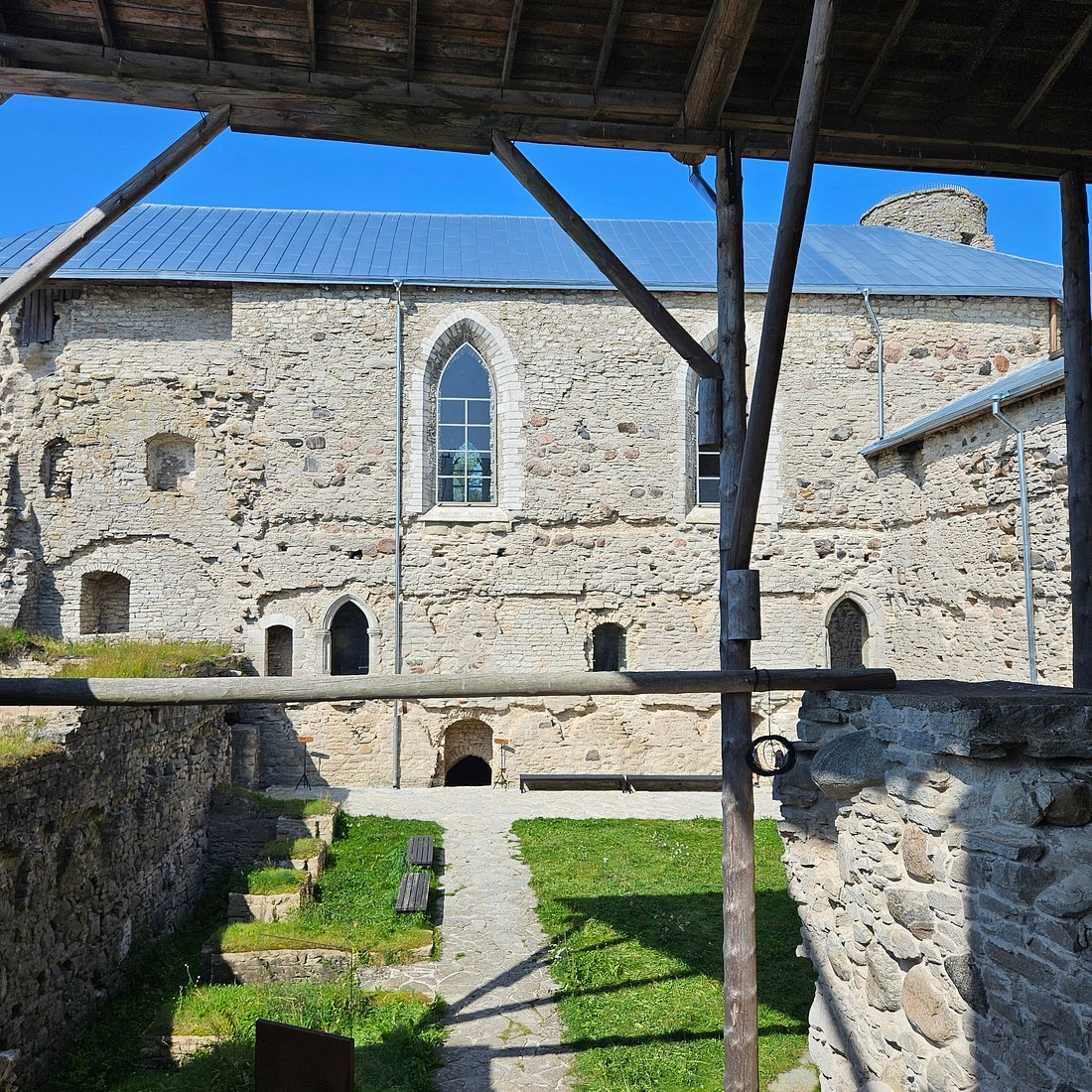
The ruins of Padise Monastery preserve the remains of one of medieval Estonia's most significant religious institutions. Founded by Cistercian monks, Padise became an important center of religious life, agriculture, landholding, and economic organization in western Estonia.
The monastery illustrates how medieval monasteries were far more than places where monks prayed.
They were agricultural enterprises, landowners, educational institutions, centers of manuscript culture, and important components of regional economies.
The Cistercian Tradition
The Cistercian Order emerged in western Europe during the late eleventh century as a reform movement within Western monasticism.
Cistercians emphasized disciplined religious life, manual labor, simplicity, and agricultural self-sufficiency.
Their monasteries often became major economic institutions.
Padise belonged to this wider European network.
Foundation of Padise
The monastery developed during the medieval period following the Christianization and political restructuring of Estonia.
Cistercian monks from another Baltic monastery established the religious community at Padise.
The location provided access to agricultural land and transportation routes.
This allowed the monastery to support itself while participating in regional economic networks.
Monastic Architecture
Padise's architecture reflected both religious requirements and practical necessities.
A medieval monastery typically required:
a church;
cloisters;
dormitories;
kitchens;
storage rooms;
workshops;
agricultural facilities;
administrative spaces.
At Padise, these functions were incorporated into a substantial stone complex.
A Monastery and Agricultural Enterprise
Agriculture was fundamental to monastic life.
Monks and lay workers cultivated crops, raised animals, managed forests, and maintained other resources.
The monastery's agricultural activities could support both the resident community and broader economic exchange.
The Cistercian approach emphasized productive landscapes.
Land management therefore became an important component of religious practice.
Economic Networks
Padise did not exist in isolation.
Monasteries exchanged goods with surrounding communities and participated in regional markets.
Surplus agricultural products could be traded.
Specialized crafts could also be performed within or around the monastery.
The monastery's economic power allowed it to acquire additional land and resources.
Political Relationships
Medieval monasteries often depended upon relationships with secular rulers.
Land grants, privileges, taxation arrangements, and legal protections affected their prosperity.
Padise's history therefore reflects the interaction between religious institutions and political authorities.
Defensive Architecture
One of Padise's most unusual characteristics is the substantial defensive character of its later architecture.
Political instability in the Baltic could threaten religious institutions.
The monastery was therefore fortified.
This transformation demonstrates that medieval religious communities sometimes had to adapt to military realities.
The boundary between monastery and fortress could become surprisingly thin.
Daily Life of the Monks
Monastic life followed a structured schedule.
The monks divided their day between:
prayer;
religious services;
work;
meals;
study;
rest.
The rhythm of life was regulated by the liturgical calendar.
Work was not regarded simply as economic necessity. Within the Cistercian tradition, labor could be considered an important component of disciplined religious life.
Archaeological Importance
The surviving ruins allow researchers to reconstruct aspects of monastic organization.
Architectural remains reveal the relationship between sacred and practical spaces.
Artifacts provide additional evidence for food consumption, trade, craft production, and domestic activity.
Together, these discoveries show how a medieval religious community functioned materially.
Destruction and Decline
Like many medieval institutions in the Baltic, Padise experienced periods of conflict and political disruption.
The Reformation and subsequent changes in religious and political organization fundamentally altered the monastery's role.
The monastic institution was eventually dissolved.
The buildings lost their original purpose and gradually deteriorated.
Conclusion
Padise Monastery provides a remarkable illustration of medieval religious life in Estonia.
Its history combines spirituality, agriculture, architecture, economics, politics, and warfare.
The ruins remind us that monasteries were major institutions capable of transforming landscapes and shaping regional economies.
Padise therefore represents much more than a ruined religious building. It is an archaeological record of the complex organization of medieval European society on the eastern Baltic frontier.