Haimenkou is an important prehistoric archaeological site in Yunnan that provides evidence for the development of early farming communities in southwestern China. The site is particularly valuable for understanding the transition toward more settled forms of life involving agriculture, animal use, craft production, and increasingly permanent settlement.
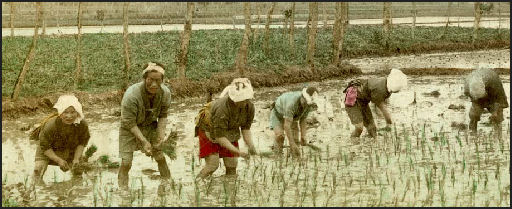
The description of Haimenkou as a community of “Neolithic rice farmers” highlights the importance of agricultural evidence, although prehistoric subsistence was rarely based on a single food source. Ancient communities typically combined cultivated crops with fishing, hunting, gathering, and animal husbandry according to local environmental conditions.
The Neolithic Transformation
The Neolithic period is generally associated with major changes in human economic and social organization.
Instead of depending entirely on hunting and gathering, many communities increasingly relied on:
cultivated plants,
domesticated animals,
permanent or semi-permanent settlements,
pottery,
and new forms of social organization.
The process did not occur everywhere at the same time.
Agriculture developed gradually and was adapted differently in different regions.
Rice Cultivation
Rice became one of the most important crops in the history of East and Southeast Asia.
Growing rice required detailed environmental knowledge.
Farmers needed to understand:
seasonal rainfall,
water availability,
soil conditions,
planting cycles,
and harvesting methods.
Different forms of rice cultivation developed over time.
Early agriculture may not have looked identical to the intensive paddy systems familiar from later historical periods.
Settlement at Haimenkou
Archaeological remains at Haimenkou provide evidence of a community that occupied a strategic environment in Yunnan.
Settlement evidence can include:
building remains,
postholes,
hearths,
storage areas,
pottery,
tools,
and food remains.
These materials allow archaeologists to reconstruct aspects of domestic life.
Houses and Wooden Architecture
One of the challenges of studying prehistoric settlements is that many houses were built from organic materials.
Wood, reeds, and plant fibers often decay.
Archaeologists therefore study indirect traces such as:
postholes,
soil discoloration,
foundation patterns,
and concentrations of artifacts.
These traces can reveal the size and organization of ancient buildings.
Farming and Food Storage
Agriculture creates the possibility of producing food surpluses.
However, crops must be stored and protected.
Ancient communities needed methods to reduce losses from:
moisture,
insects,
rodents,
and spoilage.
Storage technology could include containers, pits, baskets, or specially designed structures.
The ability to preserve food could support larger and more permanent populations.
Pottery and Daily Life
Pottery was an important technology for farming communities.
Ceramic vessels could be used for:
cooking,
storing food,
transporting materials,
and serving meals.
The design and decoration of pottery can also provide evidence for cultural traditions.
Archaeologists compare pottery styles to study connections between communities.
Tools and Agricultural Technology
Early farmers used a variety of tools made from:
stone,
bone,
wood,
and other materials.
Stone tools could be used for:
cutting,
harvesting,
processing plants,
and woodworking.
The study of microscopic wear on tools can sometimes help archaeologists identify how they were used.
Agriculture and Population Growth
More reliable food production can support larger populations.
However, farming also creates new challenges.
Communities become more dependent on successful harvests.
Crop failure can create serious problems.
Permanent settlements may also increase exposure to disease and competition over land.
The transition to agriculture was therefore not simply a story of improvement.
It created both opportunities and new risks.
Haimenkou and Southwestern China
Haimenkou contributes to the understanding of how agricultural traditions developed in Yunnan.
Southwestern China occupies an important geographical position between East Asia, Southeast Asia, and the Himalayan region.
Communities in this area participated in long-term networks of migration and cultural exchange.
Why Haimenkou Matters
The site provides evidence for the transformation of human societies during the prehistoric period.
By studying Haimenkou, archaeologists can investigate:
farming,
settlement,
technology,
food production,
and social organization.
It helps demonstrate that the development of agriculture in China involved multiple regional histories rather than a single uniform process.
Conclusion
Haimenkou offers an important archaeological window into the development of early agricultural communities in Yunnan.
Evidence of settlement, farming, pottery, and other technologies demonstrates the increasing importance of permanent communities and food production.
The site reminds us that the rise of agriculture was one of the most significant transformations in human history, changing how people organized their homes, food supplies, labor, and relationships with the landscape.