Howe Harper belongs to Orkney's remarkable tradition of prehistoric monumental landscapes.
Neolithic mounds and burial monuments demonstrate that communities living thousands of years ago invested enormous effort in constructing structures connected with death, ancestry, and collective identity.
Neolithic Orkney
The Neolithic period transformed Orkney.
Farming communities established permanent settlements and constructed monumental architecture.
These included:
chambered cairns;
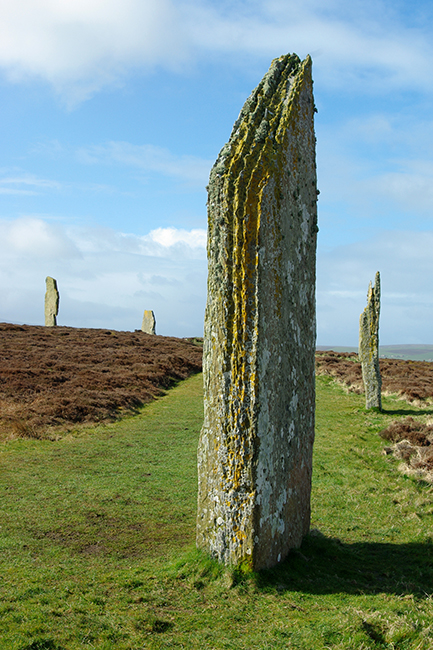
stone circles;
standing stones;
houses;
and ceremonial complexes.
The Meaning of a Mound
A prehistoric mound could cover a burial structure.
Its visible form transformed the landscape.
Even when the original internal chamber was no longer accessible, the mound remained a physical marker.
Monumental Labor
Constructing a mound required collective effort.
Workers had to:
gather stone;
transport materials;
construct chambers;
build walls;
and create the outer mound.
Such projects demonstrate organized community labor.
Ancestral Landscapes
Neolithic monuments may have served as places where communities interacted with the dead.
Ancestors could become part of the landscape itself.
The monument therefore connected:
people;
land;
memory;
and community identity.
Orkney's Monumental Network
Howe Harper belongs to a wider network of monuments.
Orkney contains one of Europe's greatest concentrations of Neolithic architecture.
The monuments were not necessarily isolated.
Their positions could relate to settlements, hills, coastlines, and other ceremonial sites.
Archaeological Interpretation
Not every mound had the same function.
Some were tombs.
Others may have had ceremonial or settlement-related purposes.
Therefore, identifying the precise role of an individual mound requires archaeological evidence.
Conclusion
Howe Harper: Orkney's Neolithic Mound represents the remarkable monumental traditions of prehistoric Orkney.
The site's broader significance lies in demonstrating how Neolithic communities transformed their environment through architecture and created enduring places associated with ancestry, ceremony, and collective memory.