Introduction
High mountain passes have long served as important routes for travel, trade, migration, and military movement. Although alpine environments can be difficult to cross, they often provide the most practical connections between valleys and neighboring regions. Communities and political authorities have therefore sought to control strategic mountain routes through watchpoints, defensive structures, and fortified positions.
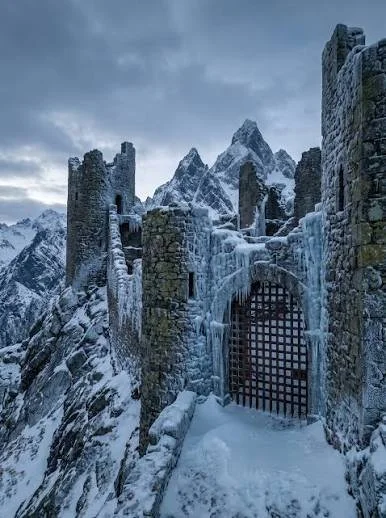
In some high-altitude environments, glaciers and permanent snowfields may preserve archaeological materials that would otherwise decay or disappear. The possibility of ice-preserved fortresses in alpine passes raises important questions about mountain defense, climate history, and archaeological preservation. However, it is necessary to distinguish actual fortifications from temporary camps, shelters, abandoned equipment, and natural rock formations.
The Strategic Importance of Alpine Passes
Mountain passes provide routes through otherwise difficult terrain. They may connect agricultural valleys, pastoral regions, trading centers, and military territories.
Controlling a pass can offer several advantages. A defensive position may allow its occupants to observe approaching travellers, regulate movement, collect tolls, or protect nearby settlements.
Some passes are narrow and naturally restricted by steep slopes, cliffs, or rock formations. These geographical features can reduce the number of possible routes through a region, making a small defensive position strategically valuable.
However, not every alpine pass required a permanent fortress. Some locations may have been monitored through seasonal patrols, temporary camps, or agreements between neighboring communities.
What Qualifies as an Alpine Fortress?
A fortress is generally understood as a defensive structure designed to protect people, control territory, or resist attack. In alpine environments, fortifications may have been adapted to the limited availability of building materials and the difficulty of transporting supplies.
Possible features include stone walls, towers, defensive enclosures, timber structures, watch platforms, and barriers placed along narrow routes.
Some defensive positions may have used natural cliffs and rock outcrops as part of their protection. Rather than constructing large walls, builders could have strengthened an existing natural barrier with smaller structures.
Researchers must distinguish these features from ordinary mountain shelters, pastoral enclosures, and structures intended for storage or weather protection. Evidence of defensive function may include controlled entrances, strategic placement, weapons, and associated military materials.
Ice as a Preservation Environment
Ice can preserve archaeological materials by limiting exposure to oxygen, reducing microbial activity, and maintaining low temperatures. Under favorable conditions, organic objects that would normally decay may survive for centuries or even longer.
Wooden tools, leather equipment, textiles, ropes, and other materials have been recovered from alpine ice and snow environments. Their preservation can provide detailed information about past technologies and everyday activities.
However, ice does not preserve everything equally. Freeze-thaw cycles, glacier movement, meltwater, and exposure after melting can damage or destroy archaeological remains.
A glacier is also not a static storage container. Moving ice can transport materials away from their original locations, mix objects from different periods, and distort the archaeological context.
Archaeological Evidence in Alpine Environments
The investigation of possible ice-preserved fortresses requires the combination of conventional excavation and specialized high-altitude survey.
Researchers may use aerial photography, satellite imagery, LiDAR, and ground-based mapping to identify unusual structures or changes in terrain. These techniques can help locate stone walls, terraces, and possible defensive features beneath snow or vegetation.
Field teams then examine exposed surfaces and archaeological deposits. They record the position of wooden fragments, metal objects, ceramics, weapons, and other materials.
The relationship between artifacts and architectural remains is particularly important. A weapon found near a stone enclosure may be relevant to its interpretation, but it does not automatically establish that the structure was a fortress.
Dating Fortifications and Associated Materials
Dating alpine fortifications can be complicated because structures may have been built, repaired, and reused over long periods.
Radiocarbon dating can be applied to suitable organic remains, such as charcoal or preserved wood. Dendrochronology, which compares tree-ring patterns, may provide precise dates when suitable timber and regional reference chronologies are available.
Ceramic typology, metalworking techniques, and historical records can offer additional chronological evidence.
Researchers must also determine whether an object was deposited during the original construction phase or entered the site through later occupation. An ancient wooden object discovered near a much younger wall may not date the wall itself.
Glacial movement and redeposition create additional complications. Objects recovered from melting ice may have lost their original archaeological associations.
Military Life in High Mountain Environments
Defending an alpine pass required more than constructing walls. Soldiers or guards needed shelter, food, water, fuel, and equipment capable of functioning in cold conditions.
The seasonal availability of routes would have influenced military activity. Heavy snowfall could make a pass inaccessible for months, while warmer periods might allow greater movement.
Archaeological evidence such as hearths, animal bones, storage containers, and repair materials can provide clues about how people lived at high elevations.
Weapons and protective equipment may indicate military activity, but their presence must be interpreted carefully. Mountain routes were also used by hunters, traders, travellers, and pastoral communities.
Climate Change and the Exposure of Archaeological Remains
Modern glacier retreat is revealing archaeological materials that have remained frozen for long periods. As ice melts, previously inaccessible objects and structures may become exposed.
This creates both opportunities and risks. Newly exposed artifacts can provide valuable information, but they may deteriorate rapidly once removed from their frozen environment.
Organic materials can become vulnerable to drying, microorganisms, physical damage, and changes in temperature. Researchers must therefore prioritize documentation and appropriate conservation.
Monitoring glacial landscapes is increasingly important because archaeological discoveries may be exposed only temporarily. Delayed investigation can result in the loss of materials through meltwater, erosion, or human disturbance.
Reconstructing Alpine Trade and Conflict
A fortified pass may provide evidence of the wider networks that connected mountain communities. Imported ceramics, coins, weapons, and other objects can reveal contact with distant regions.
The distribution of such materials may help researchers identify trade routes, political boundaries, and patterns of movement.
Evidence of repeated repairs or multiple construction phases could indicate that a location remained important over several generations. Changes in defensive architecture may reflect new military technologies or shifting political conditions.
Yet the presence of a fortress does not necessarily mean that a pass experienced frequent warfare. Fortifications could also serve as symbols of authority, customs stations, or places for controlling access to valuable routes.
Conclusion
High alpine passes offer a distinctive setting for investigating the relationship between military architecture, mobility, and environmental preservation. Fortifications in these regions could control important routes, protect nearby communities, and demonstrate political authority. Ice may preserve valuable organic materials associated with mountain activity, but glacier movement and melting can complicate archaeological interpretation. Through careful survey, dating, excavation, and conservation, researchers can reconstruct how people used and defended high-altitude landscapes while also protecting archaeological evidence threatened by changing environmental conditions.