Discovery of Vitruvius’ Ancient Basilica Stuns Italian Archaeologists
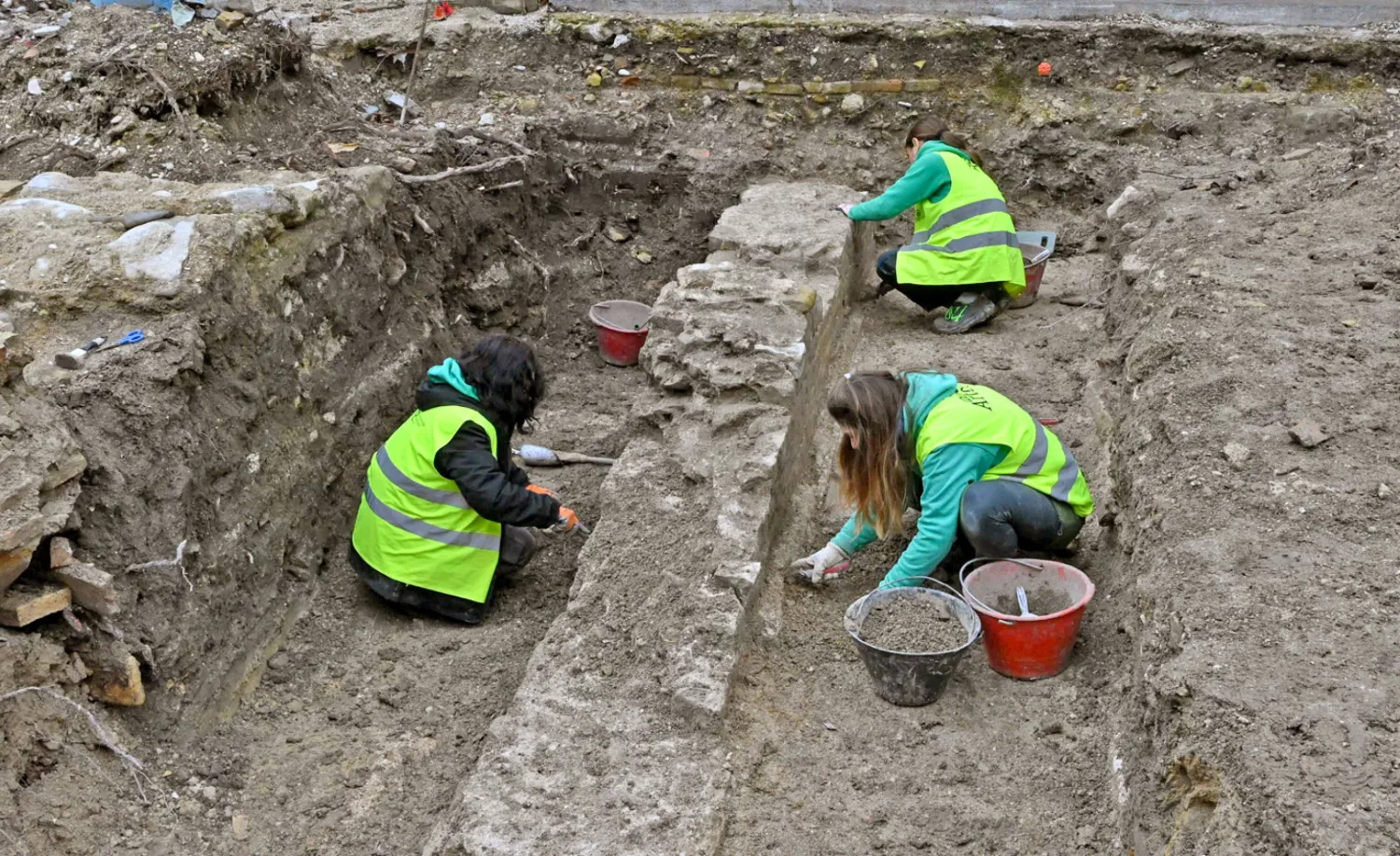
Italian officials have celebrated the unearthing of a public building in Fano, northeastern Italy, believed to have been designed by Vitruvius, the 1st-century BC Roman architect and engineer often called the “father of architecture.”
“It is a sensational finding … something our grandchildren will be talking about,” Italian Culture Minister Alessandro Giuli said at a press conference.
Vitruvius is renowned for his treatise De architectura (The Ten Books on Architecture), the oldest surviving work on architectural theory. His ideas on classical proportions influenced generations of artists, including Leonardo da Vinci, whose iconic “Vitruvian Man” was inspired by Vitruvius’ principles.
Archaeologists believe they have uncovered the remains of an ancient basilica in Fano, a rectangular public building matching descriptions in Vitruvius’ writings. “I feel like this is the discovery of the century; scientists have searched for this basilica for over 500 years,” said Fano Mayor Luca Serfilippi.
Regional archaeological superintendent Andrea Pessina noted the remarkable accuracy of the find: “We have an absolute match between the excavation and Vitruvius’ descriptions.” The basilica featured ten columns along its long sides and four along the short. When four columns were uncovered, archaeologists used Vitruvius’ specifications to locate the top right column—finding it immediately. “There are few certainties in archaeology … but the precision here was impressive,” Pessina said.
Further excavation will reveal whether more of the basilica lies underground and assess whether the site can be opened to the public.