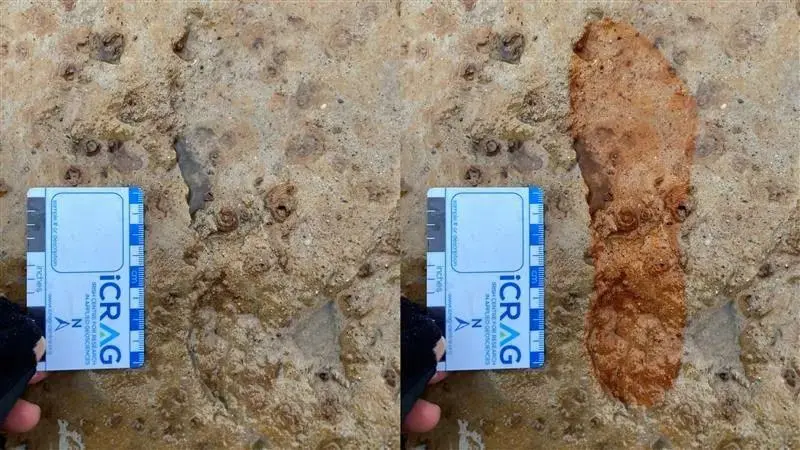
Footprints left by humans and animals roughly 2,000 years ago have been uncovered on a beach in Scotland, after storms stripped away sand and exposed a buried clay layer.
The impressions were spotted by dog walkers at Lunan Bay last month. Archaeologists from the University of Aberdeen believe the tracks date to the height of the Roman Empire, making them an exceptionally rare find for Scotland.
Similar ancient footprints have only been recorded at a few sites in England, including Formby and Happisburgh.
Because coastal conditions are unpredictable, the research team had to act fast. Strong winds were already blowing sand back over the surface, and incoming tides threatened to erase the prints entirely. Within just two days, the sea had destroyed the exposed site.
Before that happened, however, the archaeologists documented the discovery thoroughly. They photographed the tracks, created detailed 3D models, and made casts to preserve the shapes and measurements. Even though the physical footprints are gone, the data captured ensures researchers can continue studying this fleeting glimpse of life in Roman-era Scotland.
There’s something quietly powerful about footprints, right? Not monuments, not weapons — just ordinary steps frozen in time for two millennia.
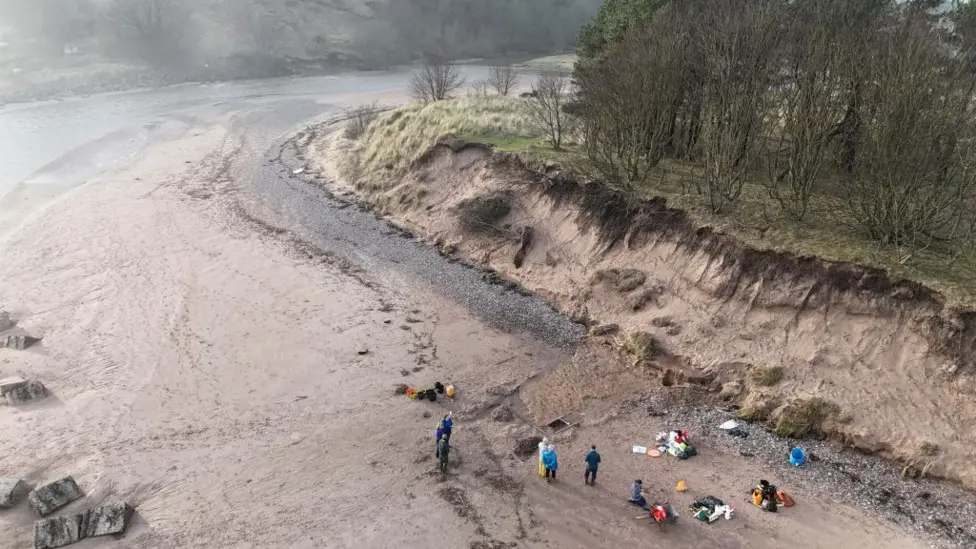
Lunan Bay in Angus
Researchers examining the site at Lunan Bay have identified tracks from animals including roe deer and red deer, along with several human footprints impressed directly into the clay. The human prints appear to have been made by barefoot individuals moving across the shoreline roughly 2,000 years ago.
Dr. Will Mills of the University of Aberdeen suggested the area may have been used for hunting or gathering wild coastal plants such as samphire. The mix of animal and human tracks hints at everyday activity — people moving through a working landscape rather than a ceremonial space.
Professor Gordon Noble noted how remarkable it is to consider that these impressions were made during the era of Roman incursions into northern Britain and in the centuries before the rise of the Picts.
It’s kind of wild when you think about it — not a grand fortress, not a battlefield relic — just someone walking barefoot along a Scottish shoreline while deer moved nearby. And somehow, the ground remembered.