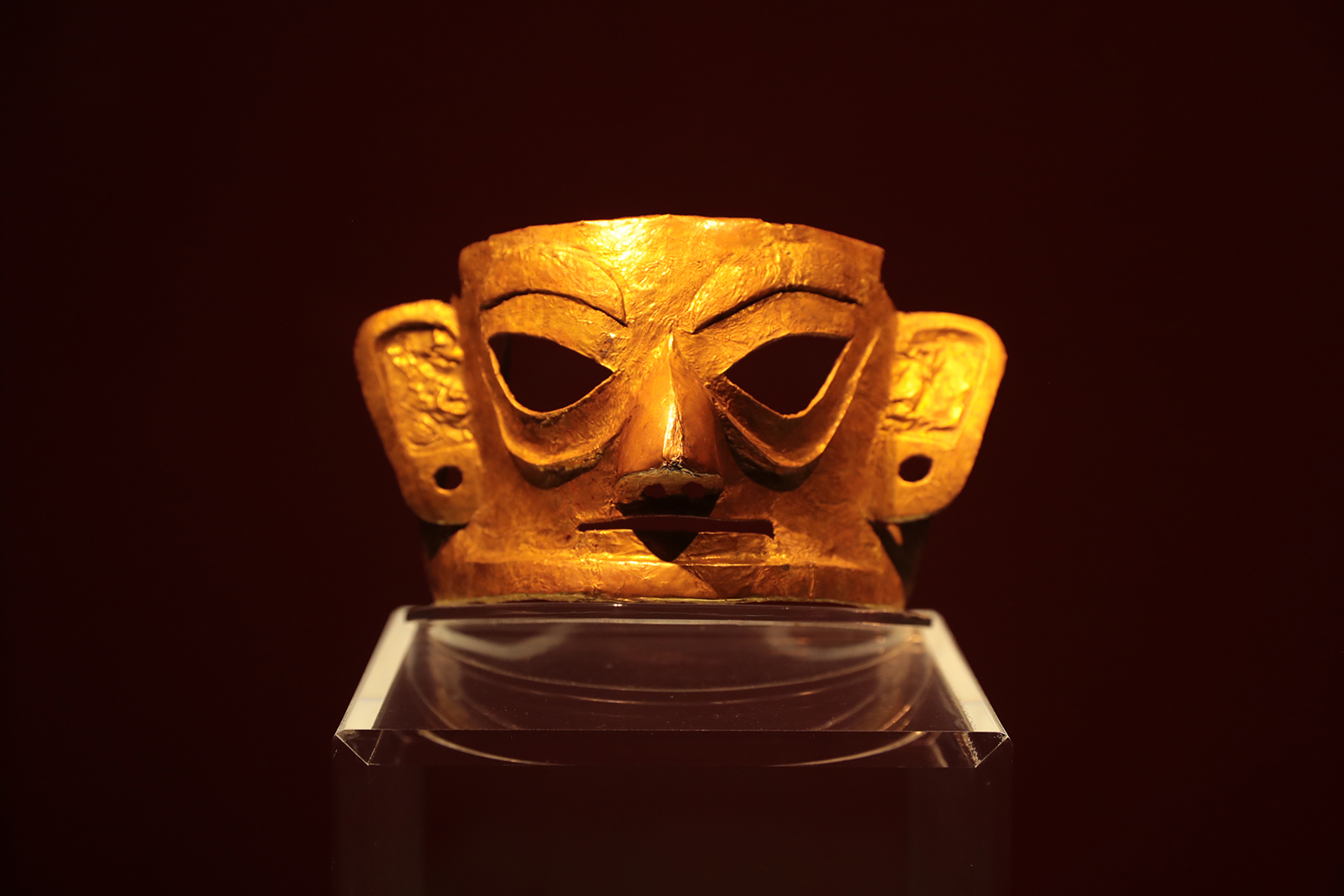
The Jinsha archaeological site, located in the modern Chengdu area of Sichuan, is one of the most important discoveries associated with the ancient Shu civilization. The site produced an extraordinary collection of gold, jade, bronze, ivory, stone, and other ceremonial objects.
Jinsha is particularly significant because it appears to represent a major cultural center that emerged after the decline of Sanxingdui. Together, the two sites provide evidence for the development and transformation of Bronze Age civilization in the Sichuan Basin.
The Discovery of Jinsha
The Jinsha site was discovered during modern construction activity in the Chengdu area.
Archaeological investigations revealed a large and complex settlement containing evidence of residential life, craft activity, burial practices, and ritual behavior.
One of the most important discoveries was a concentration of valuable ceremonial objects.
The scale and quality of these artifacts demonstrated that Jinsha had been a major political and religious center.
Gold at Jinsha
Gold was one of the most remarkable materials recovered from the site.
The most famous object is the Sun and Immortal Birds Gold Ornament, a thin circular gold object decorated with a central sun-like design surrounded by four birds.
The artifact demonstrates remarkable craftsmanship.
Creating such an object required:
obtaining gold,
refining or preparing the metal,
shaping it into a thin form,
and carefully cutting or decorating the design.
The result is one of the most recognizable symbols associated with ancient Shu culture.
The Meaning of the Sun and Birds
The exact meaning of the Sun and Immortal Birds ornament remains uncertain.
The design has been interpreted in relation to:
solar symbolism,
cosmology,
religious beliefs,
and ancient concepts concerning birds.
Bird imagery also appears at Sanxingdui and other sites.
This suggests that birds may have held important symbolic roles in the religious traditions of the ancient Shu region.
However, without surviving texts from the creators, archaeologists must distinguish between evidence and interpretation.
Jade and Ritual Power
Jade was another important prestige material at Jinsha.
In ancient Chinese societies, jade could be associated with:
status,
ritual,
political authority,
and cultural identity.
Jade was difficult to shape because of its hardness.
Crafting an object required grinding and abrasion rather than simple cutting.
This made finely produced jade artifacts evidence of substantial labor and technical skill.
Ivory and Long-Distance Exchange
Large quantities of ivory were discovered at Jinsha.
The use of ivory demonstrates access to valuable animal materials.
Obtaining ivory could involve connections with regions where elephants were present or the movement of materials through exchange networks.
The presence of such materials demonstrates that the ancient Shu civilization was connected to wider systems of trade and interaction.
Jinsha and Sanxingdui
One of the major questions surrounding Jinsha concerns its relationship with Sanxingdui.
Sanxingdui was an earlier major center in the Sichuan Basin.
After its decline, Jinsha emerged as an important regional center.
The two sites share some artistic and cultural characteristics.
This has led many researchers to interpret Jinsha as representing a later development of the ancient Shu cultural tradition.
The transition, however, was likely complex.
Political centers can shift because of:
environmental changes,
political conflict,
economic transformation,
population movement,
or changes in religious authority.
Ritual Deposits
Many valuable objects at Jinsha appear to have been deliberately deposited in ritual contexts.
This suggests that the site contained important ceremonial spaces.
Objects could be offered as part of rituals and then intentionally buried or deposited.
Such practices demonstrate that valuable artifacts were not always created for everyday use.
Some objects may have had primarily religious or ceremonial functions.
Ancient Shu Religion
The religion of the ancient Shu civilization remains difficult to reconstruct because no large body of contemporary writing has survived.
However, archaeological evidence suggests that symbolism involving:
the sun,
birds,
animals,
masks,
trees,
and other powerful images
played an important role.
These motifs may have been connected to myths or cosmological beliefs that are now lost.
Chengdu and the Sichuan Basin
The location of Jinsha within the Chengdu Plain was important.
The Sichuan Basin provided fertile agricultural land and access to river systems.
Agricultural production could support large populations and the development of complex political institutions.
The region was also connected with mountain corridors leading toward other parts of East and Central Asia.
Why Jinsha Is Important
Jinsha provides evidence for the continuation and transformation of Bronze Age civilization in Sichuan.
The site demonstrates:
advanced metalworking,
jade craftsmanship,
ritual activity,
long-distance resource acquisition,
and complex social organization.
It also helps historians understand that the ancient history of China was shaped by multiple regional centers.
Conclusion
The gold treasures of Jinsha preserve the artistic and religious imagination of the ancient Shu civilization.
The Sun and Immortal Birds ornament, jade artifacts, ivory deposits, and ritual objects reveal a sophisticated society that flourished in the Chengdu region thousands of years ago.
Jinsha demonstrates that the ancient Shu world did not disappear with Sanxingdui. Instead, cultural traditions continued and transformed as new political and religious centers emerged.
Today, the site stands as one of the most important archaeological windows into the diverse civilizations that formed ancient China.