Introduction
Located along the Ohio River in southern Illinois, Kincaid Mounds included one of the most impressive fortified villages of the Mississippian period. Occupied between approximately 1050 and 1450 CE, the settlement functioned as a regional political and ceremonial center protected by substantial defensive works. Its fortified village illustrates the importance of security, territorial control, and organized leadership within Mississippian chiefdoms while complementing the site's monumental platform mounds and ceremonial plazas.
The Palisade System
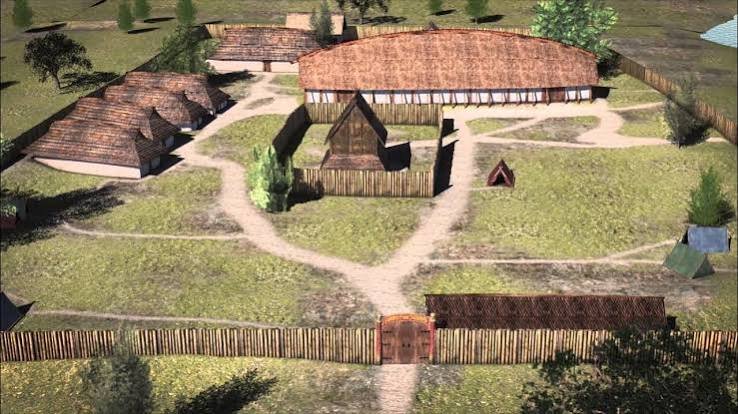
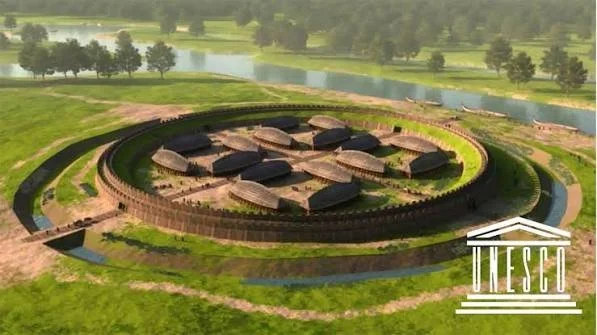
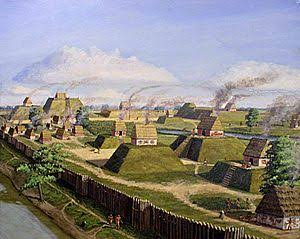
The village was enclosed by a massive wooden palisade constructed from closely spaced upright logs deeply embedded in the ground. Controlled gateways regulated access into the settlement, while projecting bastions allowed defenders to observe approaching visitors and monitor vulnerable sections of the wall.
The palisade likely served multiple purposes beyond defense. It clearly defined the sacred and political boundaries of the community while protecting important temples, elite residences, storage facilities, and the central plaza.
Village Organization
Inside the enclosure, rectangular houses surrounded a large ceremonial plaza bordered by platform mounds supporting temples and administrative buildings. Organized pathways connected residential districts with public spaces, reflecting careful urban planning.
Residents cultivated maize, beans, squash, and sunflowers while participating in extensive trade networks that connected Kincaid with Cahokia and other Mississippian centers.
Archaeological Discoveries
Excavations have uncovered postholes from the palisade, house foundations, storage pits, pottery, shell ornaments, copper objects, and ceremonial artifacts. These discoveries demonstrate repeated rebuilding of the defensive wall, suggesting that the fortifications remained an essential feature throughout the settlement's occupation.
Conclusion
Kincaid's Fortified Village highlights the advanced defensive engineering of the Mississippian Civilization. Its impressive palisade, organized settlement, monumental mounds, and ceremonial architecture reveal a highly structured society capable of coordinating large-scale public construction while protecting one of southern Illinois' most important prehistoric communities