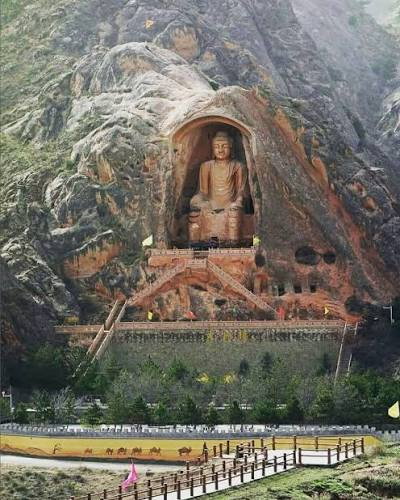
The Kumtura Caves are another major Buddhist archaeological complex in the Tarim Basin. Located in the historical region associated with the ancient kingdom of Kucha, the caves preserve evidence of monastic life, religious architecture, and Buddhist artistic traditions.
The site forms part of a larger network of cave monasteries that developed along the northern routes of the Tarim Basin.
Together with sites such as Kizil, Kumtura demonstrates the importance of Central Asia in the transmission and transformation of Buddhism.
The Creation of a Rock-Cut Monastery
A rock-cut monastery began with the landscape itself.
Builders selected suitable cliffs and excavated chambers directly into the stone.
Different rooms could serve different functions.
A complex might include:
assembly halls,
meditation chambers,
shrines,
residential rooms,
and spaces associated with religious imagery.
Creating these structures required planning and specialized labor.
The excavation process involved the gradual removal of rock using available tools.
The finished chamber could then be covered with prepared surfaces and decorated.
Religious Architecture
The design of Buddhist caves often reflected religious concepts.
Some chambers included central structures or architectural features that guided the movement of worshippers.
Others were designed primarily for meditation or the display of sacred images.
The organization of space therefore contributed to religious experience.
Architecture was not simply functional.
It helped create an environment appropriate for Buddhist worship and monastic life.
The Art of Kumtura
The caves preserve Buddhist murals and other forms of artistic decoration.
These works depict sacred figures and religious narratives.
As at other Central Asian cave sites, the artistic traditions of Kumtura reveal cultural interaction.
Different stylistic influences could coexist.
Over time, artistic traditions also changed as political conditions and cultural contacts evolved.
Buddhism and the Oasis Kingdoms
The oasis kingdoms of the Tarim Basin were important centers of Buddhism.
Settlements depended on irrigation and agriculture, but their position along major travel routes also created opportunities for cultural exchange.
Monasteries could benefit from the movement of merchants and pilgrims.
A traveler might carry new religious texts, artistic ideas, or technologies from one oasis to another.
This created a network of cultural communication across the deserts of Central Asia.
The Role of Monasteries
Buddhist monasteries were more than isolated religious retreats.
They could function as:
centers of education,
repositories of religious knowledge,
places of worship,
and institutions connected with local communities.
Monks depended on relationships with lay supporters.
Donations of food, land, labor, or wealth could help maintain religious institutions.
Changing Artistic Traditions
The Kumtura Caves were used over long periods.
As a result, different caves and paintings may represent different stages in the history of Buddhist art.
Changes in artistic style can reflect:
new cultural influences,
political transformations,
changes in religious practice,
and the movement of artists between regions.
The site therefore allows archaeologists and art historians to study cultural change over time.
Preservation and Archaeological Study
Like many ancient cave complexes, Kumtura faces challenges from natural deterioration.
Rock surfaces can crack, water can damage painted layers, and environmental changes can affect the preservation of murals.
Human activity has also contributed to the loss or removal of archaeological material.
Modern documentation and conservation are therefore essential.
Digital photography, mapping, and other technologies allow researchers to study the caves while reducing unnecessary physical contact.
Why Kumtura Is Important
Kumtura is important because it demonstrates that Buddhist Central Asia was supported by a network of regional religious institutions.
The caves were not isolated monuments.
They formed part of a cultural landscape extending across the Tarim Basin.
The site contributes to the understanding of:
Buddhist architecture,
monastic life,
artistic exchange,
and the history of the Silk Road.
Conclusion
The Kumtura Caves preserve the remains of a Buddhist world that once flourished along the oasis routes of Central Asia.
Their rock-cut chambers and painted walls provide evidence of the communities that transformed cliffs into monasteries and religious sanctuaries.
Kumtura reminds us that Buddhism spread not simply through armies or political empires but through networks of teachers, artists, travelers, donors, and local communities.
The caves remain a lasting record of that extraordinary cultural exchange.