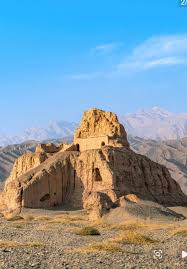
Subashi Temple, also known as the Subashi Buddhist ruins, is one of the most important archaeological monuments associated with the Buddhist history of the Tarim Basin. Located in the region historically connected with the ancient kingdom of Kucha, in present-day Xinjiang, the site reflects the period when Central Asia became a major crossroads for Buddhism, trade, translation, and artistic exchange.
The ruins demonstrate that Buddhism was not simply transmitted directly from India to China. Instead, religious ideas traveled through a vast network of communities stretching across South Asia and Central Asia. Monasteries, translators, merchants, pilgrims, and local rulers all contributed to this process.
Subashi became part of this remarkable cultural world.
The Buddhist Kingdom of Kucha
The region surrounding Subashi was historically associated with Kucha, one of the major oasis kingdoms of the northern Tarim Basin.
Kucha occupied a strategically important position along routes connecting China with Central Asia.
Because of its location, the kingdom became a meeting point for different populations and cultural traditions.
Its inhabitants participated in networks involving:
trade,
diplomacy,
Buddhism,
artistic exchange,
and the translation of religious texts.
Buddhism became particularly influential in Kucha, and the region eventually developed an important monastic culture.
The Importance of the Subashi Complex
Subashi was a major Buddhist settlement rather than a single isolated building.
The archaeological remains include the ruins of:
temples,
stupas,
monastic structures,
residential spaces,
and other religious buildings.
The site demonstrates the scale of Buddhist institutional life in the Tarim Basin.
Monasteries served several functions. They were places where monks and religious specialists could live, study, worship, and teach.
They could also provide services to travelers moving along the trade routes.
Buddhism Along the Silk Road
The spread of Buddhism across Asia was closely connected with long-distance networks of movement.
Merchants traveled between regions, while monks and pilgrims carried religious teachings and texts.
The Silk Road routes therefore became channels for cultural exchange.
Buddhist ideas moved from South Asia into Central Asia and eventually into China, Korea, Japan, and other parts of East Asia.
However, the process was not one-directional.
As Buddhism moved, it changed.
Different communities translated religious texts, developed new artistic traditions, and adapted Buddhist practices to local cultures.
Architecture and Religious Space
The buildings at Buddhist sites such as Subashi were designed for specific religious functions.
Stupas could contain sacred relics or serve as important monuments for devotion.
Temple spaces could house religious images and provide locations for ceremonies.
Monastic buildings provided accommodation for religious communities.
The layout of a monastery therefore reflected the organization of religious life.
Archaeological remains can reveal:
how buildings were arranged,
how communities moved through the site,
and how different spaces were used.
Buddhist Art and Carvings
The title of Subashi as a site of Buddhist artistic heritage reflects the wider tradition of religious imagery that developed throughout the Tarim Basin.
Artists working in Central Asian Buddhist communities produced images of:
the Buddha,
bodhisattvas,
monks,
donors,
heavenly beings,
and scenes from Buddhist narratives.
These artistic traditions were influenced by multiple regions.
Indian, Iranian, Central Asian, and Chinese artistic elements could interact and combine.
This makes the Buddhist art of Xinjiang especially important for understanding cultural exchange.
Kucha as a Center of Translation
The kingdom of Kucha became famous for its contribution to the transmission of Buddhist knowledge.
One of the most important figures associated with the region was Kumārajīva.
Kumārajīva played a major role in translating Buddhist texts into Chinese and helped make Buddhist teachings more accessible within Chinese intellectual and religious life.
His career demonstrates the importance of Central Asian communities in the spread of Buddhism.
Religious ideas that later became central to East Asian Buddhism often passed through cultural intermediaries in regions such as Kucha.
Monastic Life
The monks who lived at Buddhist complexes followed organized religious routines.
Daily life could include:
prayer,
meditation,
study,
teaching,
recitation,
and the maintenance of the monastery.
Monasteries also depended on relationships with surrounding communities.
Food, construction materials, and other resources could be provided through donations or economic connections.
Religious institutions were therefore connected to the broader social and economic life of the oasis.
The Decline of the Buddhist Centers
The religious and political landscape of Xinjiang changed over time.
New political powers emerged, trade networks shifted, and Islam gradually became the dominant religion across much of the region.
Many Buddhist institutions eventually declined or were abandoned.
The ruins of Subashi therefore preserve evidence of a religious landscape that once played a major role in Central Asian history.
Why Subashi Temple Is Important
Subashi is important because it provides evidence for the role of Central Asia in the transmission of Buddhism.
The site demonstrates that Xinjiang was not merely a distant frontier between larger civilizations.
It was an active cultural region in its own right.
Monasteries such as Subashi helped connect:
India,
Central Asia,
China,
and the wider Buddhist world.
Conclusion
Subashi Temple represents an important chapter in the history of Buddhism along the Silk Road.
Its ruins preserve evidence of a major monastic community located within the cultural landscape of ancient Kucha.
The site reminds us that Buddhism reached East Asia through a complex network of travelers, translators, artists, merchants, and religious communities.
Subashi stands as archaeological evidence of that process—a place where the spiritual traditions of Asia crossed deserts, languages, and political boundaries.