Introduction
Pöide represents an important chapter in the medieval history of Saaremaa and Estonia.
The site's fortified landscape reflects the political transformations that reshaped the eastern Baltic during the medieval period.
Fortified centers were essential to medieval societies because they combined military defense with political administration.
A castle or fortified hill could protect territory, control movement, provide a residence for authorities, and serve as a visible symbol of power.
Pöide's history reflects the complicated interaction between local communities, Christian institutions, and expanding political powers.
Saaremaa in the Medieval Period
Saaremaa occupied an important position in the Baltic Sea.
Its inhabitants had long participated in maritime networks.
During the medieval period, the island became increasingly drawn into the political struggles involving Scandinavian kingdoms, German crusading powers, and local communities.
This transformed the strategic importance of fortified locations.
The Castle
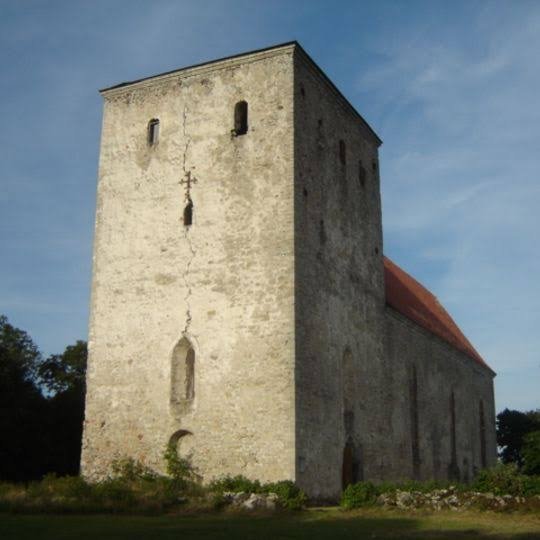
The fortified center at Pöide developed as part of a wider medieval defensive system.
Stone became increasingly important in medieval fortification.
Unlike temporary wooden defenses, masonry structures could withstand fire and provide stronger protection.
Walls, towers, gates, and internal buildings could be combined into a carefully organized defensive complex.
Military Function
A castle had several military purposes.
It could protect soldiers.
It could store supplies.
It could serve as a refuge during conflict.
It could control roads, waterways, or surrounding territory.
Its psychological function was equally important.
A large stone fortress demonstrated that its builders possessed resources, labor, and political authority.
Christianity and Political Change
Medieval Saaremaa experienced major religious transformation.
Christian institutions became increasingly influential.
Churches and fortified centers sometimes developed together because political and religious authority were closely connected.
Conversion was not simply a matter of personal belief.
It was connected to changes in law, taxation, political allegiance, and international diplomacy.
Local Resistance and Conquest
The Baltic region experienced prolonged political conflict during the medieval period.
Local populations defended their autonomy against expanding powers.
Fortifications became central to these struggles.
Pöide must therefore be understood within a broader history of conquest, resistance, and political consolidation.
Architecture
Medieval defensive architecture was based on several principles.
Walls needed sufficient thickness.
Entrances were carefully controlled.
Elevated locations provided defensive advantages.
Stone construction required skilled masons.
Timber could supplement masonry structures.
The resulting fortress combined engineering with strategic planning.
Everyday Life Inside a Fortress
A medieval fortification was not occupied only by soldiers.
It could contain administrators, craftsmen, servants, religious personnel, and other residents.
Food had to be stored.
Weapons had to be maintained.
Buildings required constant repair.
Animals and supplies needed management.
A castle was therefore a functioning community.
Trade and Administration
Fortified centers could also function as administrative hubs.
Authorities could collect taxes, regulate trade, enforce laws, and manage surrounding territories.
Their strategic location made them useful for controlling economic activity.
This demonstrates why castles were instruments of government as well as military structures.
Archaeological Evidence
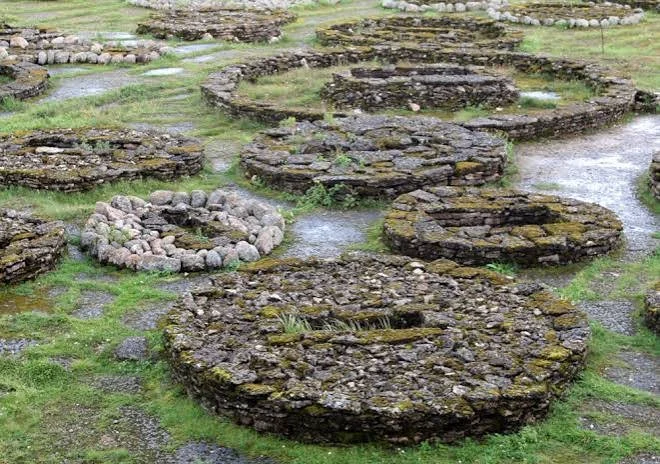
Archaeologists reconstruct medieval fortified sites through architectural remains, artifacts, and landscape analysis.
Stone walls reveal construction techniques.
Ceramics provide information about domestic activity.
Metal objects reveal tools and weapons.
Animal bones reveal diet and livestock.
Coins can indicate economic connections.
Together these materials create a picture of life within the fortress.
The Legacy of Pöide
Pöide's importance extends beyond its physical ruins.
The site represents the broader transformation of Estonia from prehistoric and Viking Age societies into medieval Christian political structures.
It illustrates how military architecture became a tool of state formation.
Conclusion
Pöide's medieval castle hill reflects a period when the eastern Baltic underwent profound political and religious transformation.
Its fortifications demonstrate the importance of military technology.
Its settlement history reveals changing systems of administration.
Its Christian context illustrates the transformation of religious and political authority.
Most importantly, Pöide demonstrates that medieval castles were not isolated military structures.
They were centers of power, administration, economy, religion, and community life.
The ruins that survive today are therefore fragments of a much larger medieval world—one shaped by warfare, commerce, conversion, and the struggle for control of the Baltic.