• MAIN PAGE
  • LATEST NEWS
    • Lost Cities
    • Archaeology's Greatest Finds
    • Underwater Discoveries
    • Greatest Inventions
    • Studies
    • Blog
  • PHILOSOPHY
  • HISTORY
  • RELIGIONS
    • Africa
    • Anatolia
    • Arabian Peninsula
    • Balkan Region
    • China - East Asia
    • Europe
    • Eurasian Steppe
    • Levant
    • Mesopotamia
    • Oceania - SE Asia
    • Pre-Columbian Civilizations of America
    • Iranian Plateau - Central Asia
    • Indus Valley - South Asia
    • Japan
    • The Archaeologist Editor Group
    • Scientific Studies
    • Aegean Prehistory
    • Historical Period
    • Byzantine Middle Ages
    • Predynastic Period
    • Dynastic Period
    • Greco-Roman Egypt
  • Rome
  • PALEONTOLOGY
  • About us
Menu

The Archaeologist

  • MAIN PAGE
  • LATEST NEWS
  • DISCOVERIES
    • Lost Cities
    • Archaeology's Greatest Finds
    • Underwater Discoveries
    • Greatest Inventions
    • Studies
    • Blog
  • PHILOSOPHY
  • HISTORY
  • RELIGIONS
  • World Civilizations
    • Africa
    • Anatolia
    • Arabian Peninsula
    • Balkan Region
    • China - East Asia
    • Europe
    • Eurasian Steppe
    • Levant
    • Mesopotamia
    • Oceania - SE Asia
    • Pre-Columbian Civilizations of America
    • Iranian Plateau - Central Asia
    • Indus Valley - South Asia
    • Japan
    • The Archaeologist Editor Group
    • Scientific Studies
  • GREECE
    • Aegean Prehistory
    • Historical Period
    • Byzantine Middle Ages
  • Egypt
    • Predynastic Period
    • Dynastic Period
    • Greco-Roman Egypt
  • Rome
  • PALEONTOLOGY
  • About us
No results found

Liang Bua Hobbits: Flores' 50,000-Year Mini Humans

July 18, 2026

Introduction

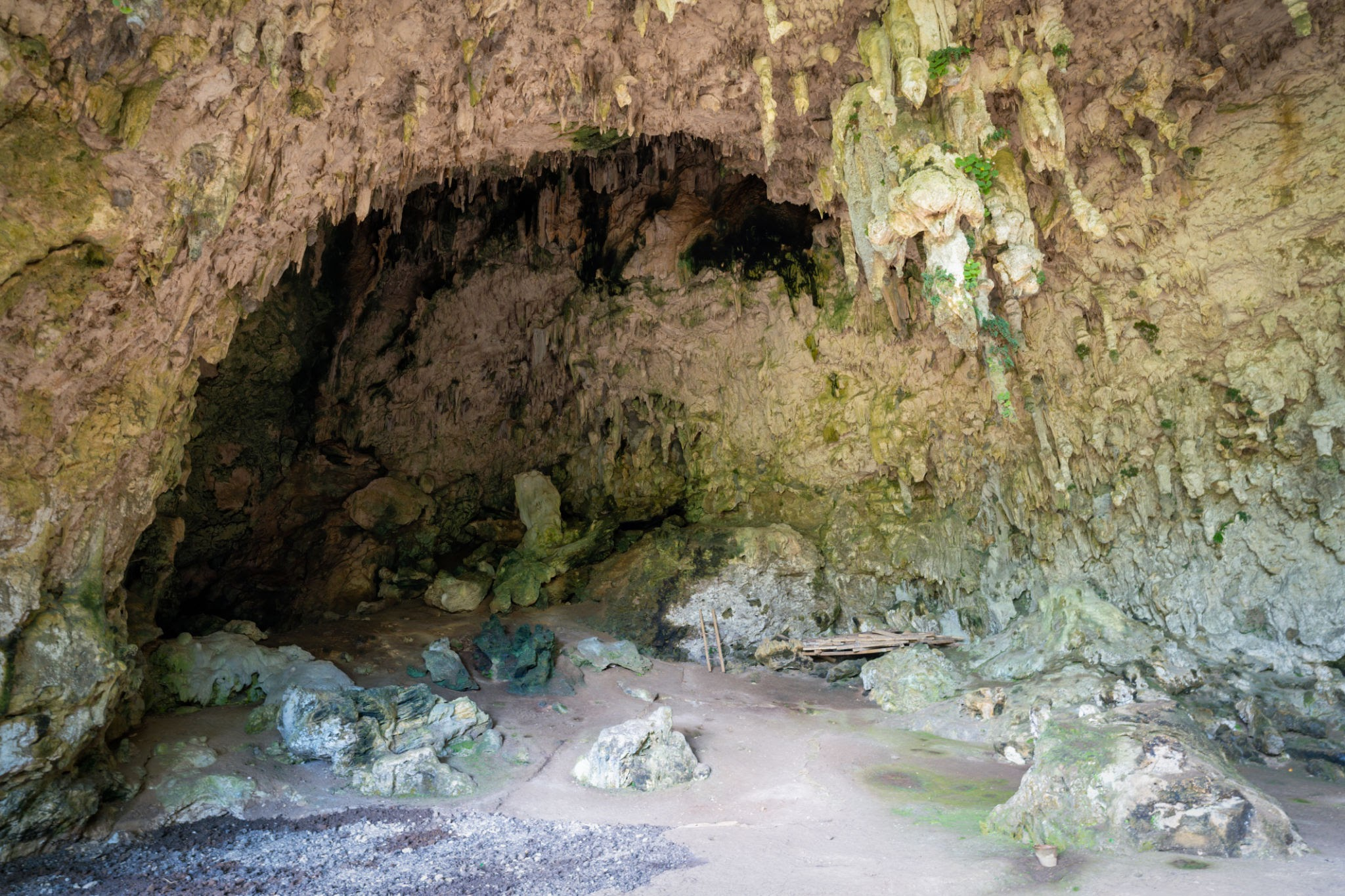
The 2003 discovery of diminutive hominin skeletal remains inside Liang Bua, a massive limestone cave on the Indonesian island of Flores, fundamentally upended established models of human evolution. Designated as Homo floresiensis—and affectionately dubbed the "Hobbit" by the international scientific community—this distinct hominin species stood a mere 1.06 meters (3.5 feet) tall and possessed a cranial capacity of roughly 400 cubic centimeters, comparable to a modern chimpanzee. Occupying the isolated island ecosystem until approximately 50,000 years ago, the Liang Bua remains provided the first definitive proof that divergent human lineages successfully coexisted alongside Homo sapiens into the deep Late Pleistocene.

Island Biogeography and Morphological Anomalies

The unique anatomical blueprint of Homo floresiensis is a classic demonstration of island dwarfism (or the island rule), an evolutionary phenomenon where large-bodied mammals isolated on resource-limited islands experience a selective reduction in body size over generations to lower their metabolic demands.

Conversely, small mammals like the local Flores giant rat (Papagomys armandvillei) grew exponentially larger. The "Hobbit" shared its isolated ecosystem with dwarf Stegodon (an extinct genus of pygmy elephants), which served as a primary prey source for both the hominins and the massive, predatory Komodo dragons that dominated the landscape

Despite their small brain size, the stratigraphic layers of Liang Bua demonstrate that Homo floresiensis possessed advanced behavioral traits. Excavated stone tool assemblages found alongside charred animal bones indicate that these small hominins engaged in coordinated group hunting, mastered fire control, and crafted complex stone tool kits.

Anatomical analyses of their wrist bones, long flat feet, and robust lower limbs suggest that while they shared deep ancestry with early Homo erectus or Homo habilis, they adapted to a distinct lifestyle that perfectly filled the apex predator niche within their isolated tropical island habitat.

Conclusion

The story of the Liang Bua hominins challenges linear models of human evolutionary progress. Homo floresiensis confirms that the human family tree was highly branched and diverse, with isolated lineages adapting in radical ways to unique environmental pressures. The disappearance of the "Hobbits" around 50,000 years ago matches the arrival of anatomically modern Homo sapiens in the region, suggesting that a mix of environmental shifts and competition with incoming modern humans ultimately closed the chapter on this fascinating island species.


← Laili Shelter: Timor-Leste's 40,000-Year ColonistsLake Toba Ash: Sumatra's 74,000-Year Supervolcano Impact →
Featured
image_2026-07-14_214817674.png
July 18, 2026
Aru Islands: Papua's 30,000-Year Wallabies Hunt
July 18, 2026
Read more →
July 18, 2026
image_2026-07-14_214743025.png
July 18, 2026
Tanimbar Islands: 4,000-Year Shell Mounds
July 18, 2026
Read more →
July 18, 2026
image_2026-07-14_214713445.png
July 18, 2026
Halmahera Obsidian: Maluku's Trade Network Hubs
July 18, 2026
Read more →
July 18, 2026
image_2026-07-14_214537993.png
July 18, 2026
Prehistoric Sulawesi: World's Oldest Hunt Scene?
July 18, 2026
Read more →
July 18, 2026
image_2026-07-14_214449170.png
July 18, 2026
Toalean Culture: Sulawesi's Arrowhead Hunters
July 18, 2026
Read more →
July 18, 2026
image_2026-07-14_214247267.png
July 18, 2026
Maros Hand Stencils: Sulawesi's 45,000-Year Pig Hunts
July 18, 2026
Read more →
July 18, 2026
read more

Powered by The archaeologist