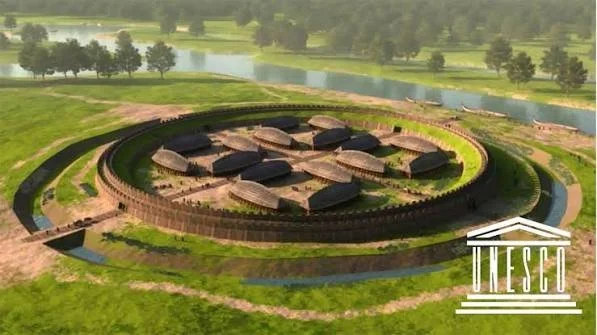
The archaeological tradition of crannogs represents one of the most intriguing forms of prehistoric settlement in Scotland. A crannog is generally understood as a human-made or substantially modified island or platform constructed within a lake or loch. Such sites could serve as dwellings, refuges, storage places, or centers of specialized activity.
A crannog associated with the Loch of Stenness landscape contributes to the broader archaeological understanding of how communities in Orkney interacted with wetlands and inland waters. Although Orkney is internationally famous for its stone monuments and coastal settlements, inland water environments also formed part of the prehistoric landscape.
What Is a Crannog?
Crannogs are particularly common in Scotland and Ireland.
They vary considerably in construction. Some were built by creating artificial islands from timber, stone, brushwood, and other materials. Others incorporated existing small islands and reinforced them with structural additions.
Their locations in water could provide several advantages.
An island settlement was naturally separated from the surrounding land, potentially offering protection and controlled access.
Construction Techniques
Building a crannog required an intimate understanding of wetland environments.
Timber posts could be driven into lake sediments, while stones and organic materials were used to create stable platforms.
In some examples, layers of brushwood, peat, timber, and stone were carefully arranged.
Such construction demonstrates sophisticated engineering knowledge.
Prehistoric builders had to understand water levels, sediment stability, structural weight, and material decay.
Why Build on Water?
The reasons for constructing a crannog probably varied.
Security was one possibility.
A settlement surrounded by water was more difficult to approach than an ordinary house. This could be valuable during periods of social conflict.
Privacy and social status may also have mattered.
An island dwelling could have restricted access and created a visually impressive residence.
Crannogs might additionally have been used for storage, craft production, or ceremonial purposes.
Life on a Crannog
Daily life would still have depended upon ordinary economic activities.
Residents needed food, fuel, water, tools, clothing, and building materials.
Agriculture could take place on surrounding land, while fishing and aquatic resources were immediately accessible.
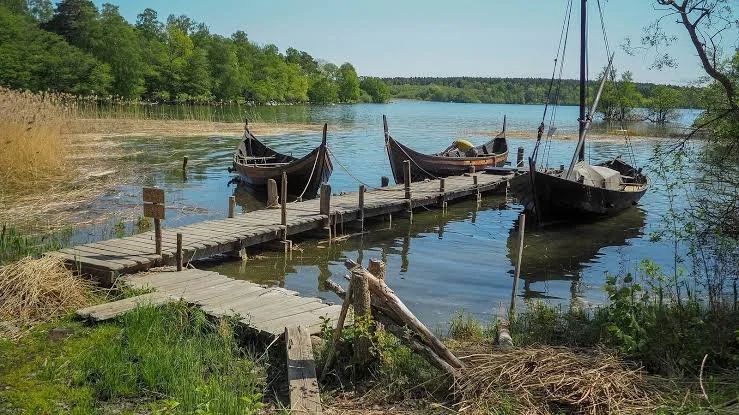
Boats would have been particularly important because they connected the settlement with the shore.
Archaeological Preservation
Wet environments can preserve materials that normally disappear.
Waterlogged wood may survive for centuries or millennia because oxygen is limited. Organic objects such as wooden tools, structural timbers, and plant remains can therefore provide exceptional information.
This makes wetland archaeology particularly valuable.
A timber preserved in waterlogged sediment can reveal construction techniques, tree species, and sometimes even the season in which a tree was felled.
The Loch of Stenness Landscape
The Loch of Stenness is located within one of Orkney's most archaeologically significant regions.
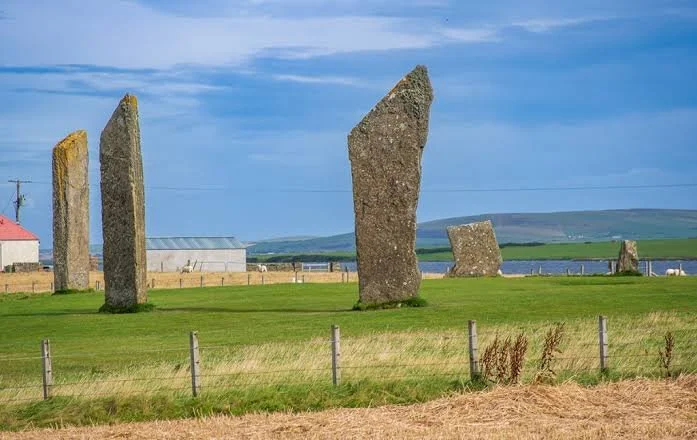
The surrounding landscape contains famous Neolithic monuments, including the Stones of Stenness and the broader Heart of Neolithic Orkney World Heritage landscape.
This creates an important archaeological context.
The presence of settlement activity in or around the loch demonstrates that people used the same landscape for multiple purposes over thousands of years.
Relationship with the Wider Landscape
A water-based settlement should never be considered in isolation.
The inhabitants would have interacted with nearby agricultural areas, settlements, monuments, and transportation routes.
The loch itself could function as a resource and a route.
Its ecological environment may have provided fish, birds, plants, reeds, and other materials.
Climate and Environmental Change
Water levels and vegetation can change dramatically over long periods.
Archaeologists therefore use environmental evidence to reconstruct prehistoric landscapes.
Pollen analysis can reveal vegetation history, while sediment cores can record changes in climate, erosion, agriculture, and human activity.
These techniques allow researchers to understand how the environment surrounding a crannog evolved.
Broader Significance
Crannogs challenge the assumption that prehistoric settlements were necessarily located on dry land.
They demonstrate that communities deliberately occupied environments that modern observers might consider difficult.
This required specialized knowledge and technology.
Water was not simply an obstacle; it could become part of the architecture itself.
Conclusion
The Loch of Stenness crannog tradition demonstrates the ingenuity of prehistoric communities in adapting settlement architecture to aquatic environments.
Its importance lies in the combination of engineering, environmental knowledge, economic activity, and social organization required to establish a stable settlement on or beside water.
When considered alongside the extraordinary Neolithic monuments surrounding the Loch of Stenness, the site contributes to a broader picture of Orkney as a landscape repeatedly transformed by communities with sophisticated knowledge of their environment.