• MAIN PAGE
  • LATEST NEWS
    • Lost Cities
    • Archaeology's Greatest Finds
    • Underwater Discoveries
    • Greatest Inventions
    • Studies
    • Blog
  • PHILOSOPHY
  • HISTORY
  • RELIGIONS
    • Africa
    • Anatolia
    • Arabian Peninsula
    • Balkan Region
    • China - East Asia
    • Europe
    • Eurasian Steppe
    • Levant
    • Mesopotamia
    • Oceania - SE Asia
    • Pre-Columbian Civilizations of America
    • Iranian Plateau - Central Asia
    • Indus Valley - South Asia
    • Japan
    • The Archaeologist Editor Group
    • Scientific Studies
    • Aegean Prehistory
    • Historical Period
    • Byzantine Middle Ages
    • Predynastic Period
    • Dynastic Period
    • Greco-Roman Egypt
  • Rome
  • PALEONTOLOGY
  • About us
Menu

The Archaeologist

  • MAIN PAGE
  • LATEST NEWS
  • DISCOVERIES
    • Lost Cities
    • Archaeology's Greatest Finds
    • Underwater Discoveries
    • Greatest Inventions
    • Studies
    • Blog
  • PHILOSOPHY
  • HISTORY
  • RELIGIONS
  • World Civilizations
    • Africa
    • Anatolia
    • Arabian Peninsula
    • Balkan Region
    • China - East Asia
    • Europe
    • Eurasian Steppe
    • Levant
    • Mesopotamia
    • Oceania - SE Asia
    • Pre-Columbian Civilizations of America
    • Iranian Plateau - Central Asia
    • Indus Valley - South Asia
    • Japan
    • The Archaeologist Editor Group
    • Scientific Studies
  • GREECE
    • Aegean Prehistory
    • Historical Period
    • Byzantine Middle Ages
  • Egypt
    • Predynastic Period
    • Dynastic Period
    • Greco-Roman Egypt
  • Rome
  • PALEONTOLOGY
  • About us
No results found

Lost Technology of the Giza Pyramid Builders: The Proto-Pulley

April 9, 2024

The Great Pyramid of Giza stands as an enduring marvel of ancient engineering, captivating generations with its enigmatic construction. Despite myriad hypotheses attempting to unravel its mysteries, the method by which the colossal stone blocks were transported and assembled continues to baffle scholars and laypeople alike.

Among the speculative accounts, the Greek historian Herodotus proposed a theory involving wooden machines to hoist the blocks into position, while Jean Pierre Houdan, a seasoned architect with decades of research on the subject, offers alternative conjectures. However, the dearth of contemporary documentation complicates the validation of any single explanation.

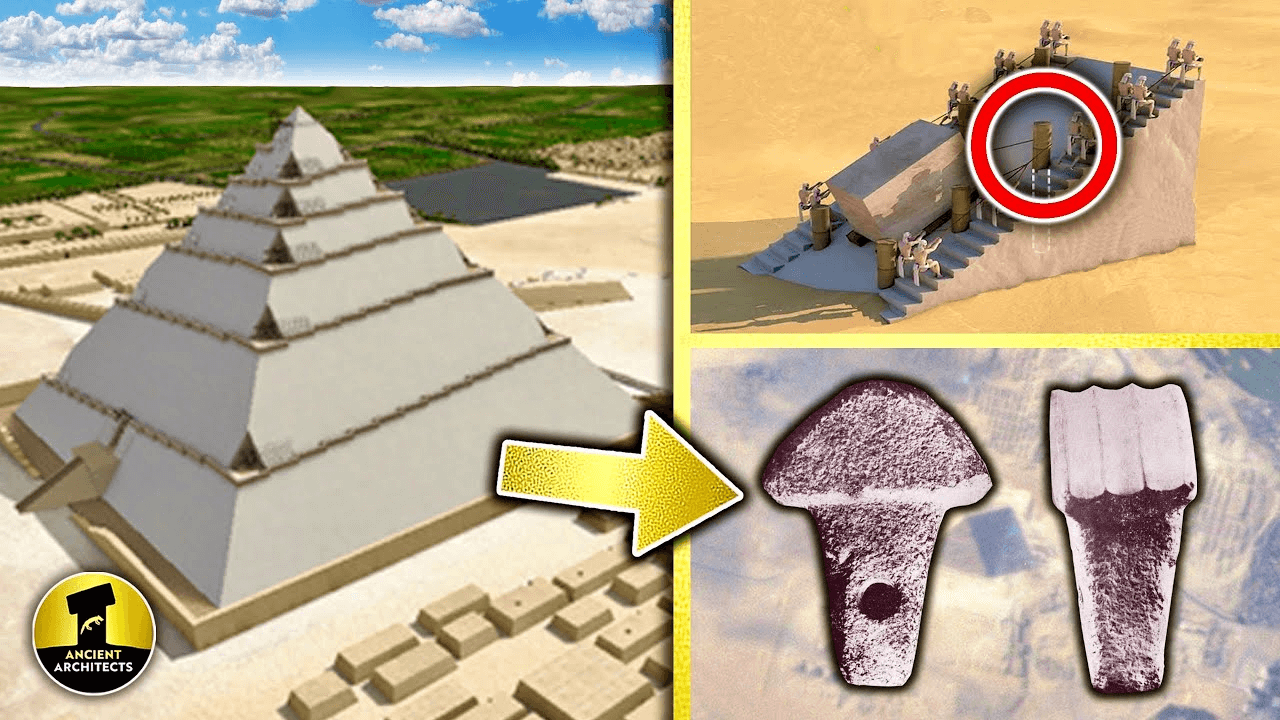
Recent archaeological findings provide intriguing insights. Excavations reveal extensive limestone quarries, suggesting significant technological intervention was necessary. In the 1930s, Egyptologist Sim Hassan unearthed basalt artifacts featuring intricate pulley-like structures, hinting at the Egyptians' adeptness with mechanical aids for lifting and maneuvering heavy loads.

This revelation underscores the sophistication of ancient Egyptian craftsmanship, showcasing their mastery of technical instruments and ingenuity in overcoming logistical challenges. The utilization of pulleys and other contraptions undoubtedly facilitated the transportation and placement of immense stone blocks across the Giza plateau.

For a comprehensive exploration of this fascinating topic, watch the informative video linked below.
← The Filipino Tribe That Lives Inside a VolcanoShipwreck Mystery Teased by Divers' Helmet Discovery →
Featured
image_2026-07-21_215409368.png
July 23, 2026
Caral-Supe Textiles: Peru's 5,000-Year Cotton Weaves
July 23, 2026
Read more →
July 23, 2026
image_2026-07-21_215324765.png
July 23, 2026
Sechín Alto: Peru's 5,500-Year Ritual Complex
July 23, 2026
Read more →
July 23, 2026
image_2026-07-21_215236513.png
July 23, 2026
Sangay Park: Ecuador's Upano Valley Roads
July 23, 2026
Read more →
July 23, 2026
image_2026-07-21_215133477.png
July 23, 2026
Chiribiquete: Colombia's Painted Cave Labyrinth
July 23, 2026
Read more →
July 23, 2026
image_2026-07-21_215024903.png
July 23, 2026
2026 LiDAR: Amazon's 10,000 Geoglyphs Revealed
July 23, 2026
Read more →
July 23, 2026
image_2026-07-21_214821187.png
July 23, 2026
Go Thap: Vietnam's Funan-Era Hindu Shrines
July 23, 2026
Read more →
July 23, 2026
read more

Powered by The archaeologist