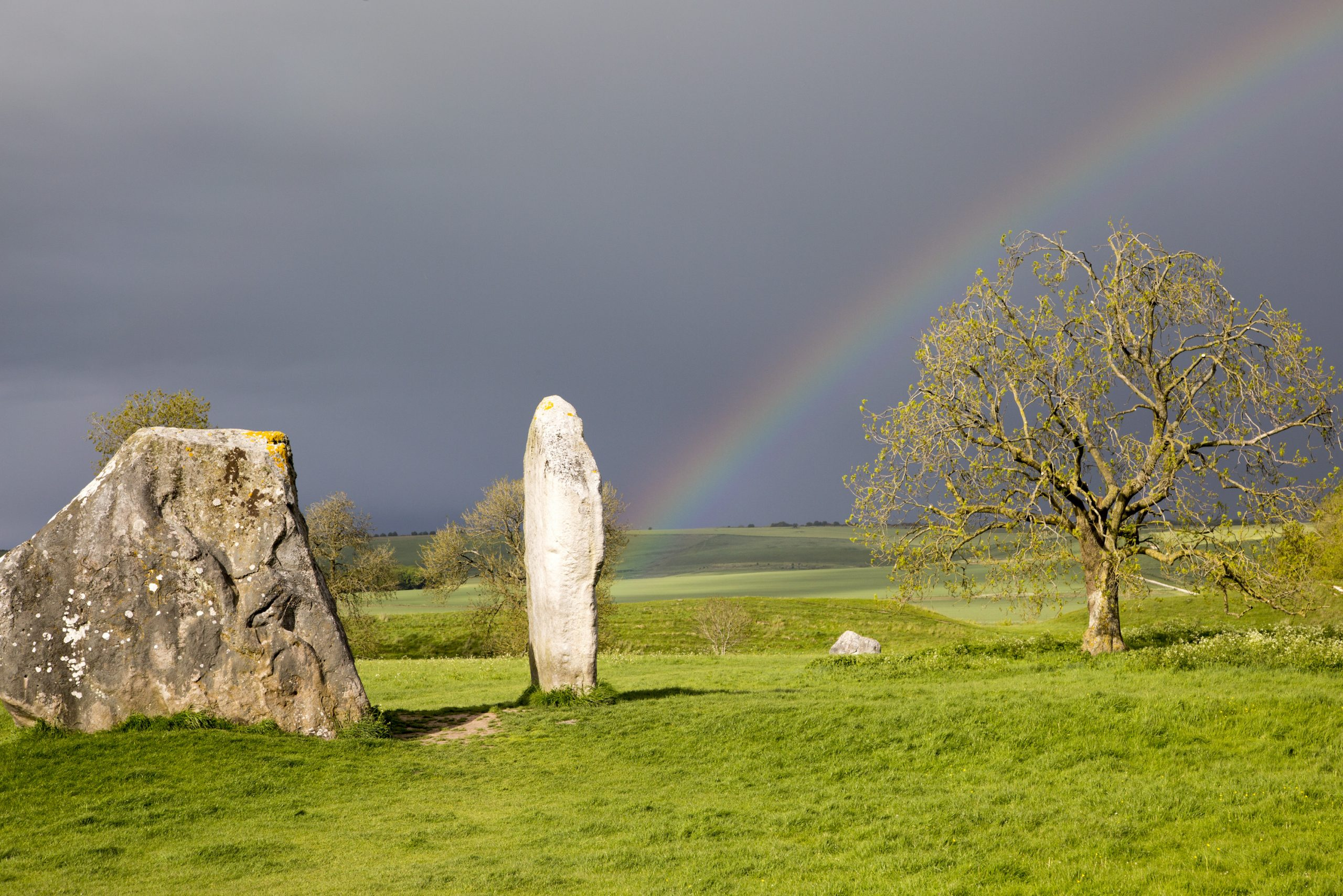
The study of Archaeoacoustics has transformed how we view sites like Stonehenge and Avebury. For decades, archaeologists focused on the visual and astronomical alignments of these monuments, but recent research suggests that the sonic environment was just as critical to the Neolithic experience.
These stone circles weren't just celestial observatories; they were sophisticated acoustic chambers designed to manipulate sound in ways that would have felt supernatural to the ancient ear.
1. The "Acoustic Shadow" and Exclusion
One of the most striking properties of a complete stone circle, like Stonehenge, is its ability to act as a sound barrier.
Isolating the Ritual: Researchers using acoustic scale models have found that the massive sarsen stones acted as an acoustic "wall." Sound produced inside the circle was reflected inward, while sounds from the outside world were dampened.
The Threshold: This created a profound sense of "otherness." Moving from the outside into the center would have resulted in a sudden increase in sound clarity and volume, psychologically separating the participants from the surrounding landscape.
2. Echoes and Reverberation: The "Cave" Effect
Unlike an open field where sound dissipates quickly, the flat, hard surfaces of Neolithic stones created a high-reverberation environment.
Sustaining the Voice: In a finished stone circle, a single drumbeat or chant would linger far longer than natural. At Stonehenge, the reverberation time is estimated to have been roughly 0.8 seconds. This gave the space a "cavernous" quality, making a small group of people sound like a much larger, more powerful assembly.
The "Blurring" of Speech: This reverberation would make spoken words difficult to understand but would make rhythmic chanting or musical tones feel immersive and "all-encompassing."
3. Helmholtz Resonance and Altered States
Some researchers, such as those at the Pearce’s Farm or Wayland’s Smithy sites, have explored the frequency of the spaces themselves.
Infrasound: Some Neolithic chambers and stone arrangements resonate at frequencies between 95 Hz and 120 Hz. This specific range is significant because it is close to the human male baritone voice.
Brainwave Entrainment: Standing in a space where these frequencies are amplified can lead to a phenomenon where the brain begins to mirror the frequency. Studies have suggested that 110 Hz can shift brain activity toward the prefrontal cortex, potentially inducing meditative or trance-like states in ritual participants.
4. Standing Waves and "Dead Zones"
The circular arrangement of stones creates a complex pattern of standing waves.
Sonic Hotspots: As sound waves reflect off the curved perimeter, they interfere with one another. This creates "hotspots" where the sound is incredibly loud and "dead zones" where the sound almost entirely disappears just a few steps away.
Invisible Architecture: To a Neolithic person unaware of physics, this would have seemed like "invisible walls" of sound. Moving through the circle during a ceremony would have resulted in a disorienting, shifting landscape of audio intensity.
5. Lithophones: The Stones That Sing
In some cases, the stones themselves were chosen specifically for their musical properties.
The Preseli Bluestones: The smaller "bluestones" at Stonehenge were transported over 140 miles from Wales. Many of these stones are phonolitic, meaning they "ring" like a bell or a metal plate when struck.
Percussive Monuments: Thousands of "hammer marks" found on certain stones suggest they were used as lithophones (stone instruments). The monument wasn't just a place to hear music; the monument was the instrument.
6. Psychoacoustics: The Voice of the Ancestors
The most eerie property found in many megalithic sites is the human voice mimicry. In some passage graves and circles, certain noises can trigger an acoustic phenomenon that sounds like whispering or "mumbling" coming from the stones themselves. For a culture focused on ancestor worship, these "voices" in the stones likely provided the "proof" that the spirits were present and responding to the ritual.
The transition from a natural forest to a stone circle was a transition from a world of chaotic, dissipating noise to a world of controlled, amplified, and supernatural sound.