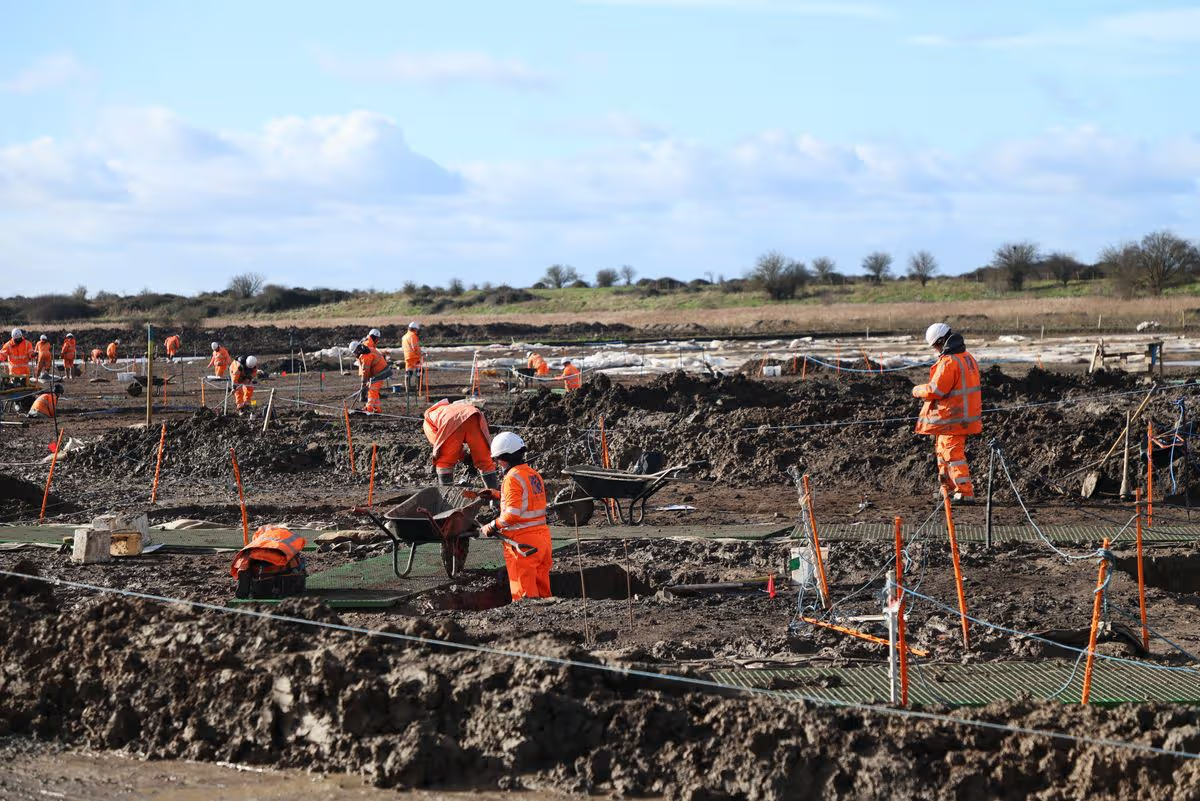
Early preparatory work has begun in parts of Kent and Essex for the major infrastructure scheme known as the Lower Thames Crossing, according to National Highways. The large-scale project will eventually include a new road and tunnel beneath the River Thames, creating a new connection between the two counties and easing congestion at the nearby Dartford Crossing.
Before full construction begins in 2028, extensive preparation is taking place to protect utilities, wildlife habitats, and archaeological remains along the route. The project also includes plans to create around 1,000 hectares of new natural habitat so ecosystems have time to establish before major building work starts.
Archaeological Investigations Underway
Near Coalhouse Fort, roughly 50 archaeologists are currently conducting excavations to investigate and preserve the historical heritage of the area. These excavations aim to document any significant archaeological remains before construction begins.
At the same time, engineers are carrying out ground investigations to better understand the local soil, rock, and groundwater conditions. These studies will help inform the detailed design of foundations and structures required for the new crossing.
Environmental Work and New Habitats
Environmental projects will begin this spring near Coalhouse Point, where an area of scrubland larger than 30 football fields will be transformed into a wetland habitat. Excavators will create shallow pools, ditches, and tidal “scrapes” designed to support migratory birds, wading birds, and species such as water voles and newts.
Similar habitat creation work is underway in Kent, east of Thong, where ponds, hedgerows, and woodland areas are being established.
Preparing for the Tunnel Construction
Later this year, archaeologists will begin further investigations near the planned southern tunnel entrance east of Gravesend. At the same time, utility lines—including gas, water, electricity, and telecommunications—will be diverted to protect essential services across London and the southeast of England.
Construction compounds are also being set up near East Tilbury in the borough of Thurrock, as well as near Thong. These compounds will house equipment, materials, and facilities for workers. Temporary “haul roads” are being built to allow construction vehicles to move materials without using local public roads.
A Low-Carbon Construction Approach
The project aims to minimize environmental impact by using low-carbon technology during construction. Equipment already in use at the compounds includes hydrogen-powered generators, electric drilling rigs, and electric excavators. The project has also purchased the largest volume of low-carbon hydrogen ever used for a construction scheme in the UK.
Jobs and Skills for Local Communities
The Lower Thames Crossing is expected to open in the early to mid-2030s and aims to improve transport connections between ports in southeast England and regions such as the Midlands and northern England.
To support the workforce required for the project, training facilities known as Skills Hubs are being established in Gravesham and Thurrock. These centres will offer free training programs designed to help local residents develop construction skills and access employment opportunities linked to the project.
Alongside improving transport capacity, the scheme aims to deliver economic growth while balancing environmental protection and archaeological preservation along the route.