Introduction
The history of farming in Lesotho is part of a much wider story about how communities across Southern Africa adapted to changing environments, developed new food-production strategies, and organized increasingly complex relationships with land and livestock. The title Machong: Lesotho's Early Farming Site invites an exploration of these transformations and the archaeological evidence that can help explain them.
It is important, however, to distinguish between the general history of early farming in the region and claims about a specific archaeological site. To establish Machong's precise role in the development of agriculture, researchers would need reliable excavation records, dated material, and evidence of farming-related activities. The broader context nevertheless shows why early farming sites are so valuable for understanding Lesotho's settlement history.
From Foraging to Food Production
For thousands of years, human communities in Southern Africa relied on diverse combinations of hunting, gathering, fishing, and other ways of obtaining food. These strategies required detailed knowledge of seasonal resources, animal behavior, edible plants, water sources, and changing weather conditions.
The introduction and development of farming did not mean that all earlier subsistence practices immediately disappeared. Communities often combined cultivation and livestock keeping with hunting and gathering. Different activities could provide food at different times of the year and reduce the risks associated with drought, crop failure, or fluctuations in animal populations.
Food production therefore developed through gradual and varied processes rather than a single universal transition. Communities adapted agricultural practices to local conditions, and the resulting systems differed according to rainfall, soil, elevation, available crops, and access to grazing.
In Lesotho, the highland environment presented particular challenges. Shorter growing seasons in some areas, cold winters, steep slopes, and uneven access to arable land influenced where cultivation was practical and how households managed their resources.
Farming in the Lesotho Landscape
Agriculture depends on more than the presence of seeds and suitable soil. Farmers must understand rainfall patterns, soil fertility, seasonal temperature, water availability, and the risks posed by pests and extreme weather.
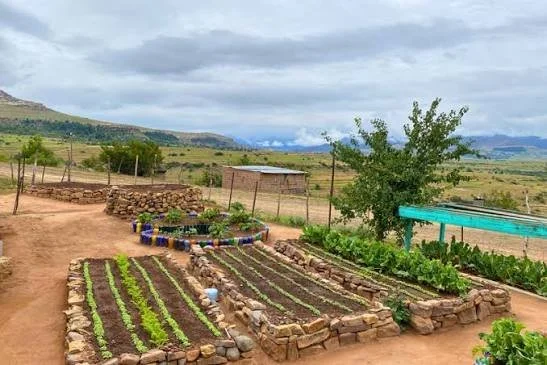
In mountainous landscapes, cultivated fields may be concentrated in valleys and gentler slopes, while steeper terrain is more useful for grazing or other activities. The relationship between fields, water, houses, and livestock enclosures can reveal how a community organized its daily work.
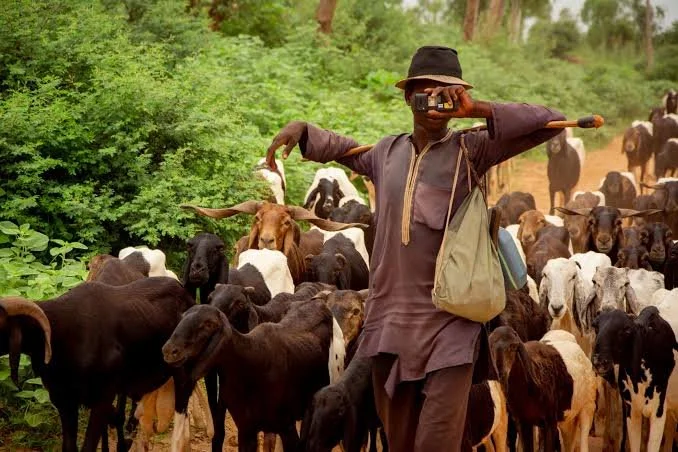
Livestock keeping could complement cultivation by providing milk, meat, hides, manure, and social or economic resources. Animals also required access to grazing and water, making seasonal movement an important part of land management.
These systems involved decisions about labor. Preparing fields, planting, weeding, harvesting, processing grain, caring for animals, and maintaining buildings all required time and cooperation. Household members may have specialized in different tasks according to age, experience, seasonal demands, and social expectations.
An archaeological site associated with early farming could preserve evidence of several of these activities, although not every activity would necessarily leave identifiable remains.
What Archaeologists Look For
Researchers investigating an early farming settlement may search for charred seeds, grain impressions in pottery, grinding stones, animal bones, storage features, domestic structures, and tools associated with food processing.
Charred plant remains are especially valuable because they can survive when ordinary plant material decays. They may reveal which crops were present, although the small quantities preserved at a site do not necessarily represent the full range of plants cultivated by its inhabitants.
Grinding stones can indicate food processing, but their interpretation requires care because they may have been used for several purposes. Similarly, animal bones can provide information about diet and animal management, but identifying domesticated species and reconstructing herd composition requires specialist analysis.
The position of these materials matters. Seeds recovered from a storage feature may have a different significance from seeds scattered in a hearth or deposited by later natural processes.
Scientific dating can help establish when particular activities occurred. Researchers must also consider whether different layers represent separate periods of occupation rather than a single continuous settlement.
Settlement and Social Organization
Farming can influence the relationship between people and place. Cultivated fields require repeated attention, and investments in soil preparation, storage, and buildings can encourage people to return to the same locations over successive seasons.
Yet farming does not automatically create permanent villages. Some communities may have maintained seasonal mobility, moving people or animals between different areas while cultivating selected fields.
The form of a settlement can help researchers examine these possibilities. Closely grouped houses, storage areas, and enclosures may indicate a different pattern of organization from scattered dwellings connected by paths and shared agricultural spaces.
Researchers should avoid assuming that every settlement had a uniform social structure. Household size, access to land, ownership of animals, and relationships with neighboring communities could vary considerably.
Climate, Risk, and Adaptation
Farming in mountainous regions requires flexibility. Rainfall can vary between seasons, while cold conditions and frost can damage crops. A household dependent on a single crop or a narrow range of resources may be especially vulnerable when conditions deteriorate.
Diversification can reduce these risks. Combining cultivation with livestock keeping, collecting wild foods, storing grain, and exchanging goods with neighboring communities may improve resilience.
Archaeological evidence can help researchers investigate whether food production became more important over time or whether households continued to rely on mixed subsistence strategies. Changes in animal remains, plant remains, storage features, and settlement locations can reveal shifts in how people responded to environmental pressures.
Why Machong Matters
If Machong is investigated as an early farming site, its significance would depend on the quality of its archaeological evidence and how that evidence compares with other settlements in Lesotho. A well-documented site could help clarify when particular farming practices were introduced, how households combined cultivation with livestock keeping, and how communities adapted agricultural techniques to local terrain.
Such research would also contribute to a more nuanced understanding of regional history. The development of farming was not simply a replacement of one lifestyle by another. It involved the combination of new practices with established environmental knowledge and social traditions.
Conclusion
Machong provides a useful starting point for exploring the history of early farming in Lesotho. By studying plant remains, animal bones, tools, pottery, settlement layouts, and environmental evidence, archaeologists can reconstruct how people obtained food and managed the risks of life in a demanding landscape.
The strongest interpretation of Machong will depend on verified site-specific findings. Within the broader history of Lesotho, however, early farming remains an important subject because it reveals how communities developed practical strategies for sustaining households, managing resources, and adapting to environmental change.