Introduction
Oakhurst Rockshelter, near George in South Africa’s Western Cape, is an important archaeological site for understanding the Later Stone Age. Its deposits preserve evidence of hunter-gatherer occupation, changing stone-tool technologies, animal use, and human burial practices over an extended period.
The site is particularly valuable for studying the Oakhurst and Wilton technological traditions. These names refer to archaeological assemblages distinguished by patterns in the tools people made and used. They are not necessarily the names that the original communities used for themselves, nor should they be treated as fixed cultural identities that remained unchanged for centuries.
Research at Oakhurst has also contributed to understanding population history in southern Africa. Archaeological evidence and more recent genetic studies provide complementary perspectives on continuity, change, and the relationships among communities living in the southern Cape.
The Archaeological Setting
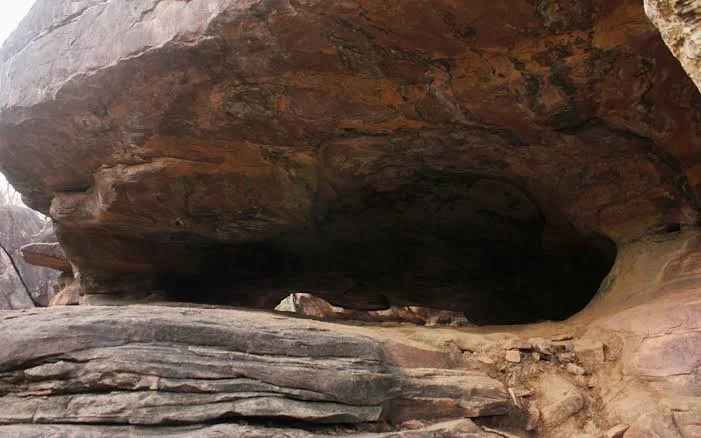
Oakhurst is a rock shelter that offered protection and a convenient place to conduct daily activities. Like many shelters in southern Africa, it accumulated layers of sediment containing stone artefacts, animal remains, and other evidence of human occupation.
These deposits developed over repeated visits rather than necessarily representing one continuous settlement. People may have occupied the shelter seasonally, returned after intervals, or used it alongside other locations in the surrounding landscape.
The sequence is valuable because changes in the archaeological material can be studied across time. Researchers compare the shapes and manufacturing techniques of stone tools, the remains of animals consumed or processed, and the spatial relationships among artefacts.
The site also contains human burials. These complicate the archaeological record because grave shafts can cut through earlier deposits, moving material between layers. Excavation records and modern dating techniques are therefore important for determining which objects belong to which period.
Understanding the Oakhurst Complex
The Oakhurst Complex is a Later Stone Age technological tradition generally associated with southern Africa during the late Pleistocene and early Holocene. It is often characterised by relatively large stone scrapers and other tools used in activities such as processing animal hides, working plant materials, and preparing resources.
The precise function of an artefact cannot always be inferred from its shape. Archaeologists examine wear patterns, microscopic traces, experimental replicas, and the contexts in which tools were found to determine how they might have been used.
At Oakhurst, the technological sequence helps researchers investigate how communities selected raw materials and adapted their tools to different activities. The availability of suitable stone could influence the form and size of artefacts, while changes in mobility and resource use could influence the tools people carried.
The term “Oakhurst” also reflects the history of archaeological classification. It is a convenient way to compare assemblages, but it should not be understood as evidence that all people who made these tools belonged to one uniform society.
The Development of Wilton Technology
The Wilton tradition is associated with microlithic technology, in which people produced small stone tools, often made from carefully shaped blades or bladelets. Some were backed or modified so that they could be hafted into composite tools.
Microlithic technology allowed a small stone component to be combined with a wooden shaft, handle, or other material. Such tools could be repaired by replacing a damaged component rather than discarding the entire implement.
At Oakhurst, research has documented a shift from Oakhurst assemblages to microlithic Wilton assemblages in the archaeological sequence. A study of the site reports that the Oakhurst technological tradition occurs through approximately the lower half of the deposits and dates to around 9,000–8,000 years ago, followed by a transition toward Wilton assemblages at about 8,000 years ago. These are broad archaeological estimates, not exact dates for a single moment of cultural change. <Cite refs={["turn487166search5"]} />
The transition is important because it demonstrates changes in technological practice over time. However, it does not necessarily indicate that one population suddenly replaced another. Toolmaking traditions can change through innovation, contact, shifting resource needs, or differences in how people organise their activities.
Human Burials and the Social Record
Oakhurst is also known for its human burials, which provide evidence of how people treated their dead. Burials can preserve information about age, health, diet, physical activity, and sometimes the objects placed with an individual.
The interpretation of grave goods requires caution. Objects found with a burial may have been deliberately deposited, but researchers must establish that they belong to the grave and were not introduced through later disturbance.
A 2026 research report revisited the identity and burial context of an individual from Grave VIa at Oakhurst. The study reported that the individual, previously identified as male in earlier discussions, was biologically female according to more recent genetic evidence. The case demonstrates how new analytical techniques can revise interpretations made during earlier excavations. <Cite refs={["turn487166search0"]} />
The finding also highlights the need to distinguish biological sex from social roles. The objects buried with an individual cannot, on their own, establish the person’s gender identity or the precise social significance of the objects. Archaeologists must avoid imposing modern assumptions on people who lived thousands of years ago.
Diet, Mobility, and the Environment
The remains of animals and other food resources help reconstruct the activities of people who used Oakhurst. Animal bones can reveal which species were hunted or processed, while shellfish remains at coastal sites can provide evidence of marine resource use.
Stone-tool assemblages also contribute to the study of mobility. The types of raw materials used at a site can indicate whether people relied primarily on nearby sources or transported stone over longer distances. These patterns can be compared with evidence from other settlements to explore connections across the landscape.
The environment was not static during the period represented at Oakhurst. Changes in rainfall, vegetation, coastline, and animal distribution could have influenced when and how people used particular locations.
Nevertheless, archaeologists should not assume that environmental change alone determined cultural change. Communities made decisions within social and economic contexts that are only partly visible in the archaeological record.
Modern Research and the Importance of Chronology
Older excavations produced essential collections, but modern research has improved the ways archaeologists record context, date deposits, and study individual objects. Radiocarbon dating, genetic analysis, microscopic tool studies, and digital documentation can provide new information from existing material.
A particularly important development is the recognition that cultural transitions do not necessarily occur simultaneously throughout southern Africa. Differences among sites may reflect local adaptations, distinct histories, and uneven preservation.
Oakhurst therefore needs to be understood in relation to other archaeological localities rather than treated as a universal template for the Later Stone Age.
Conclusion
Oakhurst Rockshelter is a major source of evidence for the technological and social history of the Later Stone Age in southern Africa. Its archaeological sequence documents the Oakhurst and Wilton traditions, while its burials provide opportunities to investigate identity, mortuary practices, and the interpretation of human remains.
The shift toward microlithic technology around 8,000 years ago illustrates how toolmaking practices changed over time. More recent genetic research also demonstrates that established interpretations of ancient burials can be revised as new evidence becomes available.
Oakhurst’s significance lies in the depth of its archaeological record and the questions it raises about cultural continuity, technological change, and the lives of the people who repeatedly used this shelter.