Introduction
Small stone tools can preserve evidence of human activity in places where substantial buildings and large artifact assemblages are absent. Microliths—small stone implements often associated with hunting equipment and composite tools—are especially useful for investigating temporary camps, repeated visits, and seasonal movement.
Remote highlands provide a particularly interesting setting for this research. Mountain environments often contain specialized resources, seasonal grazing areas, hunting grounds, sheltered valleys, and routes connecting different ecological zones. Communities may have visited these places only during certain periods of the year, leaving scattered tools rather than permanent settlements.
A scatter of small stone artifacts, however, does not automatically identify a seasonal camp. Tools can be moved by natural processes, and similar artifacts may result from hunting, tool production, or other activities. Archaeologists must reconstruct the site's formation and examine how the artifacts relate to the surrounding landscape.
What Are Microliths?
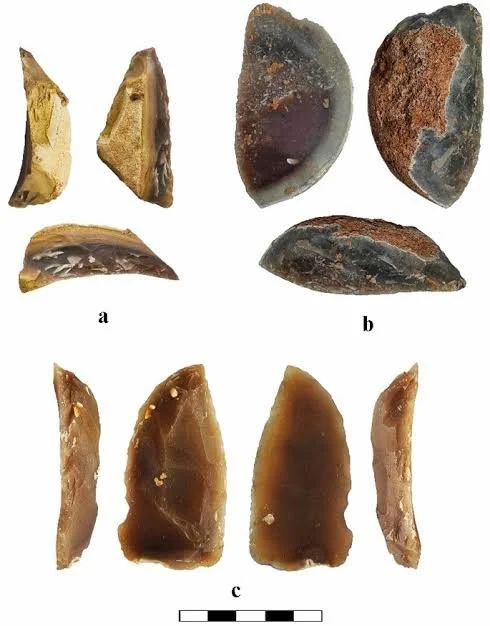
Microliths are small stone tools or tool components. Many were produced by carefully shaping stone flakes or blades into standardized forms.
In some archaeological traditions, microliths were inserted into wooden or bone shafts to create composite implements, including hunting weapons. Other small stone artifacts served different purposes, and their functions varied by period and region.
The use of small tools could provide practical advantages. Composite tools allowed people to replace damaged components without discarding an entire implement. Small stone pieces could also be produced from limited raw materials.
However, size alone does not establish function. Archaeologists examine manufacturing techniques, edge wear, breakage, and associated artifacts to investigate how a particular assemblage was used.
Why Remote Highlands Attract Seasonal Activity
Highlands can offer resources that vary throughout the year. Mountain slopes may support wild animals, seasonal plants, water sources, and grazing opportunities.
In some environments, people may have moved uphill during warmer months and returned to lower elevations during winter. Other groups may have visited mountain areas for specialized hunting, collecting raw materials, or maintaining contact with neighboring communities.
The timing and purpose of movement depended on climate, vegetation, animal behavior, and social organization.
A highland site may therefore represent a short visit, a recurring seasonal camp, or a longer period of occupation. These possibilities must be evaluated through archaeological evidence rather than assumed from elevation alone.
Recognizing Artifact Scatters
An artifact scatter is a distribution of objects across a particular area. It may include stone flakes, finished tools, broken implements, and pieces of raw material.
The distribution can reveal where people worked and moved. A dense concentration of manufacturing debris may indicate tool production, while a more limited group of finished tools could reflect use, repair, or loss.
Yet the archaeological distribution may differ from the original pattern. Wind, water, erosion, animal burrowing, and later human activity can move artifacts.
Researchers therefore record the location, condition, density, and geological context of each find.
Tool Production and Raw Materials
Microliths were made from stone selected for its ability to fracture in controlled ways. Depending on the region, suitable materials might include flint, chert, obsidian, or other fine-grained rocks.
The presence of raw material, unfinished pieces, and manufacturing debris can indicate that tools were produced or repaired at the site.
If the raw material originated far away, the evidence may also reveal movement and exchange.
However, a finished tool made from distant stone does not prove that its owner traveled to the source. The material could have been obtained through trade or passed between communities.
Geological sourcing and technological analysis can help distinguish these possibilities.
Seasonal Camps and Repeated Visits
A seasonal camp may be used repeatedly without accumulating thick occupation deposits. Visitors might carry away their tools, clean the area, or use perishable equipment that leaves little archaeological evidence.
Repeated visits can create overlapping artifact scatters, making it difficult to distinguish one occupation from another.
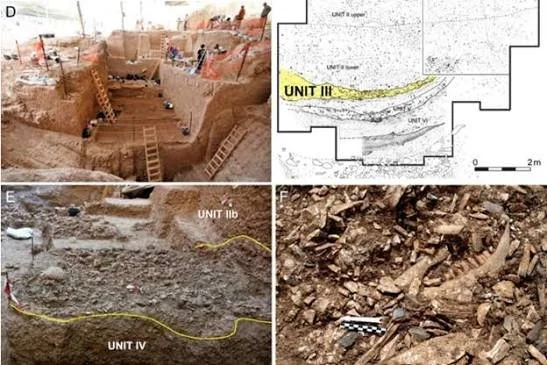
Archaeologists can investigate this problem through spatial clustering, artifact refitting, soil stratigraphy, and dating where suitable materials are available.
Refitting involves matching broken pieces from the same original object. It can reveal whether artifacts were produced in place or moved after deposition.
Even with these methods, some highland sites may remain difficult to date precisely.
Hunting and Landscape Knowledge
Microliths are often relevant to studies of hunting, particularly where small stone components were used in composite weapons.
A highland scatter located near a natural passage, water source, or animal movement corridor may have been associated with hunting.
But location alone cannot prove that purpose. The same area might have been used for gathering plants, processing raw materials, traveling between valleys, or performing several activities at different times.
Animal bones, projectile evidence, use-wear analysis, and environmental reconstruction can help establish the relationship between the artifact scatter and hunting.
Reconstructing Seasonality
Seasonality can be investigated through several kinds of evidence.
Animal remains may preserve information about age at death or the season when animals were hunted. Plant remains may indicate which species were available during a particular time of year. Isotopic analysis can sometimes reveal seasonal changes in animal diet or movement.
The usefulness of each method depends on preservation and the availability of suitable reference data.
A site with microliths alone may not provide enough evidence to establish the season of occupation. Researchers may instead infer repeated highland use from the relationship between the site, its resources, and nearby settlements.
Such interpretations should be expressed with appropriate caution.
Remote Sensing and Survey
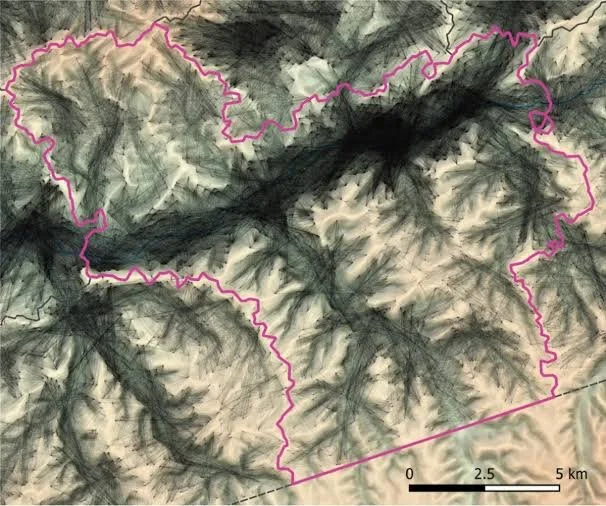
Highland terrain can make archaeological survey difficult because of steep slopes, dense vegetation, erosion, and limited access.
Aerial photography, satellite imagery, digital elevation models, and LiDAR can help identify terraces, shelters, pathways, and other landscape features.
Ground survey remains important because small stone artifacts may not appear clearly in remote-sensing data.
Researchers can use systematic sampling to compare different elevations and landforms, reducing the risk of interpreting an isolated find as representative of the entire region.
Conclusion
Microlithic scatters in remote highlands can provide valuable evidence for seasonal mobility, hunting, tool production, and repeated landscape use. Their significance becomes clearer when researchers examine artifact distributions, raw materials, manufacturing debris, environmental conditions, and connections with lower-elevation settlements.
A small concentration of stone tools does not automatically prove that a seasonal camp existed. Natural movement, tool loss, and other activities can produce similar patterns.
By combining detailed field survey with technological analysis and environmental reconstruction, archaeologists can investigate how people used mountain landscapes without constructing permanent settlements. These modest traces help reveal flexible patterns of movement and the practical knowledge required to live in challenging environments.