Introduction
The study of early human communities often depends on small and easily overlooked objects: stone flakes, fragments of bone, charcoal, pottery, and traces of ancient occupation. These materials can reveal how people obtained food, made tools, used landscapes, and adapted to changing environments.
The title Roma Valley: Lesotho's Neolithic Finds raises questions about the earliest archaeological evidence associated with the valley and the cultural changes that occurred over time. However, the term “Neolithic” must be used carefully in Southern African archaeology. It is a classification developed largely from archaeological sequences in other parts of the world and does not always correspond neatly to the timing or character of technological change in Lesotho.
A responsible interpretation of Roma Valley's early finds therefore requires verified archaeological evidence and a clear explanation of the terminology being used.
Understanding the Neolithic Concept
In many regions, the Neolithic is associated with changes such as the development of farming, animal domestication, pottery production, and more settled ways of life. These developments did not occur everywhere simultaneously, nor did they always appear together.
Southern Africa has its own complex archaeological chronology. Communities used stone tools for long periods, and different populations adopted livestock keeping, cultivation, pottery, and ironworking at different times. Some communities combined food production with hunting and gathering rather than abandoning earlier subsistence practices.
For this reason, researchers must avoid assuming that a stone tool automatically belongs to a Neolithic period or that the presence of pottery proves the existence of farming. Archaeological classifications need to reflect the evidence and history of the region being studied.
The Importance of Roma Valley's Landscape
The physical environment of Roma Valley can provide a starting point for understanding why people may have used the area. Valleys can offer access to water, relatively level ground, routes through the landscape, and nearby resources. Surrounding slopes and uplands may provide additional opportunities for gathering plants, hunting animals, or keeping livestock in later periods.
Yet the usefulness of a valley changes according to season and historical conditions. Water availability, vegetation, soil quality, and the presence of animals may vary over time. A location that is productive today may have supported different resources in the past.
Archaeologists therefore investigate not only the site itself but also the surrounding environment. Geological evidence, sediment analysis, and environmental remains can help reconstruct how landscapes changed over time.
Stone Tools and Early Technology
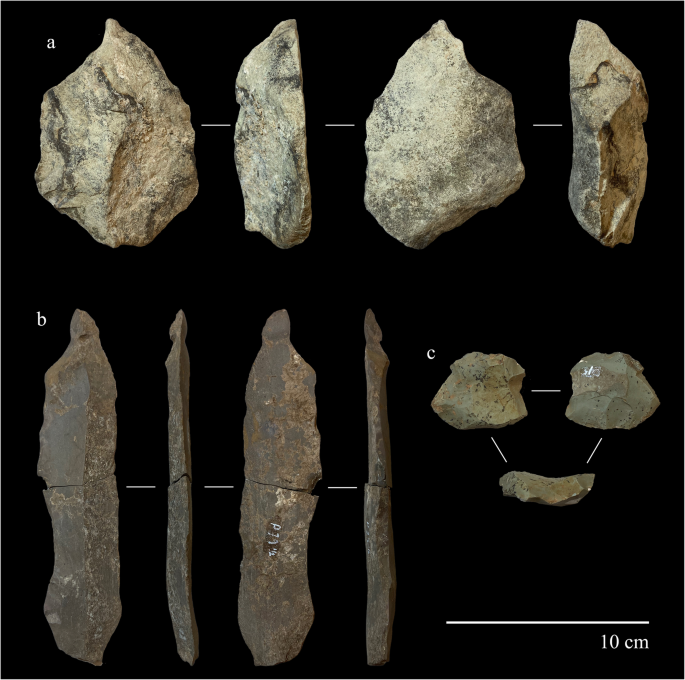
Stone artefacts are among the most common forms of evidence for early human activity. They may include flakes, cores, scrapers, and other objects produced through the deliberate shaping of stone.
Researchers examine the way flakes were removed from a core, the form of the striking platform, the presence of retouch, and the overall pattern of manufacturing. These features can help distinguish human-made tools from naturally fractured rocks.
The choice of raw material is also important. People may have selected stones that fractured predictably and produced useful cutting edges. If suitable material was not available at the site, they may have carried it from another location.
Different tools can provide evidence of different activities, but function should not be inferred from shape alone. Use-wear analysis and experimental archaeology can help determine whether a tool was used to cut plants, process animal tissue, work hides, or perform other tasks.
Food and Daily Life
The reconstruction of early diets requires several forms of evidence. Animal bones may reveal which species were present and whether they were hunted or managed. Plant remains can provide information about gathered foods or cultivated crops. Grinding stones and other implements may indicate food-processing activities.
Preservation is uneven, however. Plant remains often decay unless they are charred or preserved under unusual conditions. Bones can be fragmented by human activity, carnivores, weathering, and soil chemistry.
The absence of a particular food remains therefore does not prove that people never consumed it. Archaeologists must consider how likely different materials were to survive and whether the excavated area represents the full range of activities at the site.
A valley settlement may also have been used for several purposes. People could have gathered resources, processed food, made tools, or camped temporarily without maintaining a permanent village.
Settlement and Mobility
Early communities did not necessarily live in permanent settlements. Some groups moved between locations according to seasonal resources, while others returned repeatedly to favored places.
Repeated visits can create substantial archaeological deposits even when a location was never continuously occupied. A hearth, tool assemblage, or concentration of food remains may represent one visit or many episodes spread over a long period.
To distinguish these possibilities, archaeologists examine the arrangement of artefacts, the structure of sediment layers, and evidence of repeated burning or rebuilding. Scientific dating can help establish whether deposits formed during a short period or across many generations.
Landscape survey is also valuable. If similar artefacts occur at several locations along a valley, researchers may investigate whether the sites formed part of a wider pattern of movement and resource use.
Dating and Interpretation
The age of an archaeological find cannot always be established from its appearance. Researchers may use radiocarbon dating on suitable organic material, while other geological or scientific methods may be appropriate for older deposits.
The dated material must have a secure relationship to the artefact. Charcoal from a later hearth, for example, cannot automatically establish the age of a stone tool found nearby. Disturbance by burrowing animals, erosion, or later occupation can also mix material from different periods.
Reliable interpretation depends on documenting the find's exact position and its relationship to the surrounding deposits.
Cultural Heritage and Local Research
Archaeological sites are part of living landscapes. Local communities may know of caves, rock shelters, old paths, or places where artefacts have been discovered. Their knowledge can guide survey and help researchers understand the cultural significance of particular locations.
Any investigation should follow relevant heritage regulations and consult appropriate institutions and communities. Removing objects without recording their location can destroy evidence that cannot be recovered later.
Conclusion
Roma Valley provides a useful context for examining early archaeological evidence and the long history of human adaptation in Lesotho. The exact classification of its finds depends on verified dates, artefact analysis, and the archaeological setting in which materials were discovered.
By studying tools, food remains, sediment layers, and settlement patterns together, researchers can investigate how people used the valley and responded to changing conditions. Such work can also clarify how broad archaeological terms like “Neolithic” should be applied to Southern African histories without forcing regional evidence into categories developed elsewhere.