Introduction
Myklebostad represents another important chapter in the archaeological history of Viking Age Norway, particularly in the study of boat burials and warrior identity.
Boat graves provide a unique combination of evidence. They reveal the importance of maritime technology while simultaneously demonstrating how ships could become symbols of social status, military identity, and funerary power.
The archaeological evidence from such burials contributes to our understanding of a society in which warfare and seafaring were deeply interconnected.
The Norwegian Maritime Environment
Norway's geography made boats essential.
Long coastlines, fjords, islands, and mountain barriers encouraged communities to rely on maritime transportation.
Boats allowed people to move between settlements more efficiently than many overland routes.
This geographic reality helps explain why ships became such powerful symbols.
The Boat Grave Tradition
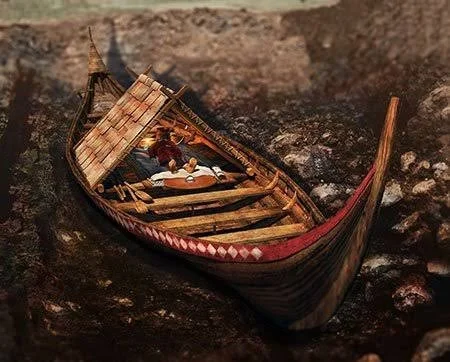
A boat grave differs from an ordinary burial because the vessel itself becomes part of the funerary monument.
The boat might be placed in a pit, surrounded by grave goods, and covered by a mound.
The scale of the vessel could communicate the wealth of the deceased.
Such a burial required resources that ordinary families might not possess.
Warrior Identity
The association of boat graves with weapons has contributed to interpretations of warrior status.
Weapons were important markers of elite identity in Viking Age Scandinavia.
However, as with other graves, archaeological interpretation must consider the symbolic function of objects.
A weapon in a grave demonstrates that the object was considered appropriate or meaningful for the deceased. It does not necessarily provide a complete biography.
Shipbuilding and Warfare
The connection between ships and warfare was practical.
A ship allowed warriors to travel quickly.
Viking vessels could approach shorelines with little warning and could operate in shallow water.
This made them particularly effective for coastal warfare and raiding.
The same technology also supported trade and peaceful transportation.
Social Investment
A large boat required enormous investment.
Timber had to be harvested.
Iron fasteners had to be produced.
Specialists had to shape the hull.
The construction process required coordination among many workers.
The presence of a substantial vessel in a burial therefore indicates significant social resources.
Burial Monuments and Memory
A boat grave could remain visible for generations.
The mound became a physical marker of ancestry.
Communities could use such monuments to remember important individuals and families.
In a society where oral traditions were important, physical monuments provided a durable anchor for collective memory.
Archaeological Interpretation
Modern archaeology attempts to reconstruct these sites using multiple lines of evidence.
Researchers examine:
surviving timber;
iron fasteners;
weapon fragments;
animal remains;
soil chemistry;
mound construction;
artifact distribution.
Each category contributes different information.
The Importance of Experimental Archaeology
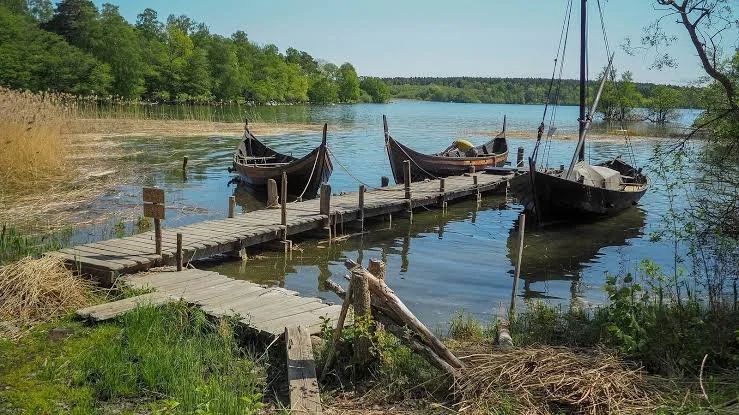
Replicas of Viking ships have demonstrated the practical capabilities of Scandinavian vessels.
Modern reconstructions can be tested in real water.
Researchers can measure speed, maneuverability, stability, and sailing performance.
These experiments help transform archaeological remains into functional technological knowledge.
Conclusion
Myklebostad belongs to the rich tradition of Viking Age boat burials that demonstrate the extraordinary importance of ships in Scandinavian society.
The boat represented more than transportation.
It embodied technological expertise, economic resources, maritime identity, and potentially military power.
When placed within a grave, the vessel became a monument to the deceased and the community capable of constructing it.
The site therefore contributes to a broader understanding of Viking society—one in which the sea was not a barrier but a central environment for travel, trade, warfare, and cultural connection.