Introduction
Skeie provides an important window into one of the least glamorous but most essential aspects of Viking society: craft production.
The popular image of the Viking Age often focuses on ships, warriors, kings, and dramatic raids. Yet none of these activities could have existed without skilled craftspeople.
Blacksmiths produced weapons, tools, fittings, agricultural equipment, nails, rivets, and countless other objects essential to everyday life.
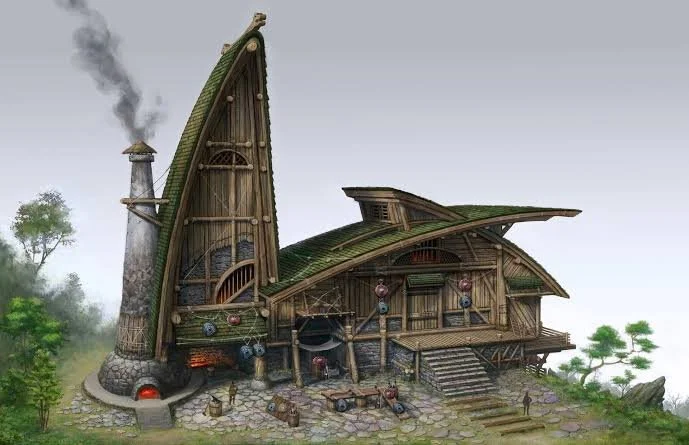
A Viking smithy therefore represents much more than a workshop. It was a technological center where raw materials were transformed into objects that supported warfare, agriculture, transportation, construction, and trade.
The Importance of Iron
Iron was one of the most important materials in Viking Age Scandinavia.
Unlike stone or wood, iron could be reshaped repeatedly through heating and hammering.
This made it ideal for producing durable tools and weapons.
However, iron production was labor-intensive.
Ore had to be extracted, processed, smelted, and refined before a blacksmith could turn it into usable metal.
The Viking Blacksmith
A skilled smith possessed specialized knowledge.
The craftsman needed to understand:
furnace temperatures;
iron behavior;
carbon content;
hammering techniques;
welding;
quenching;
sharpening;
tool maintenance.
These skills could not simply be learned from written instructions.
Much of the knowledge was practical and transmitted through apprenticeship.
The Smithy Environment
A smithy required controlled heat.
The furnace or forge had to reach temperatures high enough to make metal workable.
Bellows increased airflow and allowed the smith to regulate the fire.
Anvil surfaces provided the hard platform needed for hammering.
The workshop would also require hammers, tongs, chisels, files, and other tools.
Weapons Production
Blacksmiths produced essential military equipment.
Spearheads were relatively common.
Axes could serve both agricultural and military functions.
Knives were universal tools.
Swords were more complicated and expensive.
A high-quality sword required advanced metallurgy and considerable labor.
Shipbuilding
The smithy was also essential to maritime technology.
Ships required numerous iron components.
Rivets held planks together.
Nails and fasteners were required for structural elements.
Other fittings supported rigging and equipment.
Without blacksmiths, Scandinavian shipbuilding could not have reached the scale represented by Viking Age archaeological discoveries.
Agriculture
Iron technology was equally important to farming.
Agricultural communities needed durable tools.
Iron sickles, knives, axes, and other implements increased productivity and reduced the limitations imposed by wooden or stone tools.
This means that the smith indirectly supported food production.
The Economics of Craftsmanship
A skilled smith represented valuable human capital.
Smithing required training, tools, fuel, and access to raw materials.
Elite communities may have supported specialist craftsmen directly.
In other cases, smiths could have operated independently or moved between settlements.
The presence of a smithy therefore provides evidence for economic specialization.
Trade and Exchange
Metalworking also connected communities.
Iron ore was not equally accessible everywhere.
Finished metal objects could therefore circulate through trade and exchange.
Smiths might obtain raw materials through local production or imported supplies.
The movement of metal provides archaeologists with clues about regional economic networks.
Archaeological Evidence
Smithies often leave distinctive traces.
These can include:
slag;
charcoal;
furnace remains;
hammer scale;
metal fragments;
damaged tools;
hearth structures.
Even when the wooden building itself disappears, these industrial residues can reveal that metalworking occurred at a site.
The Social Status of Smiths
The status of smiths in Viking society is difficult to determine.
Some literary sources portray smiths as highly skilled and sometimes mysterious figures.
Archaeological evidence demonstrates their importance, but not every smith necessarily possessed the same social position.
Some may have been elite specialists.
Others may have served local communities.
Technology and Power
Metalworking was closely connected with political authority.
A leader capable of equipping warriors required access to weapons.
A community capable of producing tools had greater economic resilience.
A society capable of constructing ships depended on both woodworking and metalworking specialists.
Craft production was therefore one of the foundations of Viking power.
Conclusion
Skeie and other Viking Age smithing sites remind us that history was built by more than kings and warriors.
The blacksmith stood behind the technological systems that made Viking society possible.
From sword blades and spearheads to ship rivets and farming tools, forged iron connected warfare, agriculture, transportation, and everyday life.
The remains of a smithy may appear modest compared with a monumental ship burial, but its historical significance is enormous.
Without the controlled fire of the forge, the hammer of the smith, and generations of accumulated metallurgical knowledge, the Viking Age would have looked very different.
Skeie therefore represents the technological workshop behind the Viking world—a place where raw metal became the tools, weapons, and structures upon which medieval Scandinavian society depended.