• MAIN PAGE
  • LATEST NEWS
    • Lost Cities
    • Archaeology's Greatest Finds
    • Underwater Discoveries
    • Greatest Inventions
    • Studies
    • Blog
  • PHILOSOPHY
  • HISTORY
  • RELIGIONS
    • Africa
    • Anatolia
    • Arabian Peninsula
    • Balkan Region
    • China - East Asia
    • Europe
    • Eurasian Steppe
    • Levant
    • Mesopotamia
    • Oceania - SE Asia
    • Pre-Columbian Civilizations of America
    • Iranian Plateau - Central Asia
    • Indus Valley - South Asia
    • Japan
    • The Archaeologist Editor Group
    • Scientific Studies
    • Aegean Prehistory
    • Historical Period
    • Byzantine Middle Ages
    • Predynastic Period
    • Dynastic Period
    • Greco-Roman Egypt
  • Rome
  • PALEONTOLOGY
  • About us
Menu

The Archaeologist

  • MAIN PAGE
  • LATEST NEWS
  • DISCOVERIES
    • Lost Cities
    • Archaeology's Greatest Finds
    • Underwater Discoveries
    • Greatest Inventions
    • Studies
    • Blog
  • PHILOSOPHY
  • HISTORY
  • RELIGIONS
  • World Civilizations
    • Africa
    • Anatolia
    • Arabian Peninsula
    • Balkan Region
    • China - East Asia
    • Europe
    • Eurasian Steppe
    • Levant
    • Mesopotamia
    • Oceania - SE Asia
    • Pre-Columbian Civilizations of America
    • Iranian Plateau - Central Asia
    • Indus Valley - South Asia
    • Japan
    • The Archaeologist Editor Group
    • Scientific Studies
  • GREECE
    • Aegean Prehistory
    • Historical Period
    • Byzantine Middle Ages
  • Egypt
    • Predynastic Period
    • Dynastic Period
    • Greco-Roman Egypt
  • Rome
  • PALEONTOLOGY
  • About us

One of Europe’s Most Mysterious Languages May Share Ancient Roots with Iberian

January 20, 2026

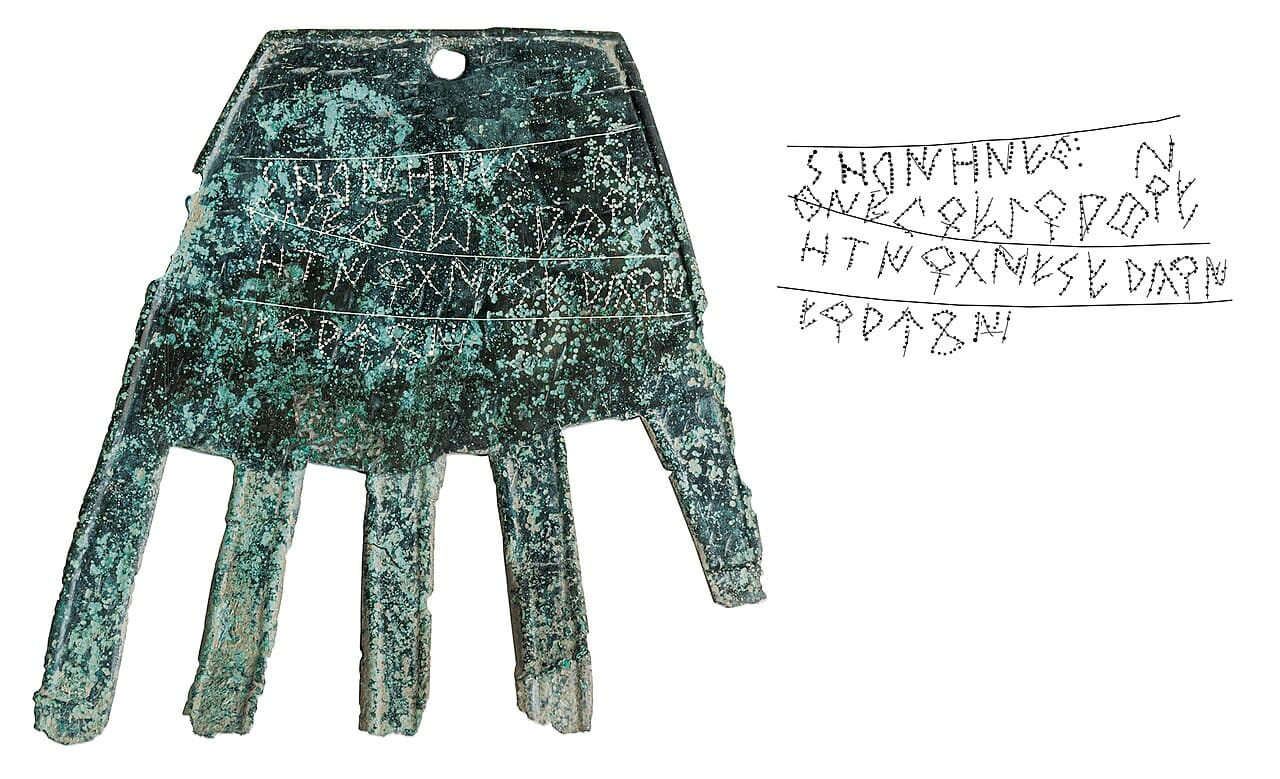
By integrating epigraphic evidence, linguistic comparison, and historical analysis, recent research indicates that the enigmatic ancient Iberian language may be more closely connected to Basque than scholars have long assumed.

The origins of Basque have puzzled linguists for centuries. Still spoken today in parts of northern Spain and southwestern France, Basque (Euskara) is unique in that it does not belong to the Indo-European language family. A new study led by Eduardo Orduña Aznar of the University of Barcelona now offers fresh insight into this enduring mystery by identifying possible links between Basque and Iberian, an ancient language once widely spoken across the Iberian Peninsula prior to Roman rule.

What sets this research apart is its focus beyond the well-known parallels in numeral systems. Instead, it examines deeper linguistic features, including kinship terms and personal names. These elements point to the possibility that Basque and Iberian share a distant common ancestry, rather than their similarities arising from chance or simple cultural interaction.

Reassessing a Long-Standing Linguistic Debate

The proposal that Iberian and Basque are related is not a recent development. As early as the 16th century, scholars such as Ambrosio de Morales suggested a connection. In the 19th century, Wilhelm von Humboldt further advanced the idea, arguing for historical links between Iberian populations and Basque speakers, largely on the basis of place names.

However, this hypothesis—often referred to as Basque-Iberianism—lost credibility during the 20th century. Once the Iberian writing system was deciphered, it became evident that Basque could not be used to directly interpret Iberian texts. Consequently, many linguists abandoned the notion of a genetic relationship between the two languages.
← The project is being undertaken by the Calton Hill Conservation Trust in partnership with Headland Archaeology, a firm with headquarters in Leith. Excavating the British tin trade that shaped the Bronze Age →
Featured
image_2026-01-20_105118178.png
Jan 20, 2026
Hiker stumbles across ancient rock paintings in Kayseri
Jan 20, 2026
Read More →
Jan 20, 2026
image_2026-01-20_104501751.png
Jan 20, 2026
Italy Uncovers Basilica Designed by Vitruvius, the 'Father of Architecture'
Jan 20, 2026
Read More →
Jan 20, 2026
image_2026-01-20_104230286.png
Jan 20, 2026
The project is being undertaken by the Calton Hill Conservation Trust in partnership with Headland Archaeology, a firm with headquarters in Leith.
Jan 20, 2026
Read More →
Jan 20, 2026
image_2026-01-20_103506416.png
Jan 20, 2026
One of Europe’s Most Mysterious Languages May Share Ancient Roots with Iberian
Jan 20, 2026
Read More →
Jan 20, 2026
image_2026-01-20_103157808.png
Jan 20, 2026
Excavating the British tin trade that shaped the Bronze Age
Jan 20, 2026
Read More →
Jan 20, 2026
image_2026-01-20_103119172.png
Jan 20, 2026
Ice Age engraving discovered in Moravian Karst cave
Jan 20, 2026
Read More →
Jan 20, 2026
read more

Powered by The archaeologist