Introduction
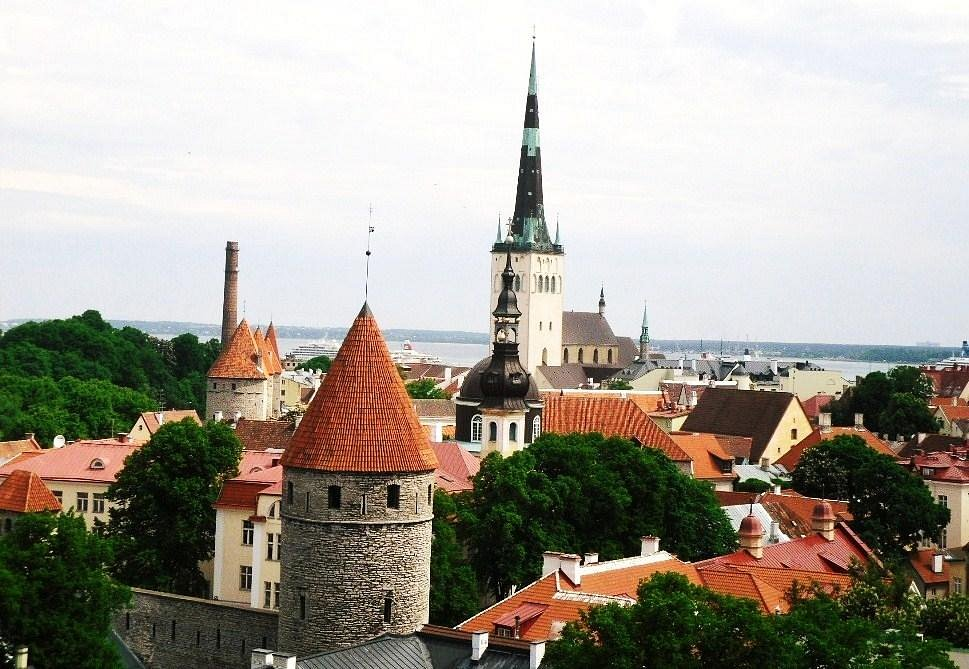
Toompea Hill dominates the historic skyline of Tallinn and has served as a center of political power for centuries. Its strategic elevation made it an ideal location for a fortress, while its position overlooking the surrounding city and Baltic approaches made it valuable to successive rulers.
The medieval history of Toompea is closely connected with Danish expansion into northern Estonia.
The castle represents an important stage in the formation of medieval Tallinn and illustrates how fortifications could become the foundations of political administration.
A Strategic Hill
Toompea's greatest advantage was its elevation.
A fortress located on a high hill could observe surrounding territory and provide defenders with a significant tactical advantage.
From the hill, authorities could oversee the settlement below and monitor important approaches.
This strategic geography helps explain why the location remained politically important for so long.
Danish Conquest
During the early thirteenth century, Danish forces became deeply involved in northern Estonia.
The conquest of Tallinn and surrounding territory brought the region into the Danish political sphere.
A fortified center was essential for maintaining authority.
Toompea consequently became a major seat of power.
The Danish Castle
The castle was developed and rebuilt repeatedly.
Medieval fortifications rarely remained unchanged because political requirements and military technology evolved.
Walls were strengthened, towers modified, and internal buildings reconstructed.
The result was a complex architectural palimpsest in which different periods of Estonian and Baltic history can be identified.
Tallinn and the Hanseatic World
Tallinn eventually became one of the major commercial cities of the eastern Baltic.
Its harbor connected the city to the wider Hanseatic trading system.
Toompea, however, represented a different form of power.
While the lower town became increasingly associated with merchants and urban commerce, Toompea was strongly connected with political and aristocratic authority.
The geographical division between the upper and lower town reflected social and institutional differences.
Nobility and Government
Throughout later medieval and early modern history, Toompea remained associated with governing elites.
Political institutions developed around the castle.
This made the hill a center from which territory could be administered.
The castle's importance consequently survived changes in ruling dynasties and political systems.
Architecture
Toompea's architecture combines defensive and residential elements.
Medieval castles required strong walls, controlled entrances, towers, storage areas, and accommodation for rulers and officials.
Later periods added new architectural styles and administrative buildings.
The modern appearance of Toompea therefore represents centuries of reconstruction rather than a single medieval building phase.
Archaeological Evidence
Archaeological research on Toompea has revealed evidence for earlier occupation beneath later structures.
Excavations and architectural studies can identify different phases of fortification and settlement.
Such evidence demonstrates that the hill was strategically significant before and after the Danish conquest.
The Symbolism of Toompea
Toompea became more than a physical fortress.
It became a symbol of authority.
Control of the hill represented control over the city and, more broadly, over northern Estonia.
The ability of the site to remain politically significant for centuries is one of its most remarkable characteristics.
Conclusion
Tallinn's Toompea demonstrates how geography can shape political history.
A naturally defensible hill became a fortified center, a seat of rulers, and eventually one of the most important political landscapes in Estonia.
Its Danish medieval origins form only one chapter in a much longer story.
Today, Toompea remains a powerful reminder that Tallinn's political importance was rooted in a strategic hill overlooking the Baltic world.