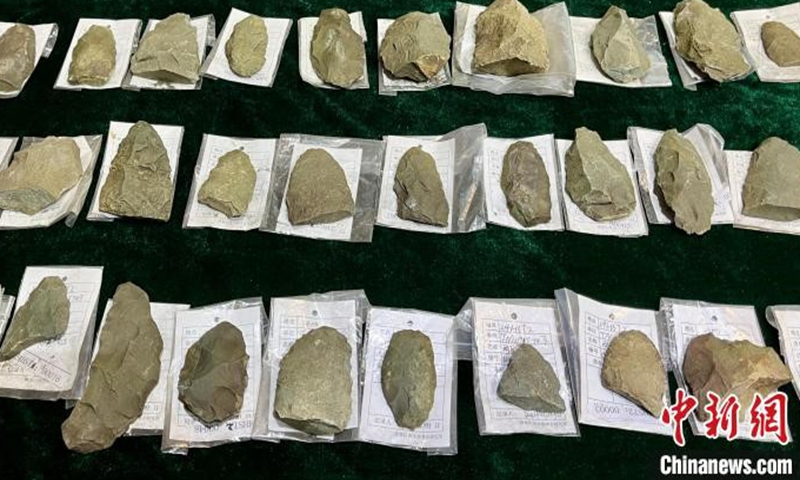
Qugong Village, an important prehistoric archaeological site in the Tibetan region, provides valuable evidence for understanding how ancient highland communities produced and used stone tools. The archaeological remains associated with Qugong help illuminate a period of Tibetan prehistory that existed long before written chronicles, monasteries, and the political kingdoms for which the region later became famous.
The study of stone tools may initially appear simple: archaeologists recover pieces of rock shaped by human hands. Yet these artifacts can preserve surprisingly detailed evidence about ancient behavior.
Through stone tools, researchers can investigate:
hunting;
food preparation;
woodworking;
hide processing;
plant use;
and technological knowledge.
At a highland site such as Qugong, these tools also reveal how prehistoric communities adapted to difficult mountain environments.
Understanding Neolithic Stone Technology
The Neolithic period is often associated with agriculture, pottery, and increasingly permanent settlement. However, stone remained one of the most important materials in daily life.
A prehistoric community could produce many specialized tools from different types of stone.
These included:
cutting blades;
scrapers;
projectile points;
axes or adzes;
grinding tools;
and hammerstones.
Different stone materials possessed different properties.
Some could be fractured to create extremely sharp edges, while others were suitable for grinding or pounding.
Finding the Right Raw Material
Before a tool could be made, suitable stone had to be obtained.
Prehistoric toolmakers may have collected materials from:
riverbeds;
exposed rock formations;
mountain slopes;
or distant quarry sources.
The location of raw materials can reveal patterns of movement and exchange.
If a stone type found at Qugong originated far from the settlement, this may indicate either long-distance travel or exchange with other communities.
Making a Stone Tool
Stone tools were created through carefully controlled processes.
A craftsperson could strike one stone against another to remove flakes.
This technique, known broadly as knapping, allowed the toolmaker to produce sharp cutting edges.
The process involved decisions about:
selecting the raw material;
choosing the correct striking angle;
controlling the force of the blow;
removing flakes in a planned sequence;
and shaping the final tool.
The resulting artifacts can reveal considerable technical skill.
Scrapers and Hide Processing
Scrapers were commonly used for processing animal hides.
Preparing a hide required removing:
flesh;
fat;
connective tissue;
and other unwanted material.
The hide could then be dried, softened, or further treated.
In cold highland environments, animal skins were especially valuable for clothing, footwear, shelter, and other protective materials.
Cutting Tools and Food Processing
Sharp stone flakes and blades could be used to process meat and plants.
Microscopic examination of their edges can sometimes identify patterns created through repeated contact with particular materials.
Archaeologists may identify evidence consistent with:
cutting meat;
scraping wood;
harvesting plants;
or processing hides.
This approach, known as use-wear analysis, helps transform a stone fragment into evidence of prehistoric activity.
Ground Stone Tools
Not all stone technology involved sharp flakes.
Ground stone tools could be shaped through repeated abrasion.
These heavier tools could be used for:
grinding plant materials;
processing pigments;
woodworking;
and other demanding tasks.
Grinding stones may provide evidence for the processing of seeds and cultivated crops.
Stone Tools and Settlement
The distribution of tools across a settlement can reveal how space was organized.
For example, concentrations of particular artifacts may indicate areas used for:
food preparation;
craft production;
toolmaking;
or domestic activities.
Waste flakes from stone-tool production can be especially informative because they reveal where ancient craftspeople worked.
Qugong and Highland Adaptation
The importance of stone tools becomes particularly clear in a mountainous environment.
Before metal became widely available, stone technology provided the essential equipment needed for survival.
Communities required tools to:
hunt animals;
construct shelters;
prepare clothing;
process food;
and work wood or bone.
The diversity of stone tools reflects the diversity of daily activities.
Archaeological Interpretation
It is important not to assume that every sharp stone was automatically a tool.
Archaeologists distinguish human-made artifacts from naturally fractured rocks by examining:
flake scars;
striking platforms;
repeated patterns;
edge modification;
and archaeological context.
A collection of intentionally produced flakes associated with settlement features provides much stronger evidence of toolmaking than an isolated stone fragment.
Qugong in Tibetan Prehistory
Qugong contributes to the larger history of human settlement across the Tibetan Plateau.
The site demonstrates that prehistoric populations possessed technological traditions suited to highland environments.
Their knowledge was transmitted across generations.
A young toolmaker did not need to rediscover how to produce a scraper or cutting blade from the beginning. Skills could be taught and refined within families and communities.
Why Qugong Matters
Qugong's stone tools are important because they preserve evidence of activities that written history cannot describe.
They reveal:
technological knowledge;
economic behavior;
environmental adaptation;
and everyday survival strategies.
Even a small stone artifact can contain information about a person's choices made thousands of years ago.
Conclusion
The stone tools associated with Qugong Village provide an important window into the prehistoric communities of Tibet.
Their makers understood the properties of different stones and developed techniques for producing sharp blades, scrapers, and other specialized implements.
These tools supported hunting, food preparation, clothing production, construction, and countless other daily activities.
Through such artifacts, the archaeological record preserves the practical intelligence of prehistoric highland communities whose voices survive not in written documents but in the tools they left behind.