Introduction
Deep within Utah's rugged canyon country lies Range Creek, an archaeological landscape remarkable for the preservation of Fremont-period sites.
The Fremont tradition represents a diverse group of ancient communities that occupied portions of Utah and neighboring regions roughly between A.D. 400 and 1350.
Range Creek is particularly valuable because archaeological sites survived there in unusually good condition.
The phrase "Range Creek Mummies" evokes preserved human bodies, but it is important to approach the subject carefully. Archaeological preservation in the canyon includes human remains and other organic materials in some contexts, but the archaeological significance of Range Creek is much broader than a collection of "mummies."
The real story is one of Fremont settlement, agriculture, storage, burial practices, environmental adaptation, and exceptional site preservation.
The Fremont Tradition
The Fremont are named after the Fremont River in Utah.
They were not a single centralized civilization.
Rather, archaeologists use "Fremont" to describe a broad archaeological tradition characterized by shared material patterns across parts of Utah and neighboring regions.
Evidence includes:
distinctive pottery
basketry
moccasins
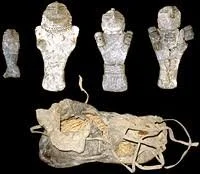
clay figurines
rock art
pithouses
agricultural systems
The National Park Service notes that Fremont communities differed in important ways from contemporary ancestral Pueblo communities farther south and east.
Range Creek Canyon
Range Creek contains more than 500 archaeological sites, according to the Natural History Museum of Utah.
Many are approximately 1,000 years old and are associated with Fremont communities.
The canyon remained relatively protected from modern development.
Restricted access helped preserve archaeological features that would have been vulnerable to looting, agriculture, construction, and recreational disturbance.
Fremont Agriculture
The people of Range Creek practiced agriculture despite the challenging environment.
Maize was particularly important.
Agriculture required water.
The canyon environment offered limited but usable resources.
Farmers cultivated suitable areas and took advantage of seasonal water availability.
This demonstrates that Fremont communities were not simply wandering hunter-gatherers.
They practiced a mixed economy.
Hunting and Gathering
Agriculture did not replace hunting and gathering.
Fremont communities continued to hunt deer and other animals.
They gathered wild plants, seeds, nuts, and other resources.
This diversified economy reduced dependence on any single food source.
The result was an adaptable subsistence system.
Pithouses
The primary Fremont dwelling was the pithouse.
Pithouses were excavated partially into the ground.
The lowered floor helped moderate temperature.
A roof supported by wooden posts covered the structure.
Utah historical sources describe Fremont pithouses as warm in winter and relatively cool in summer.
Pithouses could serve as living spaces, work areas, or communal structures.
Storage Structures
Storage was crucial.
Fremont communities built granaries and other storage facilities.
Some were deliberately placed in difficult-to-access locations.
This could protect food from animals and possibly from other people.
Storage also reflects economic planning.
A successful harvest could be preserved for later use.
Why Range Creek Is Archaeologically Important
Many archaeological sites elsewhere have been disturbed.
Looting removes artifacts.
Modern construction destroys deposits.
Agriculture can disturb floors and walls.
Range Creek escaped much of this damage.
As a result, archaeologists can study relationships among structures and artifacts.
This is extremely valuable.
Human Burials
Human remains provide evidence about Fremont life.
Archaeologists can study:
age
sex
disease
nutrition
injury
physical activity
burial practices
But human remains are not simply archaeological objects.
They are ancestors.
Modern ethical standards require careful treatment, consultation, and legal compliance.
The Meaning of "Mummy"
A mummy is generally a human or animal body preserved through natural or artificial processes.
In dry environments, bodies can sometimes become naturally desiccated.
Textiles, wrappings, and other materials can survive in exceptional conditions.
However, not every naturally preserved human burial should be described as a "mummy" in a sensational sense.
Archaeologists use more precise terminology based on the actual preservation process.
Wrapped Bodies and Textiles
Organic materials can be exceptionally valuable.
Basketry, woven fibers, cordage, and textiles can reveal technological traditions.
A preserved wrapping may demonstrate how people manufactured and used plant fibers.
The survival of such materials depends on environmental conditions.
Dry caves and sheltered areas can prevent rapid decomposition.
Archaeological Ethics
Human remains require special treatment.
Researchers must balance scientific investigation with cultural and ethical responsibilities.
Federal law, including the Native American Graves Protection and Repatriation Act, establishes important requirements concerning Native American human remains and cultural items.
Archaeology therefore cannot simply excavate every burial for scientific purposes.
Modern practice increasingly emphasizes descendant consultation and respectful treatment.
Range Creek and the Landscape
The most important lesson from Range Creek is that the Fremont people were deeply integrated into their environment.
They understood:
seasonal water
agricultural soils
animal migration
wild plants
canyon geography
storage locations
Their settlements reflect environmental knowledge accumulated over generations.
Dendrochronology and Dating
Wooden beams and other plant materials can provide chronological evidence.
Tree-ring dating can sometimes establish precise construction dates.
Researchers have also used radiocarbon dating.
Preliminary dates from maize remains have suggested Fremont occupation in Range Creek around A.D. 900–1150, although the canyon contains evidence for additional periods and the precise chronology varies by site.
Rock Art
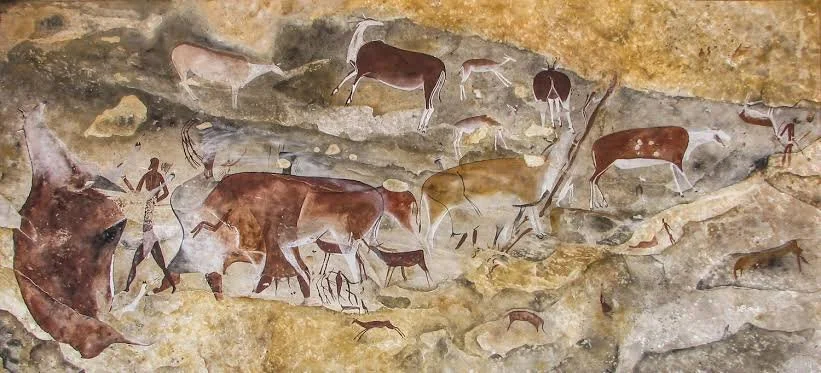
Range Creek also contains rock art.
Some imagery may be associated with Fremont traditions.
Rock art provides evidence of symbolic behavior but is difficult to date precisely.
Researchers therefore combine imagery with archaeological context.
Why the Sites Remained Preserved
Range Creek's isolation was crucial.
Limited access reduced disturbance.
This created a rare archaeological situation.
Archaeologists can study entire landscapes rather than only fragments.
The Natural History Museum of Utah describes the canyon as containing hundreds of relatively pristine archaeological sites.
Modern Research
Research in Range Creek has involved archaeologists, dendrochronologists, anthropologists, students, and other specialists.
The landscape provides opportunities to study:
settlement organization
agriculture
food storage
chronology
architecture
environmental adaptation
social organization
It is effectively a large archaeological laboratory.
Preservation and Access
The same isolation that preserved Range Creek creates challenges.
Opening the area widely to tourism could increase damage.
Archaeological sites can be destroyed quickly by uncontrolled visitation.
For this reason, restricted access and carefully managed research remain important.
Conclusion
Range Creek's significance lies far beyond the sensational idea of "mummies."
Its real importance is archaeological.
The canyon preserves hundreds of Fremont sites in unusually good condition.
Pithouses reveal domestic life.
Granaries reveal food storage.
Agricultural features reveal environmental adaptation.
Rock art reveals symbolic traditions.
Burials reveal aspects of mortuary practice.
Organic materials provide rare information about technologies that usually disappear from the archaeological record.
Together, these remains demonstrate that Fremont communities were skilled farmers, hunters, craftspeople, and environmental specialists.
Range Creek is therefore one of the most valuable landscapes for understanding Fremont life in Utah.