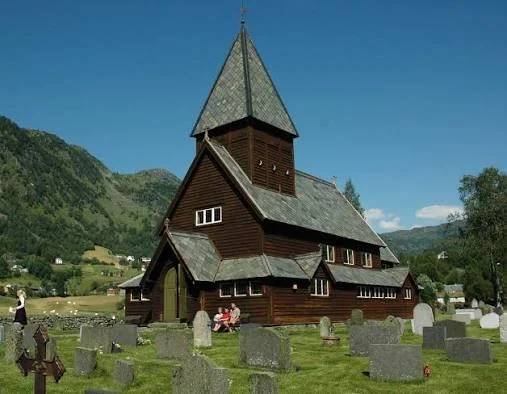
Røldal is associated with one of Norway's important medieval stave church traditions. Stave churches are among the most distinctive architectural achievements of medieval Scandinavia, combining Christian religious functions with sophisticated timber construction techniques that developed within northern European building traditions.
The church at Røldal is particularly famous for its medieval crucifix and traditions surrounding its miraculous powers.
What Is a Stave Church?
A stave church is a timber church constructed around vertical load-bearing posts known as staves.
Unlike simple timber buildings in which walls bear much of the structural weight, stave churches use a sophisticated timber framework.
Horizontal beams, vertical posts, braces, and roof structures work together to create a strong architectural system.
Christianization of Norway
Stave churches emerged during the centuries following the Christianization of Norway.
Christianity gradually became established as the dominant religion, replacing or transforming earlier religious practices.
Church construction became an important expression of the new religious order.
Yet the architecture did not simply copy continental stone churches. Norwegian builders adapted Christian architecture to local materials and construction traditions.
Timber as Architecture
Wood was abundant in Norway, making it a practical building material.
However, constructing a large timber church required considerable expertise.
Builders had to select appropriate trees, season timber, shape structural components, and create joints capable of supporting large roofs.
The survival of stave churches demonstrates the high level of medieval Scandinavian woodworking.
Røldal and Religious Tradition
Røldal became associated with a famous crucifix believed to possess healing powers.
Pilgrims traveled to the church seeking cures and spiritual assistance.
Such pilgrimage traditions demonstrate that medieval churches were not merely places where weekly worship occurred. They could become regional centers of pilgrimage, commerce, storytelling, and social interaction.
Architecture and Belief
The physical structure of a stave church shaped religious experience.
Dim interiors, carved wooden details, monumental roofs, and sacred images created a dramatic environment.
The combination of architecture and ritual helped communicate Christian teachings to communities in which literacy was limited.
Images, relics, processions, and ceremonies therefore played an important educational role.
Preservation
Stave churches are exceptionally vulnerable to fire, weather, insects, and structural deterioration.
The survival of Røldal's medieval church traditions therefore represents a significant heritage achievement.
The building provides evidence not only for medieval Christianity but also for the technological history of Scandinavian woodworking.