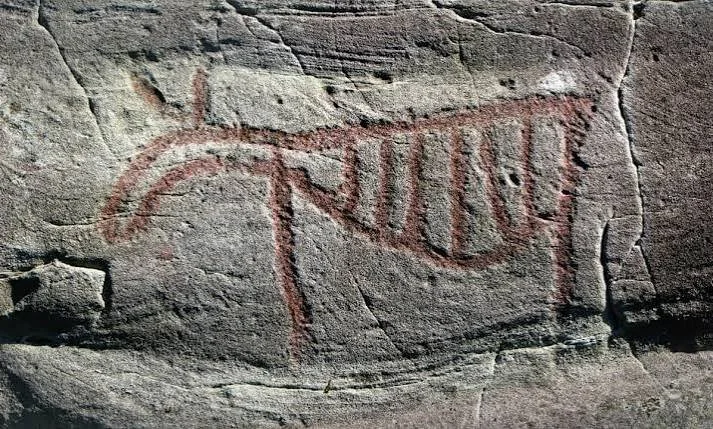
Vingen is one of Norway's most extraordinary prehistoric rock-art landscapes. Located in western Norway, the site contains thousands of carved figures, creating an archaeological record of exceptional scale.
The concentration of imagery makes Vingen particularly important for understanding the symbolic culture of Stone Age hunter-gatherer communities in Scandinavia.
A Landscape Filled With Images
Unlike a single isolated petroglyph, Vingen consists of numerous rock surfaces containing large numbers of figures.
The carvings include animals, particularly deer, as well as human and abstract representations.
The sheer quantity indicates that the location had significance over an extended period.
Deer and the Prehistoric Economy
Deer imagery dominates much of Vingen's visual tradition.
This is understandable because deer were important resources for prehistoric northern communities. They provided meat, hides, bones, antler, and other materials.
However, the abundance of deer images also suggests that the animals possessed symbolic importance.
In many hunter-gatherer cultures, animals are not simply resources. They may be understood as powerful beings with agency and spiritual significance.
The Human-Animal Relationship
The repeated depiction of animals provides an opportunity to examine prehistoric concepts of nature.
Rather than treating humans and animals as entirely separate categories, prehistoric communities may have understood them through reciprocal relationships.
Hunting was therefore potentially both an economic and spiritual activity.
The rock art may have been associated with rituals intended to maintain these relationships.
Why Choose This Location?
The placement of Vingen's carvings is significant.
The rock surfaces form part of a distinctive natural environment, and access to the site may have required deliberate movement through the landscape.
This raises the possibility that visiting Vingen itself was meaningful.
The journey to the site, the act of carving, and the resulting images may all have formed parts of a ritual process.
The Meaning of Rock Art
No written explanation survives.
Consequently, interpretations remain hypotheses.
Some scholars have connected Scandinavian hunter-gatherer rock art with shamanic practices, altered states of consciousness, hunting rituals, or cosmological beliefs.
These interpretations can be useful, but they should not be treated as proven explanations.
The evidence demonstrates symbolic activity; it does not provide a complete prehistoric theology.
Vingen's Importance
Vingen is valuable because it preserves evidence of a sophisticated symbolic tradition among Stone Age communities.
The people who created the carvings were hunters and gatherers, but their societies were capable of producing large-scale artistic landscapes.
Their lives involved technology, environmental knowledge, social relationships, ritual practices, and complex understandings of animals.
Vingen therefore challenges simplistic ideas about prehistoric societies and provides a rare window into the intellectual world of northern Europe's early inhabitants.