Introduction: The Voices in the Bedrock
When we think of the written legacy of ancient Rome, our minds naturally drift to the grand literary works of Cicero, Tacitus, or Suetonius. Yet, these texts represent an incredibly narrow, elite sliver of Roman society—written by aristocratic men, for aristocratic men, about aristocratic politics. To capture the raw, unfiltered reality of the other 99% of the empire, historians must look down from the marbled halls of the Senate to the stone surfaces of the Roman world.
Epigraphy—the study of ancient inscriptions carved into stone, bronze, and pottery—serves as the ultimate democratic archive of antiquity. Across millions of surviving epitaphs, shop signs, and graffiti scattered from Italy to Britain, common citizens, freed slaves, and low-ranking soldiers left behind their own permanent voices. Written in a gritty, colloquial Latin often riddled with spelling errors, these stone inscriptions bypass elite propaganda, offering us a direct, intimate look at the daily struggles, marriages, professions, and deep human emotions of ordinary Romans.
1. Decoding the Stone: The Epigraphic Formula
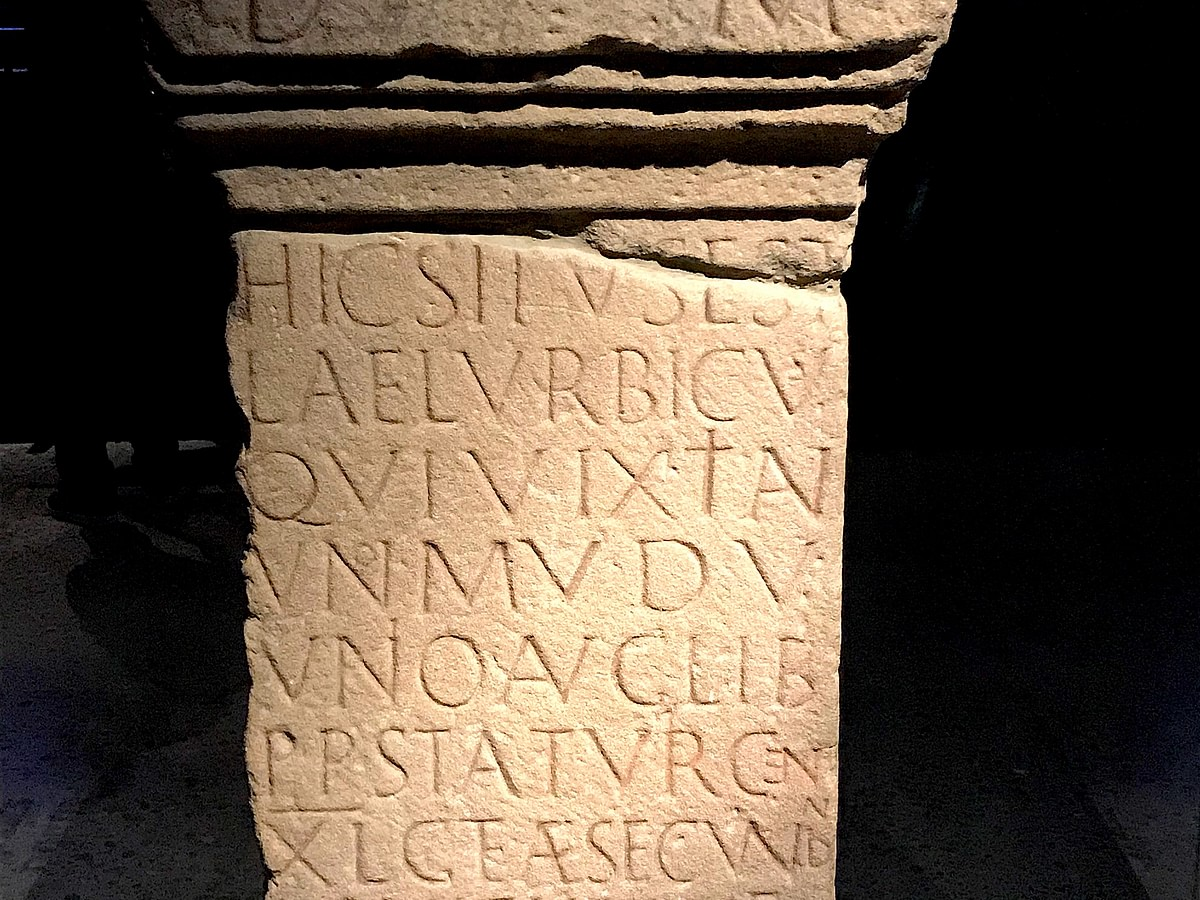
Reading an ancient Roman inscription can initially feel like cracking a military cipher. Because stone was expensive and space was limited, carvers relied heavily on a standardized system of abbreviations. Deciphering these formulaic codes is the first step in reconstructing an ordinary life.
The Dedication to the Underworld: Almost every Roman tombstone begins with the letters D·M, which stands for Dis Manibus ("To the Divine Shades/Manes"). This formulaic invocation placed the tomb under the permanent protection of the gods of the underworld.
The Vital Statistics: The name of the deceased is typically followed by V·A (Vixit Annos—"He/She lived... years"), followed by Roman numerals. In a society with rampant infant mortality and low life expectancy, tracking the exact lifespan down to the months (M) and days (D) was an act of profound parental or marital devotion.
The Closing Vow: Tombstones frequently conclude with H·S·E (Hic Situs Est—"Here he/she lies") or the deeply emotional S·T·T·L, which stands for Sit Tibi Terra Levis—"May the earth be light upon you."
2. The Pride of Labor: Epitaphs of the Working Class
In elite Roman literature, manual labor and commercial trade were viewed with aristocratic disdain. Cicero famously declared that retail trade was sordid because merchants could only profit by lying. However, the tombstones of common citizens tell a completely different story: ordinary Romans were fiercely proud of their professions and wanted to be remembered by their work for eternity.
The Visual Resumes: Many working-class tombstones did not just name a profession; they featured high-relief carvings of the tools of the trade. A butcher’s tombstone might depict meat hooks and cleavers; a builder’s stone would showcase a plumb line and square; a shoemaker’s marker would display a leather-cutting knife.
The Specialized Economy: Inscriptions reveal an incredibly diverse, hyper-specialized urban economy. We find stones dedicated to vestiararii (clothes-sellers), tonsores (barbers), margaritarii (pearl-merchants), and even a specific tomb in Rome dedicated to a woman named Aurelia Nais, whose inscription proudly identifies her as a piscatrix de horreis Galbae—a fish-monger operating out of the Galban warehouses.
The Guild Connection: Many common citizens funded their burials through collegia—professional guilds or burial societies. Inscriptions show that ironworkers, bakers, and fullers (laundry workers) paid monthly dues into a shared treasury. When a member died, the guild guaranteed a proper stone burial and a permanent inscription, ensuring the worker would not be forgotten in an anonymous pauper's pit.
3. The Freedperson's Triumph: The Liberty Marker
A massive portion of the inscriptions belonging to common citizens in Italy were erected by liberti—freed slaves. Having spent the first portion of their lives as legal property without names or rights, the act of carving their freedom into stone was the ultimate declaration of humanity and socio-economic triumph.
The Name Transformation: When a slave was freed, they took the praenomen (first name) and nomen (family name) of their former master, retaining their original slave name as their cognomen (last name).
The Legal Status Indicator: To ensure their hard-won legal freedom was indisputable, freedmen carved the letter L or LIB (Libertus/Liberta) into their epitaphs. For example, a stone reading Marcus Aurelius Lucii Libertus Hermes tells us exactly that Hermes was a freed slave of a master named Lucius Aurelius.
The Upward Mobility Narrative: Freedmen inscriptions often highlight immense pride in achieving civic respectability. Many proudly note that they attained the rank of Sevir Augustalis—a prestigious local priesthood open to wealthy freedmen dedicated to the cult of the Emperor. Prevented by law from holding traditional political office due to their slave past, these stone markers show freedmen utilizing commerce and alternative civic titles to secure their family's legacy for future generations.
4. Raw Human Emotion: Grief Across the Class Divide
While elite literature often prescribed a stoic, controlled approach to grief, the tombstones of common citizens shatter this emotional distance. The inscriptions expose raw, devastating grief over the loss of spouses, children, and companions.
Marital Devotion: Innumerable stones are dedicated by surviving husbands to their wives, using deeply affectionate phrasing like uxor carissima (dearest wife), incomparabilis (incomparable), or bene merenti (well-deserving). One famous working-class inscription reads: "We were married for 20 years, and never once did a harsh word pass between us."
The Tragedy of Youth: Parental grief is regular and heartbreaking on Roman stones. Because children were not yet active economic participants, these stones were pure expressions of love. An inscription for a five-year-old girl named Magnilla reads: "She was snatched away before her time, a sweet soul who brought joy to everyone, leaving her parents with nothing but tears."
The Humanization of Slaves: Inscriptions also reveal the complex, soft underbelly of domestic Roman slavery. Masters frequently erected beautiful stones for their young vernae (slaves born within the household), describing them with parental affection, or for their nutrices (wet-nurses) who had raised them, demonstrating that real emotional bonds routinely defied the brutal legal boundaries of Roman slave law.
5. The Walls of Pompeii: Epigraphy in Action
While tombstones represent deliberate, formal inscriptions, the catastrophic eruption of Mount Vesuvius in 79 AD preserved a completely different category of epigraphy: graffiti. Scratched with iron styluses into the plaster walls of homes, taverns, and brothels, this informal epigraphy captures the immediate, daily thoughts of common citizens in real-time.
The Political Campaign Trails: The exterior walls of Pompeian houses are covered in programmata—painted electoral advertisements. These were not written by the candidates, but by ordinary groups of citizens endorsing local politicians. Inscriptions show endorsements from caupones (innkeepers), piscicapi (fishermen), and even an inscription where a group of late-night drinkers (seribibi) demand the election of a specific local magistrate.
The Ancient Yelp Review: Tavern walls track the direct interactions of travelers and locals. One customer scratched into a bar wall: "Landlord, may your lies deceive you! You sell us water and keep the good wine for yourself!"
The Loneliness of the Streets: Informal inscriptions track the universal human experiences of love, lust, and rejection. Scribbled onto a pillar in a busy thoroughfare, one anonymous Roman citizen left a timeless poetic lament: "O wall, I am surprised that you have not collapsed under the weight of so many writers' boring nonsense."
6. Historical Legacy: Building History from Below
The value of Roman inscriptions to modern archaeology cannot be overstated. Without these stones, our understanding of the Roman world would be a top-down illusion, distorted by the biases of a tiny, wealthy elite.
By reading the lives of common citizens in stone, historians can reconstruct ancient wage rates, trace the migration patterns of provincial laborers moving to Rome, map out the true demographics of the empire, and validate the immense economic contribution of freedmen and women. These inscriptions serve as a permanent material reminder that the grandeur of Rome was not built by emperors and generals alone, but by the hands, trades, and enduring spirits of millions of ordinary citizens whose stories survive uniquely in the bedrock of history.