To truly understand the rhythm of ancient Roman life, you have to realize just how dark their world became the moment the sun dipped below the horizon.
Unlike our modern cities, bathed in the perpetual glow of electricity, ancient Rome after dark was a place of pitch-black shadows and profound vulnerability. To push back against the night, the Romans relied on an astonishingly simple, mass-produced piece of chemical engineering: the lucerna (oil lamp).
Far from being mere household utilities, these lamps were an economic juggernaut, a canvas for social and political propaganda, and the literal lifeblood of the empire's nightlife.
1. Anatomy and Physics of a Lucerna
The fundamental design of a Roman oil lamp barely changed over a millennium, relying on basic capillary action to function. The lamp consisted of two primary structural zones:
The Discus: The circular top surface of the lamp. It features a small central puncture hole used to pour in fuel, and its flat space served as prime real estate for decorative artwork.
The Rostrum (Nozzle): The protruding spout at the front that held the wick. High-end lamps often featured multiple nozzles (dimyxos or polymyxos) to multiply the light output, though this burned through fuel at an exponential rate.
The Fuel and Wick Dynamics
The standard fuel across the Mediterranean basin was olive oil. However, the Romans used a strict grading system. The pristine, first-press olive oil (oleum flos) was reserved exclusively for eating. The oil poured into lamps was low-grade, bitter, and foul-smelling oil pressed from rotten olives or the leftover skin and pits (amurca).
Wicks were twisted from linen, hemp, papyrus fibers, or even dried mullein leaves. As capillary action drew the heavy oil up the wick, heat from the flame vaporized the liquid fat, fueling a dim, flickering light that generated roughly one-tenth the brightness of a modern 40-watt light bulb.
2. Mass Production: The First Disposable Consumer Commodity
The Roman oil lamp represents one of the earliest examples of a globalized, assembly-line manufacturing empire. While wealthy aristocrats illuminated their villas with elaborate, heavy bronze lamps, the vast majority of Romans bought cheap, mold-made terracotta lamps.
[ Master Model (Stone/Clay) ] ──► Two-Part Plaster Mold ──► Wet Clay Pressed In ──► Firing in Kiln ──► Global Export
Large industrial workshops, known as officinae, popped up across Italy, North Africa, and Gaul. The most famous was a Northern Italian firm called Fortis. Their brand identity was so powerful that they stamped the name FORTIS on the base of every lamp.
These became so ubiquitous across the western empire that archaeologists treat them like modern soda cans—they are found by the tens of thousands from the deserts of Jordan to the borders of Scotland, proving that Roman military camps and trade outposts imported their lighting technology directly from major manufacturing hubs.
3. The Street and the Home: A Tale of Two Realities
Domestic and public illumination in ancient Rome highlighted the stark divide between the wealthy elite and the urban poor.
Inside the Domus and the Insula
In an elite Roman villa (domus), lamps were placed on tall, elegant bronze stands (candelabra) or suspended from ceiling chains to cast light downward over dinner parties.
In contrast, the urban poor crammed into wooden apartment buildings (insulae) lived under constant threat of catastrophe. Because these oil lamps lacked glass chimneys, they were an open, volatile fire hazard. A single tipped lamp in a drafty, wood-and-straw apartment block could—and frequently did—incinerate entire neighborhoods within hours. Furthermore, burning low-grade olive oil in unventilated rooms left a thick, greasy layer of black soot on the walls, requiring slaves to constantly scrub the frescos.
The Terrors of the Roman Street
With the exception of brief festival nights like the Saturnalia or special imperial triumphs, Roman streets had no public lighting system whatsoever.
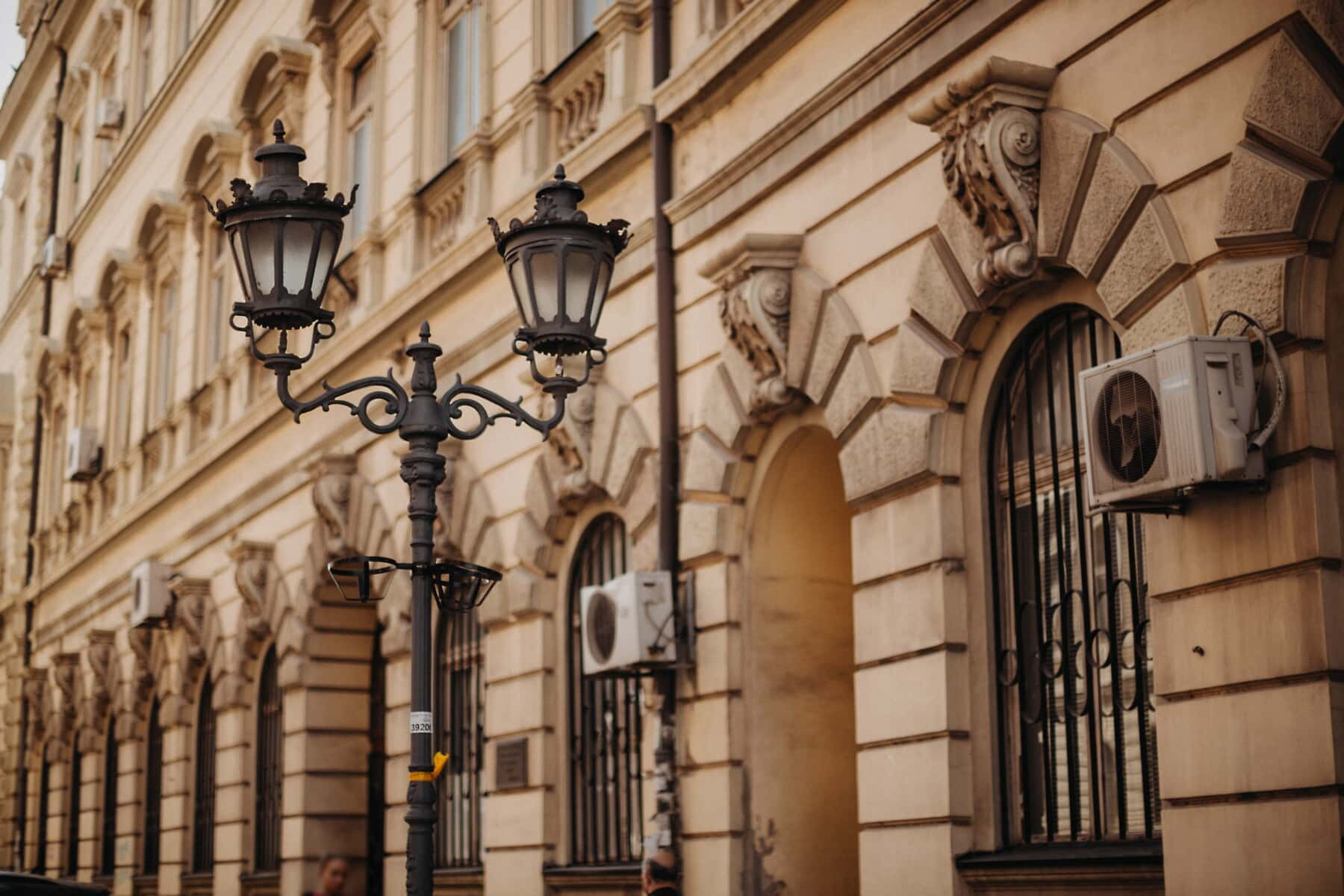
Once night fell, the avenues became dark, labyrinthine canyons ruled by muggers, runaway carts, and gangs of elite youths looking for a fight. If a citizen had to venture out at night, they never went alone. They were accompanied by a slave called a lanternarius, who carried a heavy iron or bronze lantern shielded by thin sheets of translucent animal horn to light the path and ward off predators.
4. The Discus as a Social Media Feed
Because an oil lamp sat on almost every table, desk, and shrine in the empire, the decorative discus became the ancient equivalent of a social media feed or political billboard. Pottery workshops kept their fingers on the pulse of Roman pop culture, stamping imagery that reflected the zeitgeist of the era:
Gladiatorial Fandom: Images of specific, celebrity gladiators locked in combat were wildly popular, allowing fans to buy merchandise supporting their favorite fighters.
Political Propaganda: Emperors regularly commissioned lamps stamped with their own profiles, or images of the goddess Victoria, to celebrate military victories and reinforce imperial loyalty in everyday households.
Mythology and Erotica: Scenes of gods, zodiac signs, and highly explicit erotic encounters (symplegma) were standard decorations, the latter often used as functional signage and lighting inside Roman brothels (lupanaria).
From the gutter to the palace, the simple clay lamp was the silent engine that extended the Roman day, enabling the empire to read, work, socialize, and police itself long after the sun had gone down.