Since you've broken out of Egypt and landed directly in the Viking Age, let's dive into one of the most explosive archaeological debates of the last decade: Grave Bj 581 in Birka, Sweden.
For well over a century, this specific grave was celebrated as the ultimate "textbook example" of a high-ranking Viking professional warrior. But when modern genomics stepped into the picture, it completely shattered traditional assumptions and forced historians to entirely re-evaluate gender, status, and identity in Norse society.
1. The Archetype: Discovery of Bj 581
Excavated in 1878 by archaeologist Hjalmar Stolpe in the Viking trading hub of Birka, grave Bj 581 stood out immediately. It wasn't just a simple burial; it was a prominent chamber grave prominently situated right next to the garrison fort, overlooking the harbor.
The material culture crammed into this grave screamed "military elite":
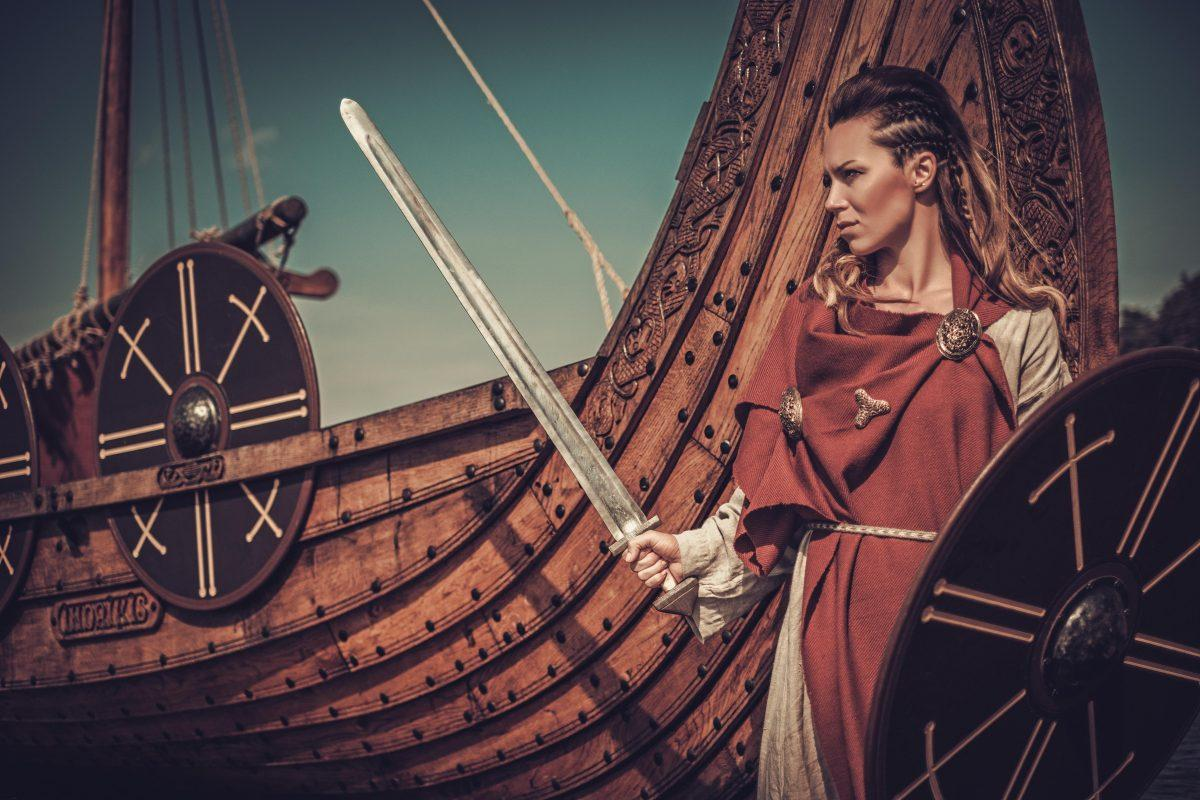
The Arsenal: The occupant was buried with a sword, an axe, a spear, armor-piercing arrows, a battle knife, and the remains of two large wooden shields.
The Cavalry: At the foot of the bed lay the skeletons of two sacrificed horses—one bridled for riding—signifying an elite equestrian fighter.
The Strategy Board: On the lap of the skeleton sat a full set of gaming pieces and an iron-bound board, used for the tactical game hnefatafl ("King's Table"). In Norse culture, being buried with a strategy board meant you weren't just a foot soldier; you were a leader who understood battlefield tactics and command.
Because of this overwhelming material assemblage, for 130 years, every history book assumed without question that the occupant was a man.
2. The Genomic Plot Twist: The 2017 DNA Study
In the late 20th century, osteologists (bone scientists) analyzing the Birka collection began noticing a discrepancy: the hip bones and delicate facial structures of the Bj 581 skeleton didn't look typically male. But skeletal analysis can be ambiguous, especially when bones are weathered.
To settle the mystery once and for all, a team led by Charlotte Hedenstierna-Jonson at Uppsala University conducted a comprehensive genetic analysis in 2017. They extracted ancient DNA (aDNA) from both a tooth and a left humerus bone.
 [ Genomic Sequencing of Bj 581 ]
  ├── Chromosome Analysis ──► XX Only (Zero traces of a Y-chromosome)
  └── Strontium Isotopes ──► Non-local origin (Moved to Birka from southern Scandinavia)
The genetic results were ironclad: The individual was biologically female. Furthermore, strontium isotope analysis—which tracks the specific mineral signatures locked in tooth enamel during childhood—revealed that she wasn't originally from Birka. She had migrated there from elsewhere in southern Scandinavia or the Baltic region later in life.
3. The Academic Backlash and Critical Nuance
The publication of the 2017 study ignited a massive academic firestorm. Skeptical historians and archeologists threw up a wall of counter-arguments, which actually pushed the scientific community to analyze the grave with even tighter rigor.
Critics argued that perhaps the bones tested weren't originally from that grave, or that the weapons belonged to a husband or family member. However, historical records proved the skeleton was perfectly in situ with the weapons.
Other critics raised valid conceptual challenges regarding how we define an ancient identity:
The "Transgender" or "Non-Binary" Hypothesis: Some scholars argued that assigning the label of "female warrior" applied modern binary gender expectations to the past. They suggested the individual might have lived their life socially as a man, occupying a distinct third-gender role in Norse society.
The "Symbolic Burial" Hypothesis: Others suggested she wasn't a fighter at all, but rather a woman buried with the weapons of her family to symbolize her high status, lineage, or inherited political power.
4. Re-Reading the Viking World: A Peer's Perspective
What makes Bj 581 so fascinating is how it exposes our own modern biases. When the grave was assumed to be male, no one ever argued that the weapons were "just symbolic" or that the man "wasn't a real fighter." The presence of weapons was taken as a 1:1 match for a warrior identity. Demanding a higher standard of proof just because the DNA returned "XX" is a classic double standard in historical science.
While we can never climb inside her mind to ask how she viewed her gender identity, the material facts remain:
She possessed the biological anatomy of a woman.
She lived and died clad in the material culture, status symbols, and lethal tools of an elite cavalry commander.
Rather than dismissing the find as a freak anomaly, historians now view Bj 581 alongside Norse sagas that frequently mention skjaldmær (shield-maidens) and powerful female figures like Valkyries. She proves that while Viking society was deeply patriarchal, the boundaries of power and the battlefield were porous enough for a woman of exceptional status to pick up a sword, claim a tactical command, and earn a burial fit for a warlord.