• MAIN PAGE
  • LATEST NEWS
    • Lost Cities
    • Archaeology's Greatest Finds
    • Underwater Discoveries
    • Greatest Inventions
    • Studies
    • Blog
  • PHILOSOPHY
  • HISTORY
  • RELIGIONS
    • Africa
    • Anatolia
    • Arabian Peninsula
    • Balkan Region
    • China - East Asia
    • Europe
    • Eurasian Steppe
    • Levant
    • Mesopotamia
    • Oceania - SE Asia
    • Pre-Columbian Civilizations of America
    • Iranian Plateau - Central Asia
    • Indus Valley - South Asia
    • Japan
    • The Archaeologist Editor Group
    • Scientific Studies
    • Aegean Prehistory
    • Historical Period
    • Byzantine Middle Ages
    • Predynastic Period
    • Dynastic Period
    • Greco-Roman Egypt
  • Rome
  • PALEONTOLOGY
  • About us
Menu

The Archaeologist

  • MAIN PAGE
  • LATEST NEWS
  • DISCOVERIES
    • Lost Cities
    • Archaeology's Greatest Finds
    • Underwater Discoveries
    • Greatest Inventions
    • Studies
    • Blog
  • PHILOSOPHY
  • HISTORY
  • RELIGIONS
  • World Civilizations
    • Africa
    • Anatolia
    • Arabian Peninsula
    • Balkan Region
    • China - East Asia
    • Europe
    • Eurasian Steppe
    • Levant
    • Mesopotamia
    • Oceania - SE Asia
    • Pre-Columbian Civilizations of America
    • Iranian Plateau - Central Asia
    • Indus Valley - South Asia
    • Japan
    • The Archaeologist Editor Group
    • Scientific Studies
  • GREECE
    • Aegean Prehistory
    • Historical Period
    • Byzantine Middle Ages
  • Egypt
    • Predynastic Period
    • Dynastic Period
    • Greco-Roman Egypt
  • Rome
  • PALEONTOLOGY
  • About us
No results found

Roman London: Life and Commerce in the Outpost of Londinium

April 29, 2026

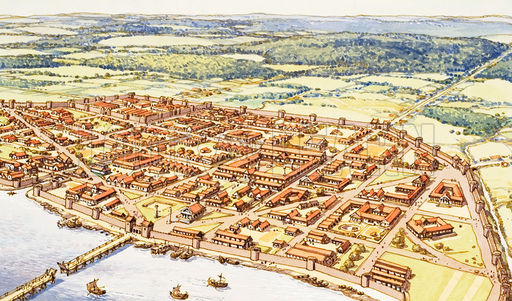
The Roman city of Londinium, founded around 43 CE in present-day London, became one of the most important centers in Roman Britain. It served as a hub of trade, governance, and daily life.

1. Strategic Location

Londinium was built for economic and military advantage.

  • River Thames: Provided easy transportation and trade routes.

  • Bridge Crossing: Connected major Roman roads.

  • Trade Hub: Linked Britain to the wider Roman Empire.

  • Rapid Growth: Quickly developed into a busy urban center.

Its location made it ideal for commerce and expansion.

2. Daily Life

Life in Londinium was active and diverse.

  • Multicultural Population: People from different parts of the empire lived there.

  • Housing: Ranged from simple homes to large villas.

  • Public Spaces: Included baths, forums, and temples.

  • Daily Activities: Trade, crafts, and social gatherings were common.

Artifacts such as writing tablets and tools provide insight into everyday life.

3. Commerce and Economy

Trade was the foundation of Londinium’s success.

  • Imports: Wine, olive oil, glassware, and pottery.

  • Exports: Wool, metals, and agricultural products.

  • Markets: Busy trading centers supported economic growth.

  • Currency Use: Roman coins facilitated transactions.

The city functioned as a major economic center in the region.

4. The Revolt of Boudica

A major turning point in Londinium’s history.

  • Boudica: Led a rebellion against Roman rule around 60 CE.

  • Destruction: Londinium was burned and many inhabitants were killed.

  • Roman Response: The rebellion was eventually suppressed.

  • Rebuilding: The city was reconstructed and became stronger.

This event showed both the vulnerability and resilience of the city.

5. Decline

Londinium declined after Roman control weakened.

  • Roman Withdrawal: Early 5th century CE.

  • Economic Decline: Trade networks collapsed.

  • Population Decrease: Many residents left the city.

  • Urban Decay: Buildings fell into ruin.

Despite this, its legacy continued.

6. Historical Significance

Londinium demonstrates how the Romans spread their culture, infrastructure, and economy across distant regions. It laid the foundation for modern London and shows how ancient cities influence present-day urban life.

Do you think modern cities still reflect Roman ideas in planning and infrastructure?

← Ancient Cuneiform: How 5,000-Year-Old Clay Tablets are Read TodayChaco Canyon: The Astronomical Alignments of the Ancestral Puebloans →
Featured
image_2026-04-29_201951276.png
Apr 29, 2026
Ancient Roman Wine: Recreating the Flavors of Antiquity
Apr 29, 2026
Read More →
Apr 29, 2026
image_2026-04-29_201632730.png
Apr 29, 2026
The Olmec Cascajal Block: Is This the Oldest Writing in the Americas?
Apr 29, 2026
Read More →
Apr 29, 2026
image_2026-04-29_211530778.png
Apr 29, 2026
The Battle of Marathon: Finding the Burial Mound of the Athenians
Apr 29, 2026
Read More →
Apr 29, 2026
image_2026-04-29_211603956.png
Apr 29, 2026
Viking Mercenaries in Byzantium: The Story of the Varangian Guard
Apr 29, 2026
Read More →
Apr 29, 2026
image_2026-04-29_211313896.png
Apr 29, 2026
Roman Mosaics: The Digital Reconstruction of the Villa Romana del Casale
Apr 29, 2026
Read More →
Apr 29, 2026
image_2026-04-29_211222879.png
Apr 29, 2026
The Walls of Benin: One of the Largest Earthworks Ever Built
Apr 29, 2026
Read More →
Apr 29, 2026
read more

Powered by The archaeologist