• MAIN PAGE
  • LATEST NEWS
    • Lost Cities
    • Archaeology's Greatest Finds
    • Underwater Discoveries
    • Greatest Inventions
    • Studies
    • Blog
  • PHILOSOPHY
  • HISTORY
  • RELIGIONS
    • Africa
    • Anatolia
    • Arabian Peninsula
    • Balkan Region
    • China - East Asia
    • Europe
    • Eurasian Steppe
    • Levant
    • Mesopotamia
    • Oceania - SE Asia
    • Pre-Columbian Civilizations of America
    • Iranian Plateau - Central Asia
    • Indus Valley - South Asia
    • Japan
    • The Archaeologist Editor Group
    • Scientific Studies
    • Aegean Prehistory
    • Historical Period
    • Byzantine Middle Ages
    • Predynastic Period
    • Dynastic Period
    • Greco-Roman Egypt
  • Rome
  • PALEONTOLOGY
  • About us
Menu

The Archaeologist

  • MAIN PAGE
  • LATEST NEWS
  • DISCOVERIES
    • Lost Cities
    • Archaeology's Greatest Finds
    • Underwater Discoveries
    • Greatest Inventions
    • Studies
    • Blog
  • PHILOSOPHY
  • HISTORY
  • RELIGIONS
  • World Civilizations
    • Africa
    • Anatolia
    • Arabian Peninsula
    • Balkan Region
    • China - East Asia
    • Europe
    • Eurasian Steppe
    • Levant
    • Mesopotamia
    • Oceania - SE Asia
    • Pre-Columbian Civilizations of America
    • Iranian Plateau - Central Asia
    • Indus Valley - South Asia
    • Japan
    • The Archaeologist Editor Group
    • Scientific Studies
  • GREECE
    • Aegean Prehistory
    • Historical Period
    • Byzantine Middle Ages
  • Egypt
    • Predynastic Period
    • Dynastic Period
    • Greco-Roman Egypt
  • Rome
  • PALEONTOLOGY
  • About us

Archaeologists found human remains at Norwich Castle

Secret behind Norwich Castle's human remains revealed

December 20, 2025

Norwich Castle is well-known for the dark and complex history of its grounds.

A recent finding of centuries-old skeletons has added new intrigue to the site’s past.

The story of these bones, interred around 600 years ago within the castle mound, was shared in an engaging podcast.

Gone Medieval, hosted by historians Dr. Eleanor Janega and Matt Lewis, examines medieval myths and recently highlighted the 900-year-old Norwich landmark in a new episode.
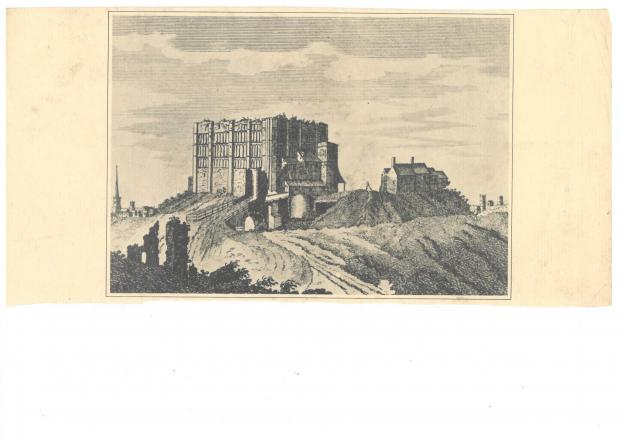
Print of Norwich Castle during the 19th century

The duo toured Norwich Castle—a site that has served as a Norman fortress, royal palace, and later a Victorian prison—exploring the massive keep with archaeologist Dr. Tim Pestell.

They investigated fire-damaged vaults from medieval sieges, examined remarkable high-status artifacts uncovered in recent digs, and visited Henry I’s feasting hall, where he celebrated Christmas in 1121.

However, the skeletons discovered during the castle’s multi-million-pound renovation arguably attracted the most attention.

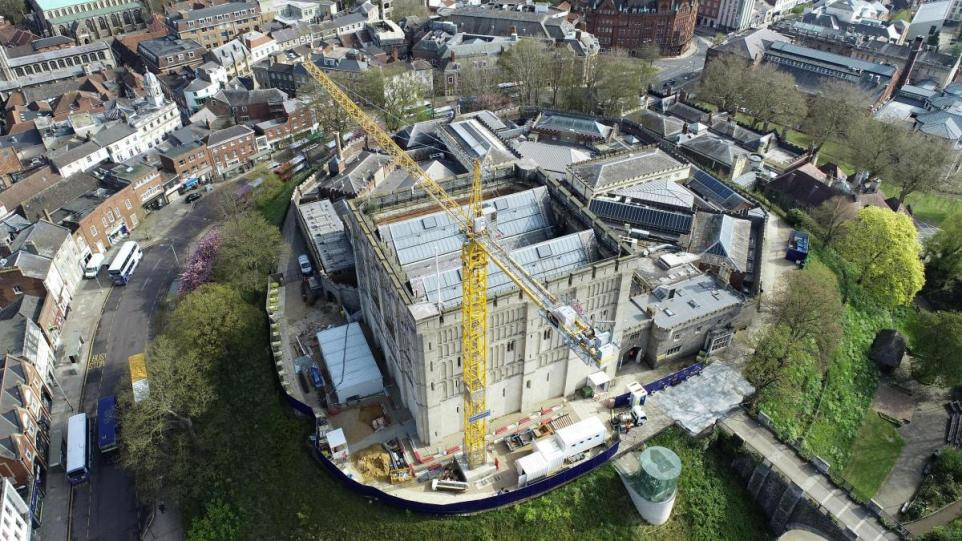
Dr. Pestell, project curator for The Royal Palace Reborn and senior curator of archaeology, explained: “During the renovation, we excavated several pits on the mound.

“We were setting up a tower crane to lift materials, and inside, we found several skeletons—fragments and partial remains.”

Dr Tim Pestell, senior curator at Norwich Castle Museum

“They almost certainly aren’t medieval,” Dr. Pestell explained. “They likely belonged to prisoners who had been brought into the keep.”

Norwich Castle County Gaol, the city’s prison, opened in the 14th century within the castle and served as a royal tool for administering justice.

“There had to be a place to bury those who were hanged,” he added.

Dr. Pestell noted that this wasn’t the first discovery of human remains; around 25 years ago, bones were found elsewhere on the site.
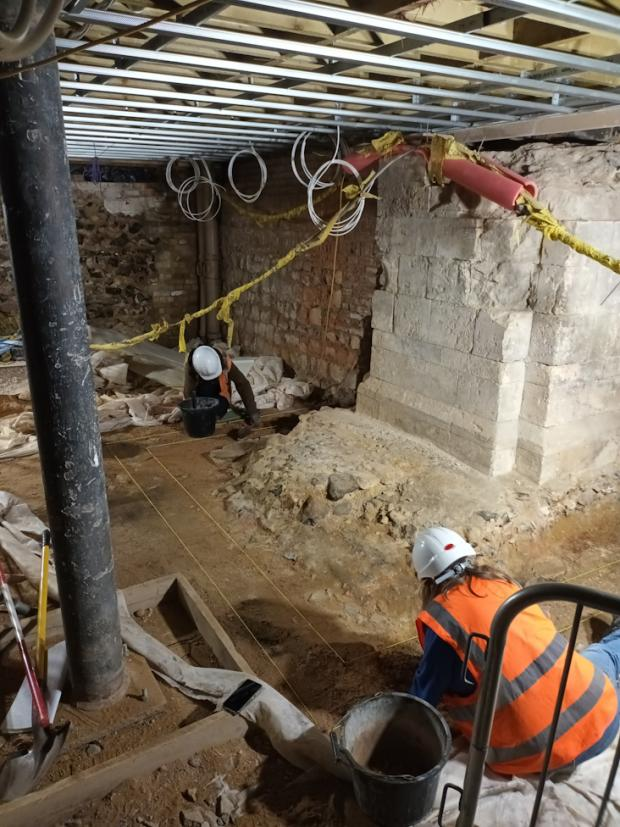
Archaeologists from Oxford Archaeology at work around the medieval pier bases at Norwich Castle

“The new finds were on the mound but in a different section,” he said. “This suggests that burials may have been more widespread. It reflects the long history of the keep and its functions.”

The castle, which developed into a medieval hub, still retains its original 12th-century vault, a key defensive feature.

Dr. Pestell observed, “The vault contains pink stonework that has clearly been burned. Significant heat likely came from below. We believe there were two sieges, in 1173 and 1216, and this damage is evidence of that.”

Mr. Lewis added humorously, “I doubt the king had planned for a massive bonfire.”

Unusual Bronze Age Burial Uncovered in Scotland →
Featured
image_2025-12-21_021529627.png
Dec 20, 2025
Secret behind Norwich Castle's human remains revealed
Dec 20, 2025
Read More →
Dec 20, 2025
image_2025-12-21_021257223.png
Dec 20, 2025
Unusual Bronze Age Burial Uncovered in Scotland
Dec 20, 2025
Read More →
Dec 20, 2025
image_2025-12-21_020831181.png
Dec 20, 2025
Where does the name Chadwell Heath originate from?
Dec 20, 2025
Read More →
Dec 20, 2025
image_2025-12-21_015405744.png
Dec 20, 2025
No Mortar, No Cement, No Metal – How Sardinia’s Nuragic Towers Have Defied Gravity for 3,500 Years?
Dec 20, 2025
Read More →
Dec 20, 2025
image_2025-12-21_014820258.png
Dec 20, 2025
Venice’s Medieval Glass Industry Examined News
Dec 20, 2025
Read More →
Dec 20, 2025
image_2025-12-21_013856552.png
Dec 20, 2025
2,600-Year-Old Tandoor Discovered at Oluz Höyük Reveals Deep Roots of Anatolian Culinary Traditions
Dec 20, 2025
Read More →
Dec 20, 2025
read more

Powered by The archaeologist