• MAIN PAGE
  • LATEST NEWS
    • Lost Cities
    • Archaeology's Greatest Finds
    • Underwater Discoveries
    • Greatest Inventions
    • Studies
    • Blog
  • PHILOSOPHY
  • HISTORY
  • RELIGIONS
    • Africa
    • Anatolia
    • Arabian Peninsula
    • Balkan Region
    • China - East Asia
    • Europe
    • Eurasian Steppe
    • Levant
    • Mesopotamia
    • Oceania - SE Asia
    • Pre-Columbian Civilizations of America
    • Iranian Plateau - Central Asia
    • Indus Valley - South Asia
    • Japan
    • The Archaeologist Editor Group
    • Scientific Studies
    • Aegean Prehistory
    • Historical Period
    • Byzantine Middle Ages
    • Predynastic Period
    • Dynastic Period
    • Greco-Roman Egypt
  • Rome
  • PALEONTOLOGY
  • About us
Menu

The Archaeologist

  • MAIN PAGE
  • LATEST NEWS
  • DISCOVERIES
    • Lost Cities
    • Archaeology's Greatest Finds
    • Underwater Discoveries
    • Greatest Inventions
    • Studies
    • Blog
  • PHILOSOPHY
  • HISTORY
  • RELIGIONS
  • World Civilizations
    • Africa
    • Anatolia
    • Arabian Peninsula
    • Balkan Region
    • China - East Asia
    • Europe
    • Eurasian Steppe
    • Levant
    • Mesopotamia
    • Oceania - SE Asia
    • Pre-Columbian Civilizations of America
    • Iranian Plateau - Central Asia
    • Indus Valley - South Asia
    • Japan
    • The Archaeologist Editor Group
    • Scientific Studies
  • GREECE
    • Aegean Prehistory
    • Historical Period
    • Byzantine Middle Ages
  • Egypt
    • Predynastic Period
    • Dynastic Period
    • Greco-Roman Egypt
  • Rome
  • PALEONTOLOGY
  • About us

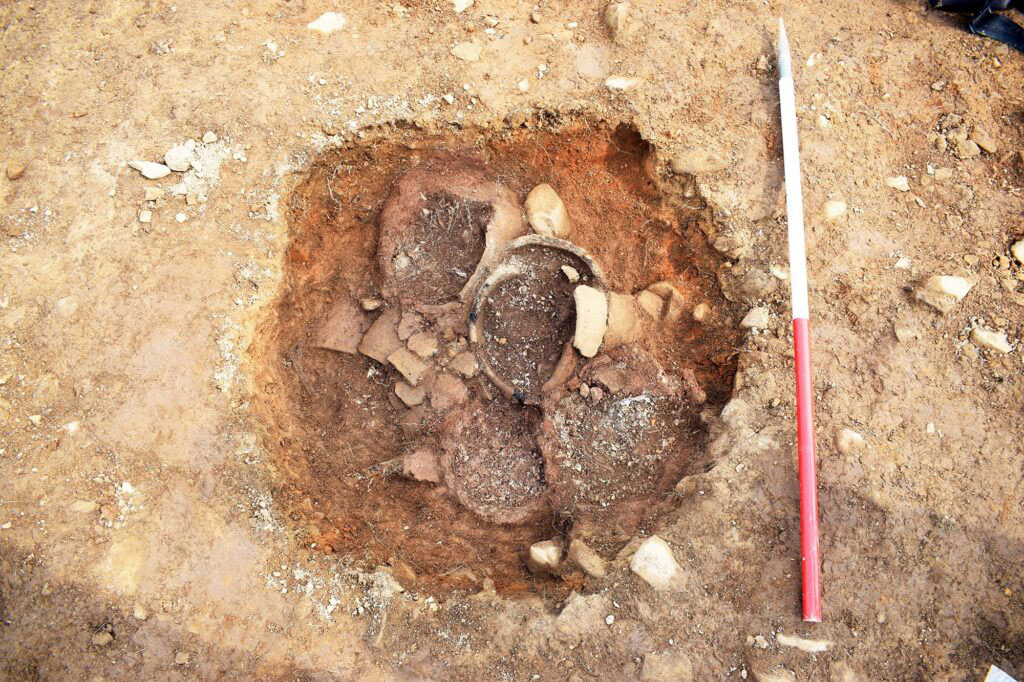
Pit with five burial urns uncovered at Twentyshilling Wind Farm, Sanquhar, Scotland

Unusual Bronze Age Burial Uncovered in Scotland

December 20, 2025

SANQUHAR, SCOTLAND—BBC News reports that archaeologists have uncovered the cremated remains of at least eight individuals inside five urns within a Bronze Age barrow in southern Scotland. Thomas Muir from Guard Archaeology and his team discovered the burial mound while surveying the area ahead of a wind farm construction. The site has been dated to between 1439 and 1287 B.C. Muir suggested that the individuals may have belonged to the same family or social group and that their deaths could have resulted from famine or another catastrophic event. “The urns were all deposited simultaneously, tightly packed in the pit, and share the same fifteenth to thirteenth century B.C. date range,” he explained. At a nearby Bronze Age site, Muir noted that bodies were sometimes exposed before being reburied in a communal burial location used over a long period.

The original research is published in Archaeology Reports Online. For more on Bronze Age Britain, see "Bronze Age Beads Go Abroad."
← Secret behind Norwich Castle's human remains revealedWhere does the name Chadwell Heath originate from? →
Featured
image_2025-12-21_021529627.png
Dec 20, 2025
Secret behind Norwich Castle's human remains revealed
Dec 20, 2025
Read More →
Dec 20, 2025
image_2025-12-21_021257223.png
Dec 20, 2025
Unusual Bronze Age Burial Uncovered in Scotland
Dec 20, 2025
Read More →
Dec 20, 2025
image_2025-12-21_020831181.png
Dec 20, 2025
Where does the name Chadwell Heath originate from?
Dec 20, 2025
Read More →
Dec 20, 2025
image_2025-12-21_015405744.png
Dec 20, 2025
No Mortar, No Cement, No Metal – How Sardinia’s Nuragic Towers Have Defied Gravity for 3,500 Years?
Dec 20, 2025
Read More →
Dec 20, 2025
image_2025-12-21_014820258.png
Dec 20, 2025
Venice’s Medieval Glass Industry Examined News
Dec 20, 2025
Read More →
Dec 20, 2025
image_2025-12-21_013856552.png
Dec 20, 2025
2,600-Year-Old Tandoor Discovered at Oluz Höyük Reveals Deep Roots of Anatolian Culinary Traditions
Dec 20, 2025
Read More →
Dec 20, 2025
read more

Powered by The archaeologist