Introduction
Located along the Tennessee River near present-day Seven Mile Island in eastern Tennessee, this archaeological site preserves the remains of a thriving Mississippian village occupied between approximately 1000 and 1450 CE. The settlement served as a regional farming community connected to larger ceremonial centers throughout the Tennessee River Valley. Its strategic riverside location provided fertile agricultural land, abundant aquatic resources, and access to major transportation routes that linked communities across the Southeast.
Village Layout
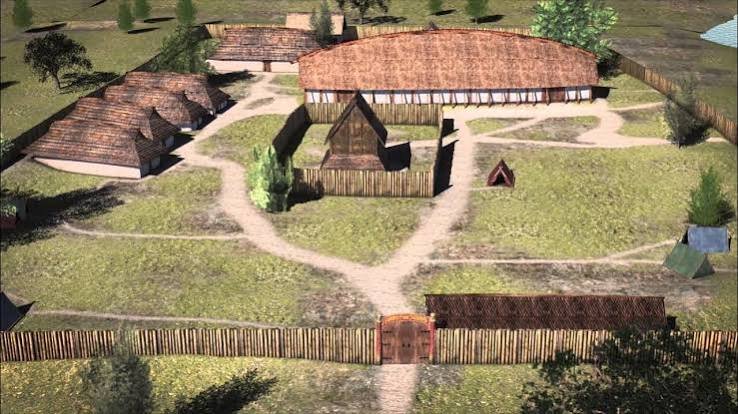
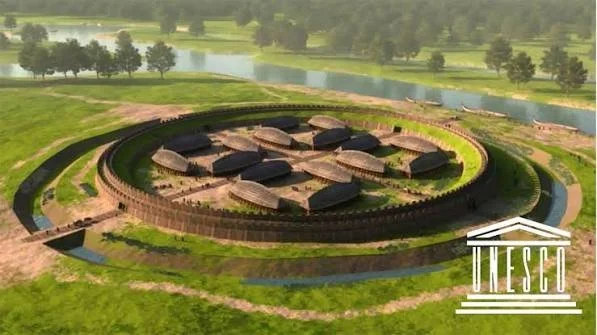
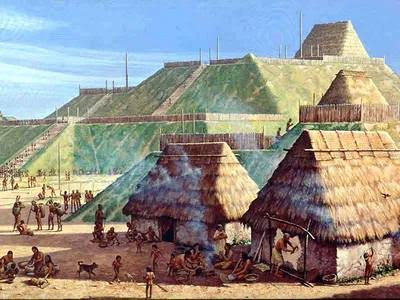
Seven Mile Island consisted of residential neighborhoods arranged around open communal spaces, with one or more platform mounds serving as ceremonial and political centers. Houses were rectangular structures built from timber frames, woven cane walls, and clay plaster, each containing central hearths and underground storage pits.
The platform mound supported a temple or council house overlooking the surrounding settlement, while nearby workshops produced pottery, stone tools, and bone implements used in everyday life.
Agriculture and Subsistence
Residents cultivated maize, beans, squash, and sunflowers on the fertile floodplains of the Tennessee River. Fishing supplied freshwater mussels, catfish, and other river species, while hunting deer, turkey, and small mammals supplemented agricultural production.
Seasonal harvesting of nuts, berries, and wild plants provided additional food resources, creating a balanced subsistence economy capable of supporting permanent village life.
Trade and Cultural Connections
Seven Mile Island participated in regional Mississippian trade networks that distributed shell ornaments, copper artifacts, pottery, and high-quality stone tools throughout the Southeast. Shared ceramic styles and ceremonial objects indicate close cultural relationships with larger Mississippian centers in Tennessee, Alabama, and Georgia.
These connections allowed the community to exchange not only goods but also religious beliefs, artistic traditions, and technological innovations.
Archaeological Importance
Excavations have uncovered house remains, storage pits, pottery fragments, shell-tempered ceramics, food remains, and stone tools that provide valuable information about everyday Mississippian life in the Tennessee River Valley. The site contributes significantly to understanding how smaller farming villages supported the larger ceremonial chiefdoms of the prehistoric Southeast.
Conclusion
Seven Mile Island illustrates the importance of river-based Mississippian villages in sustaining the economic and political foundations of prehistoric Tennessee. Its agricultural prosperity, organized settlement layout, participation in regional trade, and ceremonial traditions demonstrate the adaptability and sophistication of Indigenous communities that flourished along the Tennessee River centuries before European arrival.