Introduction
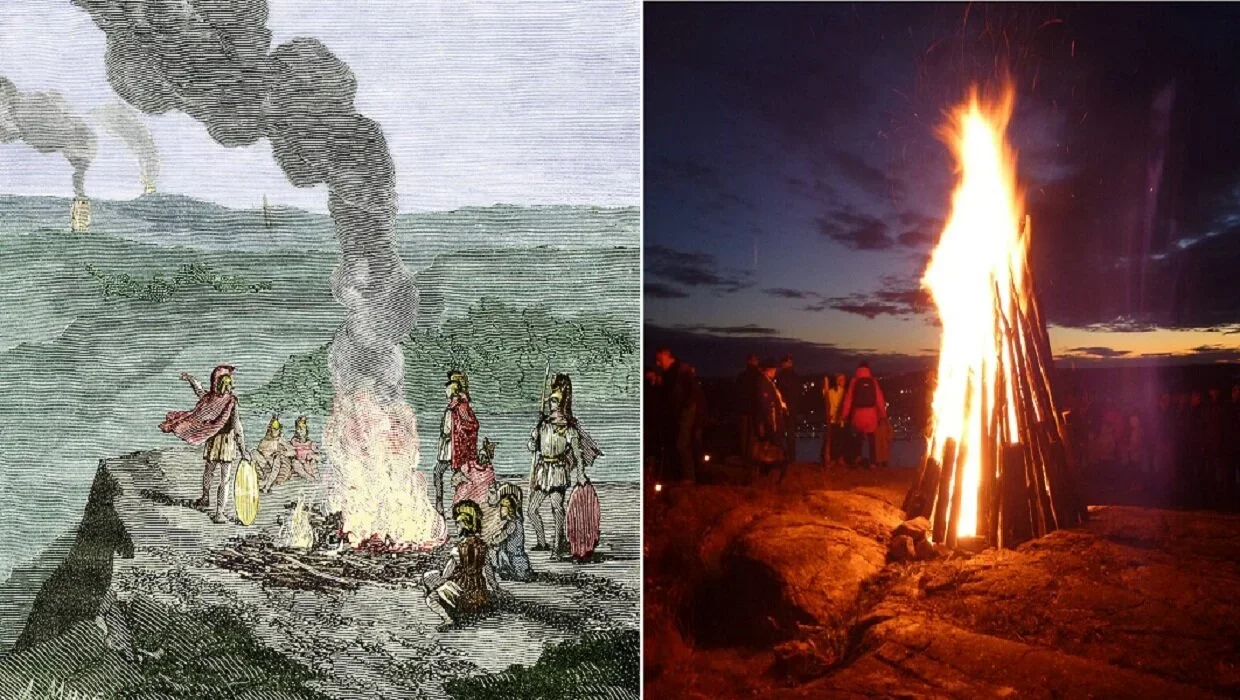
The history of ancient metallurgy is often associated with major mining districts, permanent industrial settlements, and large furnaces. However, metal production did not always take place in centralized workshops. In many regions, small groups of metalworkers established temporary smelting camps near mineral deposits, woodland resources, and suitable sources of water.
Highland ridges could provide several advantages for these activities. They offered access to exposed mineral deposits, favorable locations for controlling furnace temperatures, and proximity to forests that supplied fuel. Some camps may have operated seasonally, allowing workers to exploit resources without maintaining permanent settlements.
The archaeology of these small-scale smelting sites provides an opportunity to investigate how technological knowledge spread beyond major centers of production. It also reveals the relationship between metallurgy, seasonal mobility, landscape use, and local economies.
Why Highland Ridges Were Selected
The location of a smelting camp depended on several practical considerations. Ore availability was important, but it was not the only factor. Metalworkers also needed fuel, water, suitable construction materials, and access to routes through which finished products could be transported.
Highland ridges sometimes exposed mineral-bearing rocks through natural erosion. This could make certain ores easier to locate than deposits hidden beneath deep soil. Workers could identify promising materials through their color, weight, texture, and other visible characteristics.
Elevated locations could also offer access to prevailing winds, although furnace design and airflow requirements varied considerably. Some smelting installations were constructed to take advantage of natural air movement, while others relied on bellows or carefully designed openings.
The selection of a site therefore reflected a combination of geological opportunity and technological experience.
The Structure of Temporary Smelting Camps
A small smelting camp might contain several features arranged around a working area. These could include furnace remains, roasting pits, charcoal deposits, ore-crushing surfaces, storage spaces, and temporary shelters.
Not every camp would contain all these features. Some stages of metal production might have taken place at a nearby location, while other activities were performed directly beside the furnace.
Furnaces could be constructed from clay, stone, or combinations of both. Their size and design depended on the type of ore, the desired metal, available materials, and local metallurgical traditions.
Temporary shelters may have been relatively simple. Workers could use wooden frameworks, lightweight roofing materials, or natural rock formations for protection. Because such structures were often made from perishable materials, they may leave little archaeological evidence.
The Smelting Process
Smelting involves extracting metal from ore through heating and chemical reactions. The precise process varies depending on the metal being produced and the mineral composition of the ore.
For copper production, for example, suitable copper ores were heated under controlled conditions to separate metal from unwanted components. Iron production required different temperatures and chemical conditions, often producing a spongy mass known as a bloom rather than immediately yielding liquid iron.
Fuel was essential. Charcoal was particularly valuable because it could produce high temperatures and create a reducing environment inside the furnace.
The process required considerable practical knowledge. Metalworkers had to understand how to prepare ore, regulate airflow, maintain furnace temperatures, and recognize when the material was ready for further processing.
Evidence Left Behind
Smelting camps can be identified through several types of archaeological evidence. Furnace fragments, slag, tuyères, charcoal, and ore-processing remains are particularly important.
Slag is one of the most useful indicators. It is the waste material produced during smelting and often preserves chemical information about the process. Its composition can help researchers identify the type of ore and the metallurgical techniques used.
Tuyères, or air-delivery pipes, may provide evidence for how oxygen entered the furnace. Their shape and heat damage can help reconstruct furnace operation.
Researchers may also examine microscopic residues and metallurgical inclusions. These can reveal production techniques that are not visible from the overall shape of the remains.
Seasonal Mobility and Labor
Small smelting camps may have been occupied only during particular periods of the year. Workers could travel to highland areas when weather conditions allowed access to ore deposits and fuel supplies.
Seasonal operation may have been connected to agricultural calendars. Communities could organize metal production during periods when fewer people were required for planting or harvesting.
However, not every small smelting site was temporary. Some may have operated repeatedly over generations, gradually accumulating substantial archaeological deposits.
The organization of labor is equally important. A small team could handle ore preparation, furnace construction, fuel collection, and smelting. More demanding operations might require cooperation between specialists and local communities.
Metallurgy and Local Exchange
Metal produced in highland camps could supply nearby settlements or enter wider exchange networks. Finished objects might include tools, weapons, ornaments, and components used in agricultural or domestic activities.
In some cases, workers may have transported metal in semi-processed forms to larger workshops. This would allow specialized craftsmen elsewhere to produce finished objects without operating their own furnaces.
The movement of metal can be investigated through chemical and isotopic analysis, although determining the exact geological source is not always straightforward. Metals could be mixed, recycled, or transported through several intermediate communities.
Environmental Impact
Smelting required considerable fuel, especially where production was repeated over long periods. Charcoal production could place pressure on nearby woodland.
Archaeologists can investigate this impact through charcoal analysis, pollen records, and changes in vegetation. A decline in certain tree species near a production area may indicate intensive fuel collection, although climate and other land-use activities must also be considered.
Mining and ore processing could alter slopes, expose soils, and create waste deposits. These changes sometimes remain visible long after production ended.
Identifying a Smelting Camp
A concentration of slag alone does not always prove that smelting occurred at the location. Waste material could have been transported from another site or reused in later construction.
Researchers therefore look for combinations of evidence. Furnace remains, slag deposits, ore fragments, fuel residues, and related working surfaces provide a stronger basis for interpretation.
Dating is also important. Charcoal from a furnace may be radiocarbon dated, provided its archaeological context is secure. Researchers must consider the possibility that older wood was used as fuel, which can make a date appear earlier than the actual smelting event.
Conclusion
Small-scale smelting camps on highland ridges demonstrate that ancient metallurgy was not limited to major industrial centers. Metal production could take place in temporary or semi-permanent locations where workers combined geological knowledge, fuel resources, and specialized technical skills.
These sites reveal the mobility of metalworkers and the relationship between local environments and technological production. Their remains also provide valuable evidence for the organization of labor, resource management, and exchange.
Although many smelting camps are difficult to identify because their structures were temporary, the surviving slag, furnace fragments, and environmental evidence can help reconstruct activities that once connected remote highland landscapes with wider economic networks.