Introduction
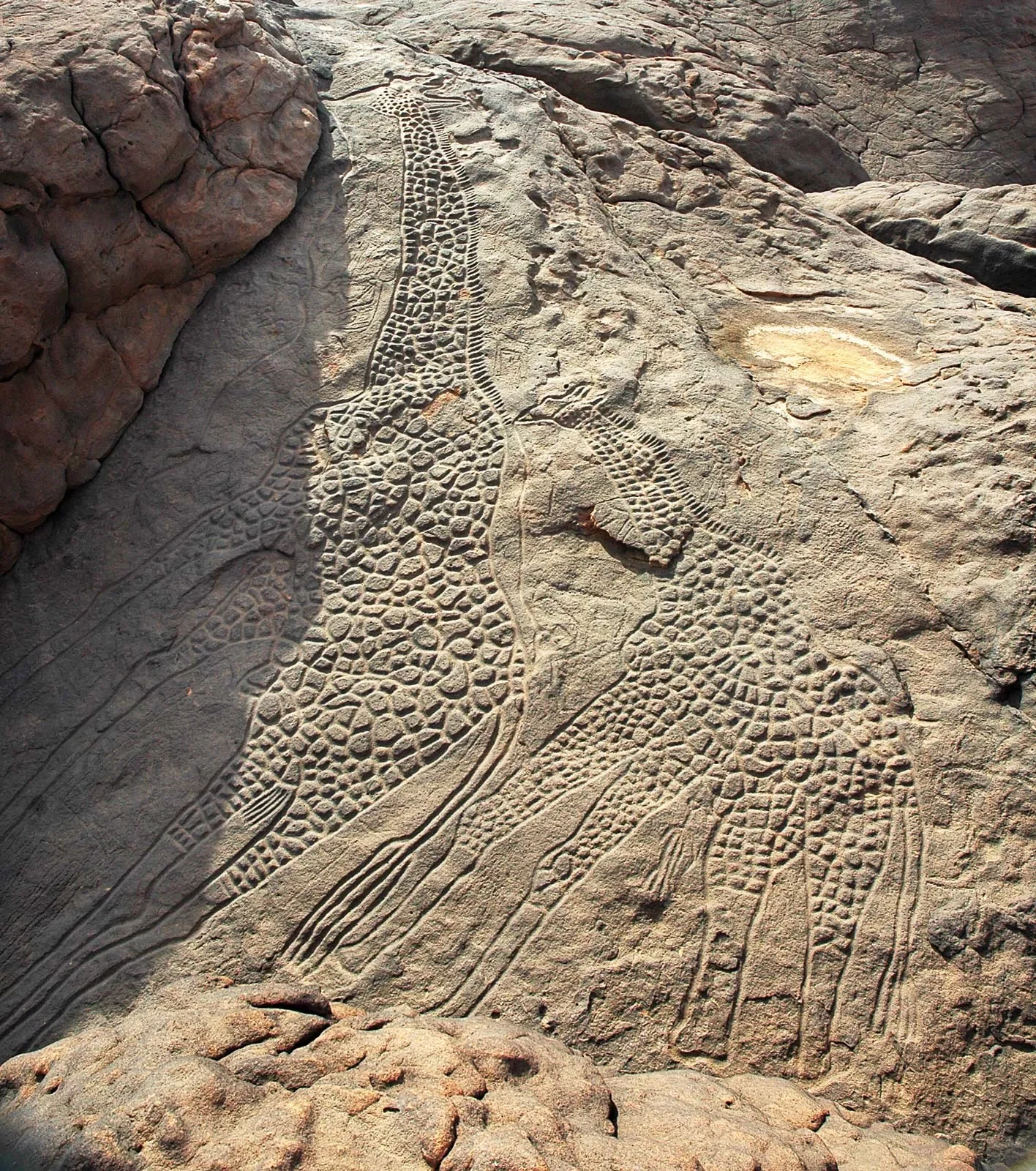
The Central Sahara contains some of the most remarkable collections of prehistoric rock art in the world. Across its mountains, plateaus, and desert valleys, ancient artists created images of animals, people, hunting activities, ceremonies, and everyday life.
These images are valuable historical sources because they preserve information about environments and communities that existed thousands of years ago. Some researchers have also investigated whether particular rock art panels could have functioned as calendars, recording seasonal changes, astronomical observations, or important events in the annual cycle.
The idea of a rock art calendar is intriguing, but it requires careful interpretation. A painting or engraving showing animals, celestial objects, or repeated symbols does not automatically represent a formal calendar. Archaeologists must examine the arrangement, chronology, cultural context, and possible relationship between the images and seasonal environmental changes.
The Central Sahara in Prehistory
The Sahara was not always the hyper-arid desert familiar today. During wetter periods, parts of the region contained lakes, rivers, grasslands, and vegetation capable of supporting substantial human and animal populations.
These environmental changes influenced settlement, mobility, and economic activities. Communities could hunt wild animals, raise livestock, gather plants, and move between water sources.
As the climate became increasingly dry, populations adapted their activities and settlement patterns. Some groups moved toward more reliable water sources, while others developed pastoral strategies suited to changing conditions.
Rock art preserves traces of these transformations. Images of large wild animals, cattle, and other species provide clues about the environments in which ancient artists lived.
What Is a Rock Art Calendar?
A calendar organizes time through recurring cycles. These may include the movement of the sun, the phases of the moon, the appearance of particular stars, rainfall patterns, or seasonal changes in plants and animals.
A rock art calendar would therefore be a visual system through which people recorded or communicated recurring temporal information.
Such a system might contain repeated symbols, sequences of images, or representations associated with predictable environmental events. However, a calendar does not need to resemble a modern written system.
In societies where knowledge was transmitted orally, images could support shared memories and seasonal teaching. A particular animal might signal a migration period, while a recurring natural event could indicate when to move livestock or collect certain resources.
Animals as Seasonal Indicators
Animal imagery is particularly important in Saharan rock art. Different species require specific environmental conditions and may appear in particular landscapes or seasons.
The presence of cattle, wild fauna, and other animals can provide evidence for the ecological conditions represented by a particular artistic tradition.
However, the relationship between an animal image and a season must be established carefully. An animal may be depicted because it held religious significance, represented social status, or formed part of a narrative rather than because it indicated a particular time of year.
Comparing the images with archaeological evidence, faunal remains, and palaeoenvironmental records can help clarify their possible meanings.
Astronomical Interpretations
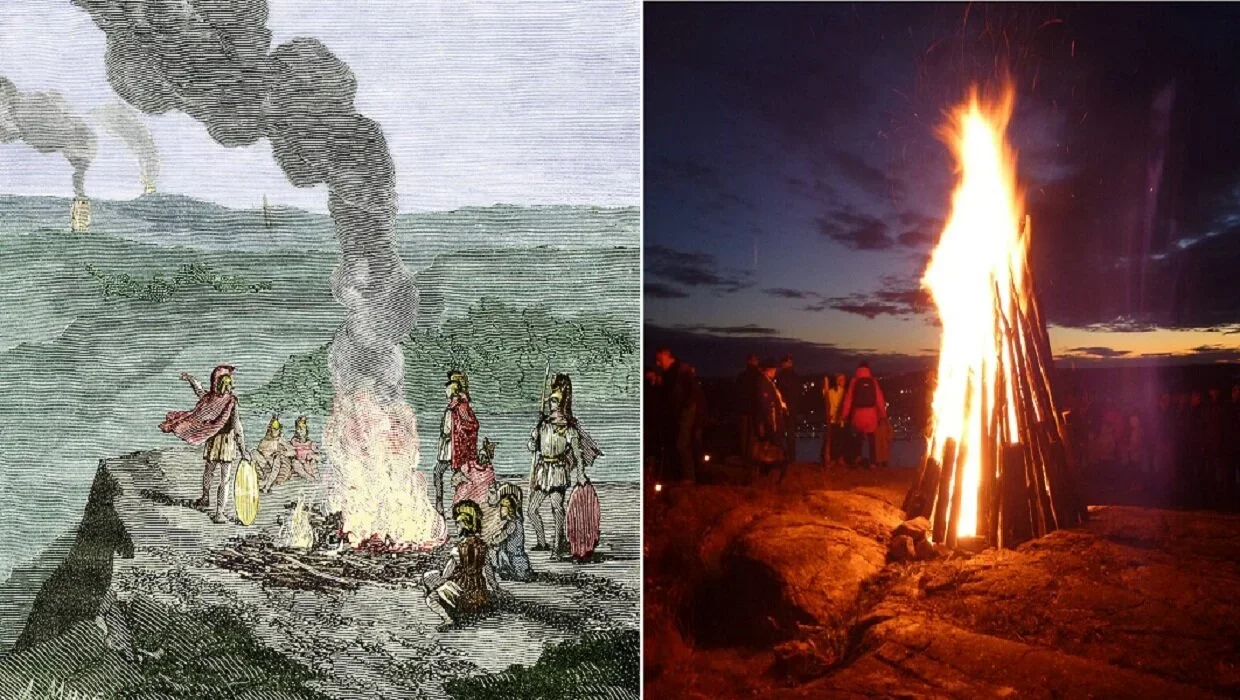
Some researchers have explored whether prehistoric rock art reflects observations of the sun, moon, stars, or other celestial phenomena.
Astronomical knowledge could have been useful for organizing seasonal activities. The changing position of the sun, for example, provides a predictable reference for the annual cycle.
A panel containing repeated marks or carefully positioned figures might invite astronomical interpretation. Yet such interpretations are vulnerable to speculation when the symbols are not clearly understood.
A convincing astronomical explanation requires more than a visual resemblance. Researchers need to demonstrate that the arrangement is intentional, that the proposed celestial relationship is plausible for the period, and that the interpretation fits the wider cultural context.
Rock Art and Pastoral Calendars
The development of pastoralism created new demands for seasonal planning. Herd owners needed to understand the availability of water, pasture, and safe routes.
In arid environments, the timing of movement could be especially important. A community might travel toward a seasonal grazing area after rainfall and return when resources became scarce.
Rock art could have helped communicate information about animals, landscapes, and important locations. It may also have supported collective memory by recording routes, encounters, and culturally significant events.
However, the existence of pastoral calendars does not prove that specific rock art panels were used as calendar charts. This remains a question requiring site-specific investigation.
Dating Rock Art
Establishing the age of rock art is essential for understanding its possible function. Direct dating is difficult because pigments and engraved surfaces may not contain materials suitable for standard dating methods.
Researchers may use several approaches, including radiocarbon dating of associated organic pigments where suitable, dating of mineral deposits that formed over or beneath an image, and comparison with archaeological layers.
Stylistic analysis can also provide chronological clues. Changes in the representation of animals, clothing, weapons, and human figures may help identify different artistic traditions.
Nevertheless, stylistic sequences are not always precise. A motif may remain in use for a long period, and artists may deliberately reproduce older styles.
The Importance of Landscape Context
Rock art should not be studied as an isolated collection of images. Its location may be meaningful.
A panel overlooking a valley, water source, migration corridor, or mountain pass could have served a different purpose from one located inside a sheltered cave.
Researchers examine visibility, accessibility, nearby archaeological sites, and relationships with natural features.
Some locations may have functioned as gathering places. Others may have been connected with ritual activities, territorial claims, or communication between communities.
A possible calendar interpretation becomes stronger when the images are associated with environmental features relevant to seasonal planning.
The Limits of Interpretation
One of the greatest challenges in rock art research is the absence of direct testimony from the artists. Images can preserve cultural information, but their meanings may not be recoverable with certainty.
A repeated pattern might represent counting, decoration, ownership, ritual symbolism, or something that modern researchers have not considered.
The same image could also have served different purposes at different times.
For this reason, researchers should distinguish between observable evidence and interpretation. A panel may clearly depict animals and human figures, while its supposed function as a seasonal calendar remains hypothetical.
Modern Research Methods
Digital photography, photogrammetry, three-dimensional scanning, and geographic information systems have expanded the study of Saharan rock art.
High-resolution imaging can reveal faint engravings and pigment traces that are difficult to see in ordinary light. Three-dimensional models allow researchers to examine the depth and technique of engravings.
Geographic information systems can compare the location of rock art panels with water sources, terrain, archaeological settlements, and reconstructed environmental conditions.
These methods make it possible to investigate patterns across large regions rather than relying only on individual panels.
Conclusion
Rock art calendars of the Central Sahara offer a fascinating possibility for understanding how prehistoric communities observed and organized time. Images of animals, people, and environmental features may preserve knowledge about seasonal movement, pastoral activities, and recurring natural events.
However, identifying a particular panel as a calendar requires strong evidence. Astronomical alignments, animal sequences, and repeated symbols must be evaluated within their archaeological and environmental contexts.
The greatest value of this research lies in examining how ancient communities understood their changing surroundings. Even when the precise meaning of a rock art panel remains uncertain, it can reveal how people used images to preserve memory, communicate knowledge, and maintain relationships with the landscapes on which their survival depended.