Introduction
Water-powered machinery played an important role in the development of medieval economies. While large mills serving towns and major estates are often emphasized, smaller waterwheels also operated in rural landscapes.
These installations could provide mechanical power for grinding grain, processing agricultural products, operating simple industrial equipment, and supporting local production.
Small-scale waterwheels were particularly valuable because they allowed communities to use the energy of flowing water rather than relying entirely on human or animal labor.
Their remains can be difficult to identify archaeologically. Wooden components often decay, channels may become filled with sediment, and later land use can erase the original structures.
Nevertheless, the study of small rural waterwheels helps reconstruct the technological and economic life of medieval communities.
The Development of Water Power
Water-powered machinery existed long before the medieval period, but its use expanded in different regions and industries over time.
The basic principle is straightforward. Moving water strikes or passes through a wheel, causing it to rotate. This movement can then be transferred through shafts, gears, and other mechanical components.
The design depends on the available water source and the amount of energy required.
Some wheels were driven by water flowing beneath them, while others received water from above or at an intermediate point.
Each design had advantages and limitations based on terrain, water flow, construction materials, and seasonal conditions.
Why Small Rural Mills Were Useful
Large mills were not always practical for isolated villages.
A smaller installation could be built near a local stream and operated by a household, landowner, or group of neighbors.
Such mills could reduce the time required for repetitive work and make agricultural production more efficient.
Grain grinding was one of the most important uses. Instead of manually processing grain, households could bring it to a water-powered mill.
Other applications could include fulling cloth, sawing timber, crushing materials, or operating equipment used in small industries.
Not every medieval waterwheel performed all these functions. Its purpose depended on the machinery connected to it.
Choosing a Suitable Location
The location of a waterwheel was critical.
Builders needed a reliable water source, sufficient flow, and a suitable difference in elevation where the design required it.
Small streams could support modest installations, although their flow might change significantly between seasons.
A site also needed access for transporting grain, timber, tools, and finished products.
Rural waterwheels were often located near settlements, agricultural fields, bridges, or existing channels.
The surrounding landscape could therefore provide clues about the mill's economic role.
Constructing the Wheel
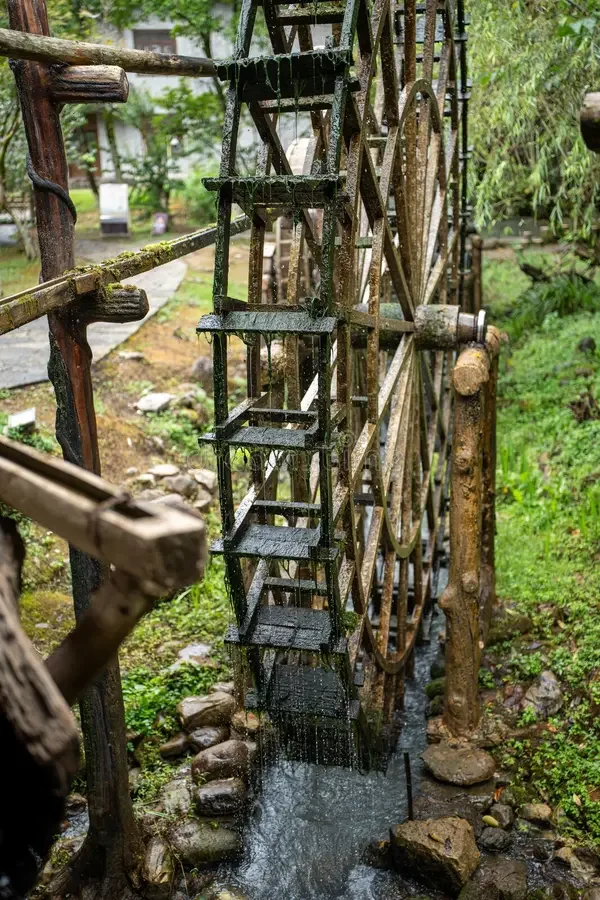
Waterwheels were commonly constructed using timber, although stone and metal components could also be used in parts of the installation.
The wheel contained a central axle and a series of spokes or structural supports. Depending on its design, it could also include paddles or compartments that captured water.
Wooden components required regular maintenance because constant exposure to water and mechanical stress could cause deterioration.
Builders needed knowledge of carpentry, balance, and mechanical transmission.
A poorly constructed wheel could lose efficiency or fail under repeated use.
Water Channels and Control Structures
A waterwheel required a system for directing water toward the wheel.
This might include a diversion channel, a small dam or weir, a millrace, and a mechanism for controlling water flow.
The design varied according to local topography.
Some installations diverted part of a stream through a channel before returning it downstream. Others used a small reservoir to regulate water availability.
These features could leave archaeological traces even when the wheel itself has disappeared.
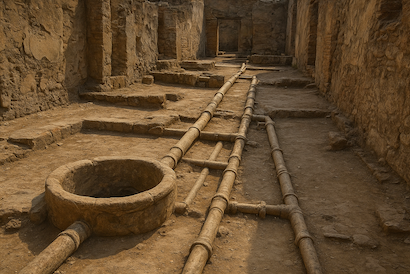
Researchers may identify channels, retaining walls, sluices, and sediment deposits that indicate water management.
Archaeological Identification
Small waterwheels are often reconstructed from indirect evidence.
A millrace or channel may survive as a shallow depression. Stone foundations could indicate the location of a building, while wheel pits or axle supports may reveal where the machinery operated.
Sediment deposits can also preserve evidence of repeated water movement.
Archaeologists examine the relationship between these features and nearby streams to determine whether they formed part of a mill system.
Historical maps, estate records, tax documents, and local charters may provide additional information.
Rural Economies and Ownership
Water-powered mills could be privately owned, controlled by landlords, operated by communities, or associated with religious institutions.
Ownership influenced who could use the machinery and what fees might be charged.
In some medieval regions, tenants were required to use a particular mill and pay for grinding services. In other places, communities had more direct control over local installations.
A small waterwheel could therefore become an important part of rural economic relationships.
It was not simply a machine. It was also an asset connected to land, labor, rights, and obligations.
Seasonal Operation
The reliability of a waterwheel depended on the water supply.
During dry periods, a small stream might not provide enough flow to operate the machinery. During floods, excessive water could damage channels or the wheel itself.
Some mills may therefore have operated seasonally.
Communities could adjust their production schedules according to water availability and agricultural demands.
The archaeological record may reveal repeated repairs associated with flooding or changing stream conditions.
Environmental Impact
Waterwheels altered local waterways.
Diversion channels could change water distribution, while small weirs might affect sediment movement and fish passage.
The environmental effects of a small mill were generally local, but repeated installations along the same stream could influence the wider water system.
Researchers can investigate these changes through sediment analysis, historical landscape reconstruction, and examination of surviving channels.
The study of mill sites therefore contributes to understanding how medieval communities modified their environments for economic purposes.
Technology and Knowledge Transfer
Waterwheel technology spread through contact between communities, movement of craftsmen, and the circulation of technical knowledge.
Millwrights needed practical skills in carpentry, masonry, hydraulics, and mechanical design.
A new installation might reflect local adaptation rather than direct copying of a distant model.
Regional differences in wheel design can therefore provide clues about technological traditions and patterns of exchange.
Conclusion
Small-scale waterwheels were important components of medieval rural economies. They allowed communities to harness flowing water for grinding, processing, and other forms of production, reducing dependence on manual and animal power.
Although their wooden machinery rarely survives, channels, foundations, wheel pits, and historical documents can help reconstruct their operation.
These installations also reveal relationships between technology, property, labor, and environmental management.
The history of medieval water power is not limited to monumental mills or major industrial centers. Small rural waterwheels demonstrate how communities adapted local resources to meet everyday needs and how modest engineering projects could transform agricultural and domestic life.Introduction
Water-powered machinery played an important role in the development of medieval economies. While large mills serving towns and major estates are often emphasized, smaller waterwheels also operated in rural landscapes.
These installations could provide mechanical power for grinding grain, processing agricultural products, operating simple industrial equipment, and supporting local production.
Small-scale waterwheels were particularly valuable because they allowed communities to use the energy of flowing water rather than relying entirely on human or animal labor.
Their remains can be difficult to identify archaeologically. Wooden components often decay, channels may become filled with sediment, and later land use can erase the original structures.
Nevertheless, the study of small rural waterwheels helps reconstruct the technological and economic life of medieval communities.
The Development of Water Power
Water-powered machinery existed long before the medieval period, but its use expanded in different regions and industries over time.
The basic principle is straightforward. Moving water strikes or passes through a wheel, causing it to rotate. This movement can then be transferred through shafts, gears, and other mechanical components.
The design depends on the available water source and the amount of energy required.
Some wheels were driven by water flowing beneath them, while others received water from above or at an intermediate point.
Each design had advantages and limitations based on terrain, water flow, construction materials, and seasonal conditions.
Why Small Rural Mills Were Useful
Large mills were not always practical for isolated villages.
A smaller installation could be built near a local stream and operated by a household, landowner, or group of neighbors.
Such mills could reduce the time required for repetitive work and make agricultural production more efficient.
Grain grinding was one of the most important uses. Instead of manually processing grain, households could bring it to a water-powered mill.
Other applications could include fulling cloth, sawing timber, crushing materials, or operating equipment used in small industries.
Not every medieval waterwheel performed all these functions. Its purpose depended on the machinery connected to it.
Choosing a Suitable Location
The location of a waterwheel was critical.
Builders needed a reliable water source, sufficient flow, and a suitable difference in elevation where the design required it.
Small streams could support modest installations, although their flow might change significantly between seasons.
A site also needed access for transporting grain, timber, tools, and finished products.
Rural waterwheels were often located near settlements, agricultural fields, bridges, or existing channels.
The surrounding landscape could therefore provide clues about the mill's economic role.
Constructing the Wheel
Waterwheels were commonly constructed using timber, although stone and metal components could also be used in parts of the installation.
The wheel contained a central axle and a series of spokes or structural supports. Depending on its design, it could also include paddles or compartments that captured water.
Wooden components required regular maintenance because constant exposure to water and mechanical stress could cause deterioration.
Builders needed knowledge of carpentry, balance, and mechanical transmission.
A poorly constructed wheel could lose efficiency or fail under repeated use.
Water Channels and Control Structures
A waterwheel required a system for directing water toward the wheel.
This might include a diversion channel, a small dam or weir, a millrace, and a mechanism for controlling water flow.
The design varied according to local topography.
Some installations diverted part of a stream through a channel before returning it downstream. Others used a small reservoir to regulate water availability.
These features could leave archaeological traces even when the wheel itself has disappeared.
Researchers may identify channels, retaining walls, sluices, and sediment deposits that indicate water management.
Archaeological Identification
Small waterwheels are often reconstructed from indirect evidence.
A millrace or channel may survive as a shallow depression. Stone foundations could indicate the location of a building, while wheel pits or axle supports may reveal where the machinery operated.
Sediment deposits can also preserve evidence of repeated water movement.
Archaeologists examine the relationship between these features and nearby streams to determine whether they formed part of a mill system.
Historical maps, estate records, tax documents, and local charters may provide additional information.
Rural Economies and Ownership
Water-powered mills could be privately owned, controlled by landlords, operated by communities, or associated with religious institutions.
Ownership influenced who could use the machinery and what fees might be charged.
In some medieval regions, tenants were required to use a particular mill and pay for grinding services. In other places, communities had more direct control over local installations.
A small waterwheel could therefore become an important part of rural economic relationships.
It was not simply a machine. It was also an asset connected to land, labor, rights, and obligations.
Seasonal Operation
The reliability of a waterwheel depended on the water supply.
During dry periods, a small stream might not provide enough flow to operate the machinery. During floods, excessive water could damage channels or the wheel itself.
Some mills may therefore have operated seasonally.
Communities could adjust their production schedules according to water availability and agricultural demands.
The archaeological record may reveal repeated repairs associated with flooding or changing stream conditions.
Environmental Impact
Waterwheels altered local waterways.
Diversion channels could change water distribution, while small weirs might affect sediment movement and fish passage.
The environmental effects of a small mill were generally local, but repeated installations along the same stream could influence the wider water system.
Researchers can investigate these changes through sediment analysis, historical landscape reconstruction, and examination of surviving channels.
The study of mill sites therefore contributes to understanding how medieval communities modified their environments for economic purposes.
Technology and Knowledge Transfer
Waterwheel technology spread through contact between communities, movement of craftsmen, and the circulation of technical knowledge.
Millwrights needed practical skills in carpentry, masonry, hydraulics, and mechanical design.
A new installation might reflect local adaptation rather than direct copying of a distant model.
Regional differences in wheel design can therefore provide clues about technological traditions and patterns of exchange.
Conclusion
Small-scale waterwheels were important components of medieval rural economies. They allowed communities to harness flowing water for grinding, processing, and other forms of production, reducing dependence on manual and animal power.
Although their wooden machinery rarely survives, channels, foundations, wheel pits, and historical documents can help reconstruct their operation.
These installations also reveal relationships between technology, property, labor, and environmental management.
The history of medieval water power is not limited to monumental mills or major industrial centers. Small rural waterwheels demonstrate how communities adapted local resources to meet everyday needs and how modest engineering projects could transform agricultural and domestic life.