• MAIN PAGE
  • LATEST NEWS
    • Lost Cities
    • Archaeology's Greatest Finds
    • Underwater Discoveries
    • Greatest Inventions
    • Studies
    • Blog
  • PHILOSOPHY
  • HISTORY
  • RELIGIONS
    • Africa
    • Anatolia
    • Arabian Peninsula
    • Balkan Region
    • China - East Asia
    • Europe
    • Eurasian Steppe
    • Levant
    • Mesopotamia
    • Oceania - SE Asia
    • Pre-Columbian Civilizations of America
    • Iranian Plateau - Central Asia
    • Indus Valley - South Asia
    • Japan
    • The Archaeologist Editor Group
    • Scientific Studies
    • Aegean Prehistory
    • Historical Period
    • Byzantine Middle Ages
    • Predynastic Period
    • Dynastic Period
    • Greco-Roman Egypt
  • Rome
  • PALEONTOLOGY
  • About us
Menu

The Archaeologist

  • MAIN PAGE
  • LATEST NEWS
  • DISCOVERIES
    • Lost Cities
    • Archaeology's Greatest Finds
    • Underwater Discoveries
    • Greatest Inventions
    • Studies
    • Blog
  • PHILOSOPHY
  • HISTORY
  • RELIGIONS
  • World Civilizations
    • Africa
    • Anatolia
    • Arabian Peninsula
    • Balkan Region
    • China - East Asia
    • Europe
    • Eurasian Steppe
    • Levant
    • Mesopotamia
    • Oceania - SE Asia
    • Pre-Columbian Civilizations of America
    • Iranian Plateau - Central Asia
    • Indus Valley - South Asia
    • Japan
    • The Archaeologist Editor Group
    • Scientific Studies
  • GREECE
    • Aegean Prehistory
    • Historical Period
    • Byzantine Middle Ages
  • Egypt
    • Predynastic Period
    • Dynastic Period
    • Greco-Roman Egypt
  • Rome
  • PALEONTOLOGY
  • About us
No results found

Smoo Cave: Sutherland's Viking Age Use

September 9, 2026

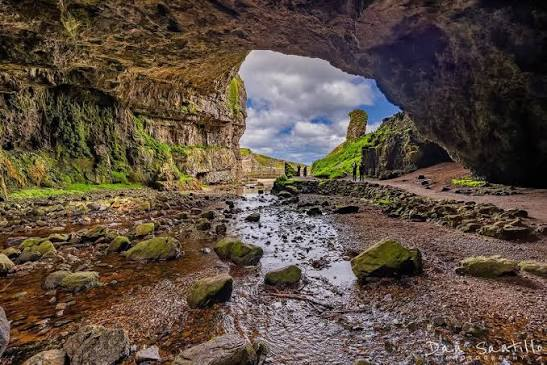
Smoo Cave is one of the most spectacular natural caves in northern Scotland.

Located near Durness on the coast of Sutherland, the cave combines dramatic geology with evidence for human activity spanning multiple periods.

Its location near the sea made it particularly well positioned within the maritime world of northern Scotland, including the period of Norse influence.

A Natural Monument

Smoo Cave was formed through geological processes involving both marine erosion and freshwater activity.

The cave contains a large entrance chamber and additional passages.

A waterfall enters one section of the cave, creating an unusually dramatic subterranean environment.

Human Activity

Archaeological evidence demonstrates that people used Smoo Cave during prehistoric and later periods.

The cave's sheltered interior would have provided protection from:

  • wind;

  • rain;

  • and harsh coastal weather.

The Norse World

From the Viking Age onward, Norse settlement and political influence became increasingly important in northern Scotland.

Norse communities established themselves throughout:

  • Orkney;

  • Shetland;

  • Caithness;

  • the Hebrides;

  • and parts of the northern mainland.

Cave Use and the Vikings

The title's reference to “Viking Age use” should be understood cautiously.

Evidence for human activity during the Norse period does not necessarily mean that Vikings permanently lived inside the cave.

Caves could have served temporary or specialized purposes.

Possible activities could include:

  • shelter;

  • storage;

  • ritual activity;

  • travel;

  • or temporary occupation.

Maritime Geography

The location of Smoo Cave near the northern coast is important.

The sea connected northern Scotland with:

  • Orkney;

  • Shetland;

  • Norway;

  • the Hebrides;

  • and Ireland.

The Norse world was therefore fundamentally maritime.

Archaeological Importance

Caves are valuable archaeological environments because certain deposits can remain protected from weathering.

Organic materials can sometimes survive better underground than in exposed settlements.

Archaeologists can therefore use cave deposits to reconstruct past human activity.

Folklore

Smoo Cave has also accumulated legends and stories.

As with many dramatic natural locations, later communities associated the cave with supernatural activity.

Such traditions should be distinguished from archaeological evidence but remain culturally significant.

Conclusion

Smoo Cave: Sutherland's Viking Age Use illustrates the intersection of geology, archaeology, and Norse history.

The cave should not necessarily be imagined as a permanent Viking settlement.

Rather, evidence for human activity must be interpreted within the broader maritime environment of medieval northern Scotland.
← Dun Grugaig: Glenelg's Wheelhouse BrochStrathnaver Clearances Sites: Sutherland's Deserted Villages →
Featured
image_2026-09-01_150407961.png
September 9, 2026
Dunadd Fort: Argyll's Inauguration Rock Carvings
September 9, 2026
Read more →
September 9, 2026
image_2026-09-01_150445885.png
September 9, 2026
Kilmartin Glen: Argyll's 5,000-Year Megalithic Landscape
September 9, 2026
Read more →
September 9, 2026
image_2026-09-01_150523753.png
September 9, 2026
Nether Largie: Argyll's Clyde Tomb Alignment
September 9, 2026
Read more →
September 9, 2026
image_2026-09-01_150612586.png
September 9, 2026
Ri Cruin: Argyll's Bronze Age Cairn Circle
September 9, 2026
Read more →
September 9, 2026
image_2026-09-01_150753980.png
September 9, 2026
Barnaluasgan: Argyll's Standing Stones
September 9, 2026
Read more →
September 9, 2026
image_2026-09-01_150644895.png
September 9, 2026
Ballymeanoch: Argyll's Kerbed Cairn
September 9, 2026
Read more →
September 9, 2026
read more

Powered by The archaeologist