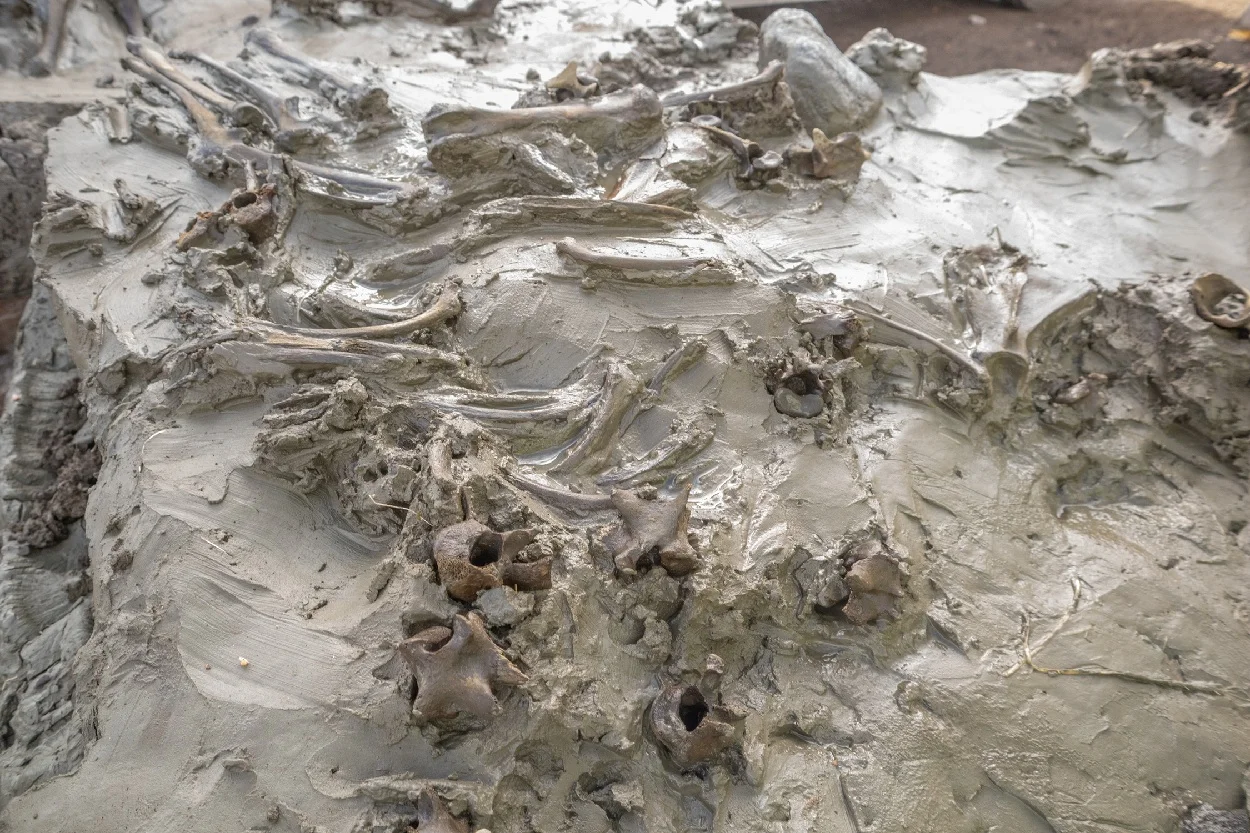
ARchaeologists have unearthed an exceptionally rare Stone Age dog burial in a bog just outside Järna, southern Sweden.
The discovery was made by a team from the State Historical Museums in preparation for the construction of the Ostlänken high-speed railway at Logsjömossen in Gerstaberg.
The burial contains the well-preserved skeletal remains of a large male dog, deliberately buried in wetland sediment alongside the funerary offering of a finely crafted bone dagger.
“Finding an intact dog from this period is very unusual, but the fact that it was also buried together with a bone dagger is almost unique”, says Linus Hagberg, archaeologist and project manager at Arkeologina.
An analysis of the dog remains indicates that it was around 3 to 6-years-old at time of death and stood roughly 52 centimetres in height. It was found with the skull completely crushed and was likely buried in a leather bag weighted down with stones.
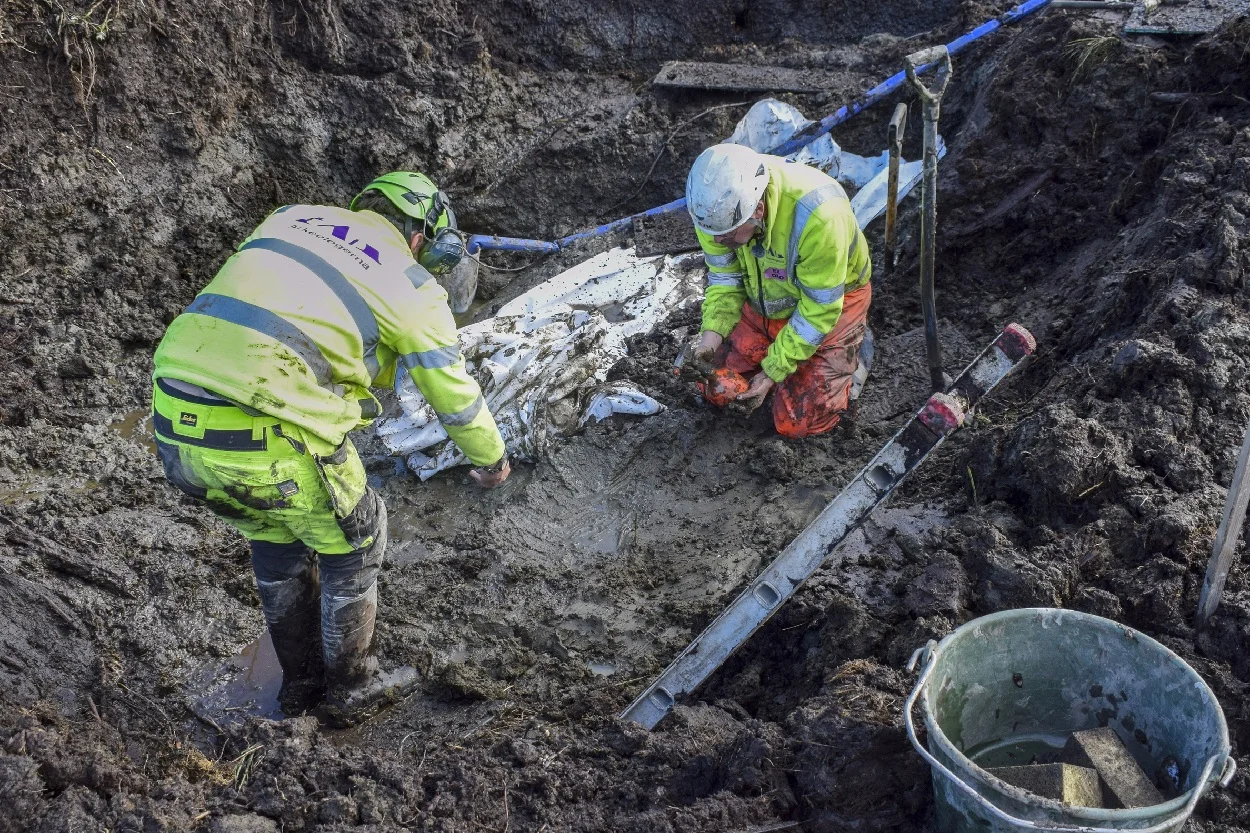
veral thousand years ago, the site was not a bog but a clear lake used for fishing. Ritual deposits of dogs are known from the Stone Age, and the find is believed to represent a deliberate ceremonial act rather than a disposal.
Planned scientific analyses, including radiocarbon dating, isotope studies, and DNA testing, are expected to provide further insight into the dog’s age, diet, and life history. Researchers hope this information will also illuminate how the people who lived in the area organised their subsistence and daily lives.
In addition to the dog burial, archaeologists uncovered a wealth of well-preserved wooden remains dated to between 3,300 and 2,600 BC. These include driven stakes and posts that may have formed piers, stone anchors or sinkers, and a two-meter-long woven willow structure identified as a mjärde, an early type of fishing trap. Trampling marks in the lakebed suggest repeated human activity, possibly related to fishing or maintaining equipment.