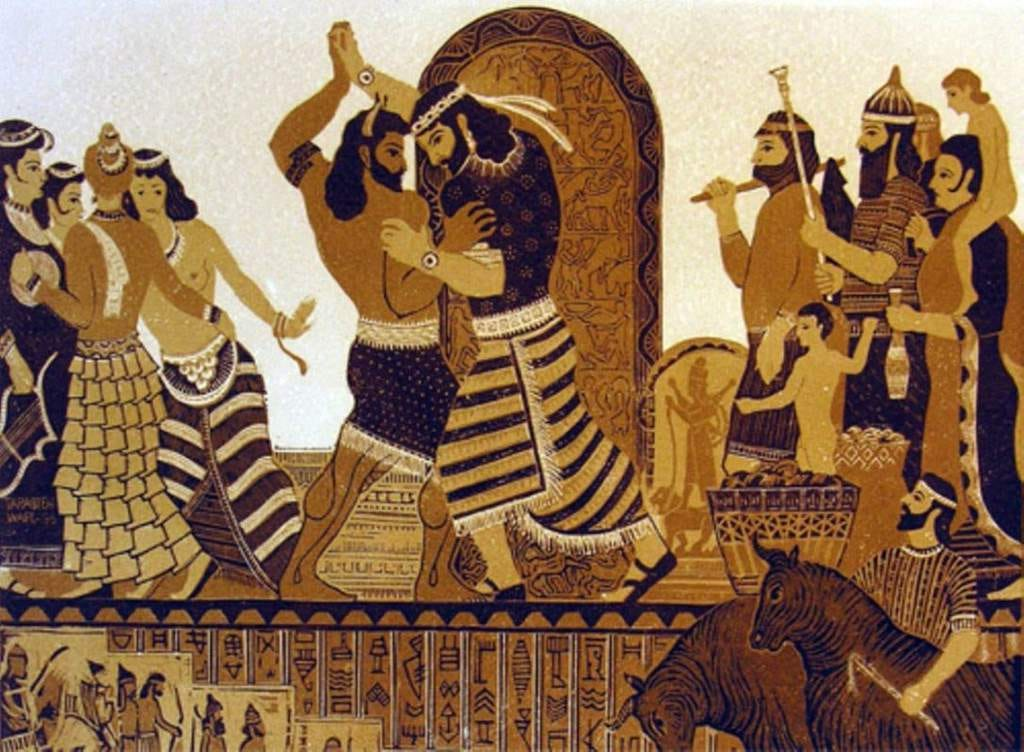
The story of Gilgamesh and Enkidu forms the emotional and moral core of the Epic of Gilgamesh, the oldest surviving literary work in human history. Set in ancient Mesopotamia, the epic explores themes of friendship, power, mortality, and the search for meaning. Gilgamesh, king of Uruk, begins the story as a powerful but tyrannical ruler who abuses his authority.
The gods create Enkidu, a wild man raised among animals, to challenge Gilgamesh and restore balance. Their initial battle ends not in death but in mutual respect, leading to one of the earliest depictions of deep male friendship in literature. Enkidu becomes Gilgamesh’s moral anchor, helping to temper his arrogance and guiding him toward heroic rather than selfish acts.
Together, they undertake dangerous quests, including the defeat of Humbaba, guardian of the Cedar Forest, and the killing of the Bull of Heaven. These victories, however, anger the gods. As punishment, Enkidu is sentenced to die, a turning point that profoundly transforms Gilgamesh.
Enkidu’s death forces Gilgamesh to confront his own mortality. His grief drives him on a futile journey to seek eternal life, ultimately teaching him that immortality lies not in physical survival but in legacy and wisdom. Their friendship remains one of the earliest literary examples of how human bonds shape identity and growth.