Introduction
Oysters were an important food resource in many coastal societies of the ancient Mediterranean. Their popularity extended beyond ordinary consumption, as they could also be associated with hospitality, trade, wealth, and elite dining.
During the Roman period, oysters were transported and consumed across different parts of the empire. Archaeological evidence from coastal settlements, military sites, villas, and urban centers demonstrates the importance of marine resources in Roman food economies.
One particularly interesting question concerns whether oysters were deliberately cultivated or managed in Roman provincial harbours. Oyster farming could involve the collection of young oysters, the transfer of shellfish to suitable growing areas, and the maintenance of environments that encouraged their development.
Investigating these practices helps researchers understand Roman aquaculture, maritime commerce, and the relationship between coastal communities and marine ecosystems.
Oysters in the Roman Diet
Oysters were widely appreciated in Roman cuisine. They could be eaten fresh, served at banquets, or incorporated into other dishes.
Their popularity was influenced by availability, transportation, and preservation methods. Coastal communities could obtain oysters relatively easily, while inland consumers depended on trade networks that moved seafood away from the shoreline.
Written sources from the Roman world occasionally mention oysters and their reputation as desirable foods. These accounts provide useful context, although they often reflect elite tastes rather than the diets of the entire population.
Archaeological shell deposits provide more direct evidence of consumption. Large concentrations of oyster shells can indicate repeated use of marine resources and may reveal changes in food preferences over time.
Understanding Oyster Farming
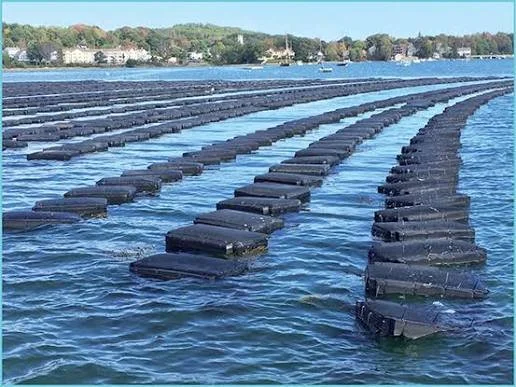
Oyster farming involves managing oysters so that they grow in suitable conditions and can be harvested later.
Modern aquaculture uses a variety of techniques, but ancient practices were likely more dependent on local ecological knowledge and simple installations.
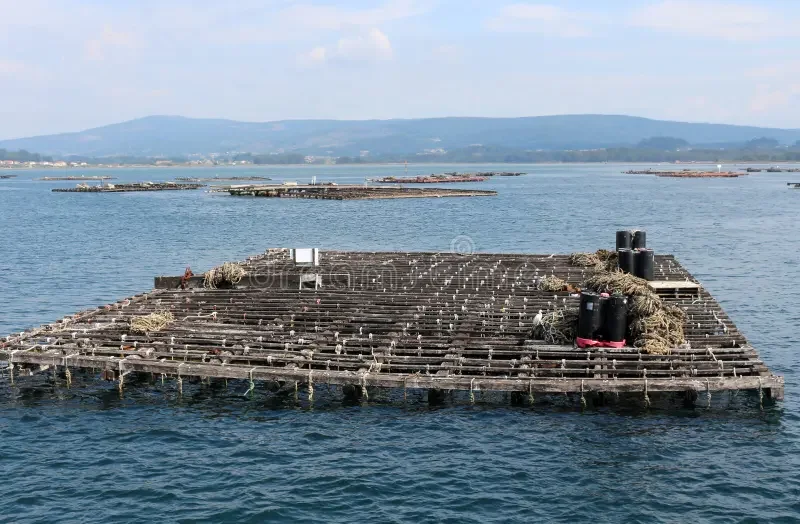
People could collect young oysters from natural beds and relocate them to protected areas. They might also encourage oyster growth by placing suitable surfaces or structures in shallow water.
Such activities do not always leave obvious archaeological remains. A managed oyster bed may look similar to a naturally occurring shellfish habitat, especially after centuries of environmental change.
For this reason, archaeologists must distinguish deliberate cultivation from ordinary harvesting.
Natural Oyster Beds and Human Management
Oysters naturally attach themselves to hard surfaces in suitable marine environments. They may grow on rocks, older shells, submerged wood, or artificial structures.
A community could exploit these natural beds without actively farming them.
However, repeated harvesting might lead people to develop management strategies. They could protect certain areas, avoid collecting immature oysters, or relocate shellfish to improve their growth.
These practices represent different levels of resource management. They should not all be described as intensive aquaculture.
The archaeological challenge is identifying when human intervention became systematic enough to qualify as farming.
Roman Provincial Harbours
Roman provincial harbours connected coastal settlements with regional and long-distance commercial networks.
Ports handled agricultural products, pottery, building materials, metals, fish, and other commodities. They also provided access to marine resources.
Harbour environments could contain suitable locations for shellfish cultivation, particularly in sheltered waters with appropriate salinity and water movement.
Some ports may have supported specialized seafood production, while others relied mainly on nearby natural resources.
The presence of oyster shells in a harbour does not automatically demonstrate farming. Shell deposits could represent consumption, market waste, shipboard provisions, or discarded cargo.
Archaeological Evidence
Oyster farming can be investigated through several types of evidence.
Large and repeated concentrations of shells may indicate intensive harvesting. Measurements of shell size can help researchers investigate whether oysters were selected or managed in particular ways.
The age distribution of oysters may also be informative. A pattern dominated by mature individuals could suggest harvesting practices that allowed younger oysters to grow, although natural ecological conditions can produce similar patterns.
Artificial structures, such as submerged platforms or deliberately placed materials, may provide stronger evidence for cultivation when their function can be established.
Researchers may also examine harbour sediments for oyster shells, marine organisms, and traces of human activity.
Shell Growth and Environmental Conditions
Oyster growth depends on environmental factors such as temperature, salinity, water quality, food availability, and water movement.
Changes in these conditions can affect shell thickness, shape, growth rates, and survival.
Shells may preserve chemical signals that provide information about the environment in which the oysters lived.
Stable isotope analysis can sometimes help reconstruct aspects of water conditions and seasonal growth patterns. Elemental analysis may also contribute to understanding the environments from which oysters originated.
These methods are valuable, but interpretation requires caution. Environmental signals can be influenced by several factors, and a single shell rarely provides a complete picture.
Transporting Oysters
Transport was an important challenge for ancient seafood economies.
Oysters could survive for a limited period outside seawater if handled carefully, making short-distance transport possible.
They could be moved in baskets, containers, or other arrangements that reduced damage and dehydration. Longer journeys were more difficult because the animals needed appropriate conditions to remain alive.
The distribution of oyster shells at inland Roman sites can help researchers investigate how far seafood traveled.
However, shellfish could also be transported after death, and shell deposits do not necessarily indicate that live oysters were delivered to a settlement.
Economic and Social Significance
Oysters could serve different social groups.
For ordinary households, they provided an accessible source of food in coastal communities. For wealthy consumers, selected seafood could become part of elaborate dining practices.
The economic value of oysters depended on location and market demand. A harbour with abundant shellfish could supply nearby settlements and possibly support specialized traders.
If cultivation occurred, it may have created opportunities for seasonal work and local investment in coastal resources.
The relationship between oyster production and trade therefore deserves attention alongside the archaeological study of Roman food consumption.
Environmental Impact and Sustainability
Repeated harvesting can affect natural oyster populations.
If too many mature oysters are removed, reproduction may decline. Damage to oyster beds can also reduce habitat for other marine organisms.
Ancient communities may have developed informal rules or practices that helped maintain shellfish resources. However, the existence of sustainable management should not be assumed without evidence.
Archaeological shell deposits can sometimes reveal changes in size distributions, species composition, and harvesting intensity.
Comparing deposits from different periods may help determine whether oyster exploitation increased, declined, or changed in response to environmental and economic conditions.
Conclusion
The archaeology of oyster farming in Roman provincial harbours provides an opportunity to investigate the development of ancient aquaculture and the organization of coastal food economies.
Roman communities clearly valued oysters, and their remains appear at many archaeological sites. What remains more difficult to establish is the extent to which people deliberately cultivated oysters rather than harvesting natural beds.
By combining shell analysis, harbour archaeology, environmental reconstruction, and historical sources, researchers can distinguish different forms of marine resource management.
The study of oysters demonstrates that Roman coastal economies were not based only on shipping and trade. They also depended on detailed knowledge of marine environments and the ability to obtain, manage, and distribute resources from the sea.