Introduction
Fortifications are often associated with monumental stone walls, massive castles, and large defensive earthworks. Yet many communities relied on smaller and less permanent structures to protect homes, settlements, livestock, and stored resources.
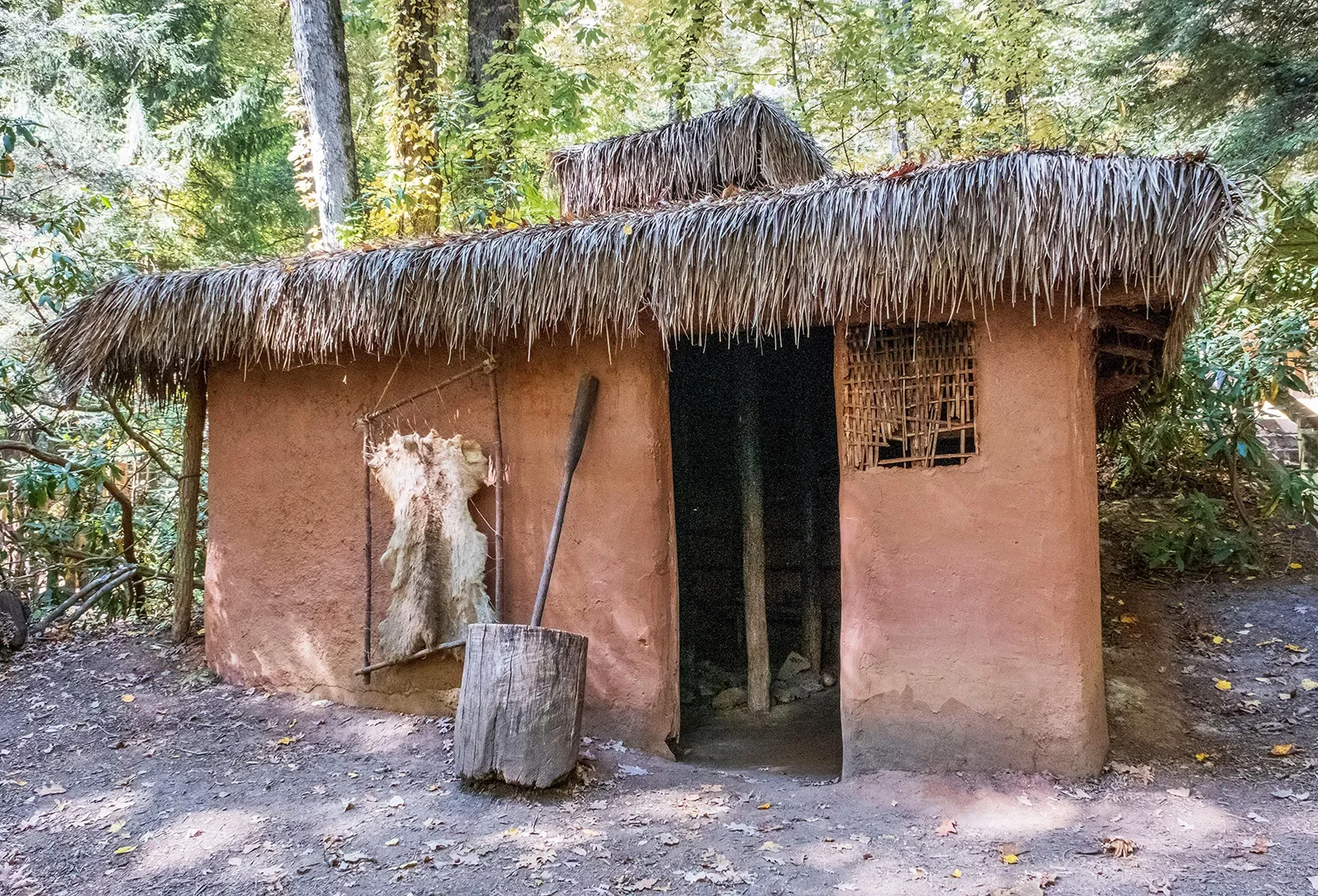
One construction technique particularly suited to local materials was wattle and daub. It involved weaving flexible branches or wooden strips between upright supports and covering the framework with a mixture commonly containing clay, earth, water, and plant fibers.
Although wattle and daub is widely recognized in traditional architecture, its use in defensive structures presents an important archaeological question. Could relatively modest fences, reinforced barriers, and compact enclosures have served as fortifications for smaller settlements?
This article explores the construction, archaeological traces, defensive functions, and limitations of small-scale wattle and daub fortifications.
1. Understanding Wattle and Daub Construction
Wattle and daub construction uses a framework of wooden supports and interwoven branches. The woven material creates a lattice that can be covered with a thick earthen mixture.
The daub may contain clay-rich soil, sand, straw, grasses, animal hair, or other organic materials. The precise composition depends on local resources and building traditions.
This technique is relatively economical because it requires materials that may be available close to a settlement. It can also be constructed without extensive stoneworking or advanced masonry skills.
However, wooden components and unfired earthen surfaces are vulnerable to weathering, decay, insects, and fire. Archaeological remains may therefore be incomplete even when the original structures were substantial.
2. Why Small Communities Needed Defensive Barriers
Not every settlement required a large defensive wall. Small agricultural villages, pastoral communities, temporary camps, and isolated farmsteads could face more localized threats.
These might include livestock theft, disputes over resources, raids, wild animals, or unauthorized access to stored food and valuable equipment.
A small defensive enclosure could provide an additional layer of protection without requiring the labor and resources needed for a major fortification system.
Such structures may have been particularly useful where communities needed to secure entrances, protect vulnerable buildings, or create controlled spaces within a larger settlement.
3. Structural Features of Defensive Wattle and Daub
A defensive wattle and daub barrier would likely require stronger construction than an ordinary internal partition.
Upright posts could be placed in prepared holes, with woven branches connecting the supports. The resulting framework might be reinforced with additional horizontal beams, thicker timber, or closely spaced posts.
An earthen coating could strengthen the surface and reduce visibility through the woven structure. In some circumstances, a substantial barrier might also resist weather and minor physical impacts.
However, the effectiveness of such a structure would depend on its height, thickness, maintenance, and the availability of suitable timber. Wattle and daub should not automatically be understood as equivalent to a high stone defensive wall.
4. Archaeological Evidence of Wooden Frameworks
The most important evidence for timber-based structures often comes from postholes, stakeholes, foundation trenches, and preserved organic remains.
Postholes may appear as dark circular or oval features in archaeological soil. Their dimensions, spacing, and arrangement can help researchers reconstruct the position of former walls or fences.
Linear patterns of closely spaced posts may indicate a barrier, although similar arrangements can also belong to ordinary buildings, animal enclosures, or agricultural fencing.
Where wooden material survives in waterlogged or oxygen-poor conditions, researchers may be able to examine the original construction more directly.
5. Identifying Daub Fragments
Burned or collapsed wattle and daub structures can leave fragments of hardened clay. These pieces sometimes preserve impressions of branches, reeds, or other woven materials.
Such impressions are especially useful because they reveal how the original framework was assembled.
Some fragments may also preserve fingerprints, smoothing marks, or impressions left by construction tools. Microscopic analysis can identify plant fibers, tempering materials, and mineral components.
Nevertheless, daub fragments alone cannot establish that a structure was defensive. They must be studied alongside posthole arrangements, settlement layouts, entrances, and evidence of surrounding barriers.
6. Fire and the Preservation of Defensive Structures
Fire can destroy a wattle and daub structure while simultaneously improving the preservation of some of its components.
High temperatures may harden clay surfaces, preserve impressions of wooden frameworks, and create recognizable layers of burned building material.
Archaeologists sometimes find concentrations of burned daub associated with collapsed walls. The distribution of these fragments can provide clues about the original structure's orientation and collapse.
However, a burned building does not necessarily indicate warfare. Accidental fires, domestic hearths, industrial activity, and deliberate demolition can produce similar archaeological evidence.
7. Entrances, Gates, and Controlled Access
A defensive enclosure is not simply a barrier. Its effectiveness also depends on how people enter and leave the protected space.
Small-scale fortifications may have included narrow openings, movable wooden gates, reinforced entrances, or overlapping barrier sections.
Archaeologists can investigate possible access points by examining interruptions in linear posthole patterns and identifying areas where additional structural supports were placed.
The presence of an entrance alone does not prove defensive intent. Its interpretation becomes stronger when combined with restricted movement, strategic positioning, and other protective features.
8. Distinguishing Fortifications from Ordinary Fences
One of the central challenges in archaeological interpretation is distinguishing defensive barriers from agricultural or domestic structures.
Animal pens, garden fences, property boundaries, and temporary windbreaks may all produce posthole patterns resembling small fortifications.
Researchers therefore consider several factors together: the scale of the barrier, the thickness of the construction, the arrangement of entrances, its relationship to houses, and the presence of other defensive features.
A structure surrounding an elevated settlement position or protecting a concentrated group of buildings may be more plausibly interpreted as defensive than an isolated fence beside a field.
9. Conservation and Experimental Archaeology
Experimental archaeology can help researchers understand how wattle and daub barriers were constructed and how they performed under different conditions.
By recreating traditional techniques, investigators can test the strength of different post arrangements, daub mixtures, and reinforcement methods.
These experiments can also help explain the archaeological appearance of collapsed structures. Comparisons between experimental remains and excavated daub fragments may reveal construction techniques that are otherwise difficult to reconstruct.
Conservation presents additional challenges because exposed daub can deteriorate rapidly after excavation. Recording, stabilization, and controlled storage are therefore important for preserving this evidence.
Conclusion
Small-scale wattle and daub fortifications demonstrate that defensive architecture did not always require monumental construction. Communities could use timber, woven branches, and earthen materials to create barriers adapted to local security needs.
Although distinguishing defensive structures from ordinary fences and enclosures can be difficult, posthole patterns, daub impressions, settlement layouts, and evidence of controlled entrances provide valuable clues.
Further archaeological and experimental research can help clarify how these modest structures contributed to the protection and organization of ancient settlements.