Introduction
Across many ancient landscapes, mineral deposits were more than valuable natural resources. Springs rich in iron, copper-bearing rocks, salt deposits, ochre outcrops, and other mineral sources could become important places of gathering, exchange, and ritual activity. Some were associated with healing, fertility, protection, or the spiritual significance of the land.
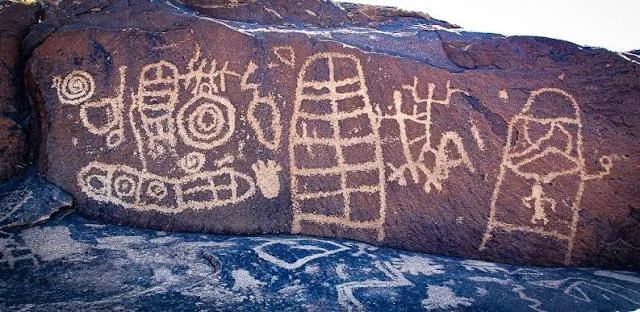
Petroglyphs—images and symbols carved or pecked into exposed rock surfaces—provide one possible way to investigate how prehistoric and early historic communities understood these locations. When rock carvings occur near mineral sources, their proximity may suggest a relationship between symbolic expression and resource extraction. However, proximity alone cannot prove that the carvings were created specifically for mining rituals.
This article examines the archaeological potential of petroglyphs near mineral deposits, the possible rituals associated with extraction, and the methods researchers can use to distinguish established evidence from interpretation.
1. Mineral Sources as Important Cultural Landscapes
Mineral deposits often attracted repeated human activity because they supplied materials that were difficult or impossible to obtain elsewhere. Ochre could be used for coloring, copper ores for metal production, salt for food preservation, and certain stones for tools or ornaments.
The locations of these resources sometimes shaped settlement patterns and travel routes. Communities could revisit the same outcrops over generations, creating places with accumulated practical and cultural significance.
A mineral source might therefore function simultaneously as a workplace, meeting point, exchange location, and place associated with local beliefs.
2. Understanding Petroglyphs in Resource Landscapes
Petroglyphs are produced by techniques such as pecking, incision, scraping, and abrasion. Their subjects vary considerably, including geometric patterns, animals, human figures, footprints, weapons, and abstract marks.
When carvings are found near mines or mineral outcrops, archaeologists examine their relationship to the surrounding landscape. Important questions include whether the images face the resource, follow paths leading to it, or appear near entrances to extraction areas.
Researchers also investigate whether the carvings belong to the same period as the earliest mining activity. Without reliable dating, an apparent relationship may represent separate episodes of human use.
3. Possible Rituals Before Extraction
Mining and mineral collection could involve uncertainty and danger. Rockfalls, unstable tunnels, difficult terrain, and unpredictable material quality made extraction potentially hazardous.
It is plausible that some communities developed practices intended to secure protection or favorable outcomes before collecting resources. These could have included offerings, spoken invocations, symbolic markings, or ceremonies conducted near important outcrops.
However, archaeological evidence must be interpreted carefully. A carved animal or geometric symbol does not automatically represent a mining deity or protective ritual. Such interpretations require support from associated deposits, repeated patterns, historical accounts, or comparable archaeological contexts.
4. Ochre, Pigments, and Symbolic Practices
Ochre is among the most widely documented mineral materials used by ancient communities. Its pigments could be applied to bodies, objects, tools, burial contexts, and rock surfaces.
The presence of ochre deposits near petroglyph sites raises interesting questions about the relationship between resource collection and symbolic expression. A community might have visited an outcrop to obtain pigment and also used the surrounding rock surfaces for marking or ceremonial activities.
In some contexts, pigment traces on carvings or nearby surfaces may help establish a connection between mineral materials and artistic practices. Yet researchers must distinguish naturally occurring discoloration from deliberate pigment application.
5. Metal Ores and the Development of Extraction Traditions
The emergence of metalworking increased the cultural and economic importance of certain mineral landscapes. Copper, tin, iron, and other ores became essential to technologies involving tools, weapons, ornaments, and exchange networks.
Mining areas sometimes developed distinctive traditions involving specialized knowledge, labor organization, and restricted access. If petroglyphs occur near ancient extraction zones, they may provide evidence of how communities represented these important places.
Possible interpretations include territorial symbols, records of group identity, commemorative images, or ritual markings. Establishing their purpose requires more than visual resemblance to familiar symbols.
6. Archaeological Methods for Investigating the Relationship
Researchers use several complementary methods to investigate petroglyphs near mineral sources.
Spatial analysis identifies the distance between carvings, extraction pits, mineral veins, water sources, and ancient pathways. Geological surveys establish the composition and distribution of available resources.
Microscopic examination can reveal carving techniques, tool marks, weathering, and possible pigment residues. Archaeologists may also compare the patination of carved and uncarved surfaces to investigate relative chronology.
Radiocarbon dating can sometimes establish the age of associated charcoal, organic offerings, or occupation layers, although it generally cannot directly date a carving made into bare rock. Other techniques, including surface exposure studies and archaeological stratigraphy, may provide additional chronological information.
7. Offerings and Depositional Evidence
Evidence of ritual activity may be found in deposits surrounding extraction sites. These can include intentionally placed objects, animal remains, pottery fragments, unusual concentrations of charcoal, or carefully arranged stones.
The context of these materials is essential. Objects deposited in a sealed archaeological layer may provide stronger evidence of deliberate placement than scattered materials found on a disturbed surface.
Even when offerings are identified, their exact purpose may remain uncertain. They could relate to mining, travel, settlement activity, burial practices, or other forms of community ceremony.
8. The Social Organization of Mineral Extraction
Mineral extraction often required cooperation, technical expertise, and knowledge passed between generations. Certain individuals or families may have controlled access to valuable deposits or possessed specialized skills in recognizing and processing ores.
Petroglyphs could have contributed to the social identity of groups associated with these resources. Repeated symbols might have marked routes, commemorated important events, or expressed connections between communities and particular landscapes.
Such interpretations become stronger when carvings can be connected to identifiable settlement networks, trade routes, or patterns of resource distribution.
9. Challenges in Interpreting Ritual Landscapes
One of the greatest difficulties in studying petroglyphs near mineral deposits is avoiding the assumption that every unusual image has a religious meaning.
Carvings may have served practical, social, commemorative, territorial, or artistic purposes. Mineral sources may also have attracted people for ordinary economic reasons without requiring formal ceremonies.
Natural erosion, later mining, quarrying, vandalism, and modern excavation can further complicate archaeological interpretation. A convincing explanation must account for both the carvings and the physical history of the surrounding site.
Conclusion
Petroglyphs near mineral sources offer a valuable opportunity to investigate the relationship between ancient communities, natural resources, and symbolic expression. These landscapes may have combined practical extraction activities with social traditions, ceremonial practices, and collective identities.
Although specific ritual interpretations require careful archaeological confirmation, the relationship between rock art and mineral resources remains an important subject of research. By combining geological analysis, spatial mapping, dating methods, and contextual excavation, researchers can better understand how ancient people experienced and organized their resource landscapes.