• MAIN PAGE
  • LATEST NEWS
    • Lost Cities
    • Archaeology's Greatest Finds
    • Underwater Discoveries
    • Greatest Inventions
    • Studies
    • Blog
  • PHILOSOPHY
  • HISTORY
  • RELIGIONS
    • Africa
    • Anatolia
    • Arabian Peninsula
    • Balkan Region
    • China - East Asia
    • Europe
    • Eurasian Steppe
    • Levant
    • Mesopotamia
    • Oceania - SE Asia
    • Pre-Columbian Civilizations of America
    • Iranian Plateau - Central Asia
    • Indus Valley - South Asia
    • Japan
    • The Archaeologist Editor Group
    • Scientific Studies
    • Aegean Prehistory
    • Historical Period
    • Byzantine Middle Ages
    • Predynastic Period
    • Dynastic Period
    • Greco-Roman Egypt
  • Rome
  • PALEONTOLOGY
  • About us
Menu

The Archaeologist

  • MAIN PAGE
  • LATEST NEWS
  • DISCOVERIES
    • Lost Cities
    • Archaeology's Greatest Finds
    • Underwater Discoveries
    • Greatest Inventions
    • Studies
    • Blog
  • PHILOSOPHY
  • HISTORY
  • RELIGIONS
  • World Civilizations
    • Africa
    • Anatolia
    • Arabian Peninsula
    • Balkan Region
    • China - East Asia
    • Europe
    • Eurasian Steppe
    • Levant
    • Mesopotamia
    • Oceania - SE Asia
    • Pre-Columbian Civilizations of America
    • Iranian Plateau - Central Asia
    • Indus Valley - South Asia
    • Japan
    • The Archaeologist Editor Group
    • Scientific Studies
  • GREECE
    • Aegean Prehistory
    • Historical Period
    • Byzantine Middle Ages
  • Egypt
    • Predynastic Period
    • Dynastic Period
    • Greco-Roman Egypt
  • Rome
  • PALEONTOLOGY
  • About us

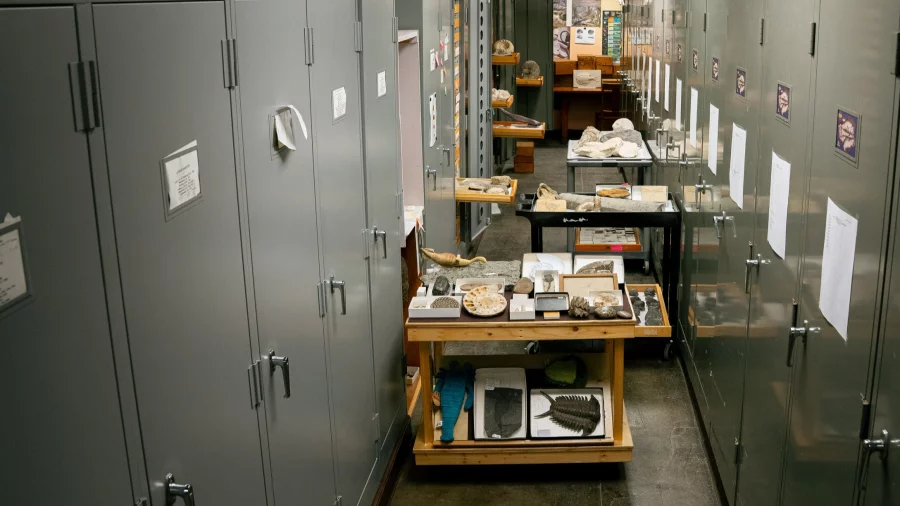
The Invertebrate Paleontology Collection at the Carnegie Museum of Natural History.
The dinosaur secrets found in the archives of a natural history museum

January 7, 2026

What goes on behind the scenes of a dinosaur exhibit? Short Wave host Regina Barber got a firsthand look at the Carnegie Museum of Natural History in Pittsburgh. In the museum’s basement, she spoke with a paleobiologist, examined fossils discovered on farmland, and even handled a 67-million-year-old bone. It turns out that a museum basement can be full of fascinating science.

← Powick Old Bridge delay over removing driftwood and treesFrom Mycenaean Frescoes to Hellenistic Sculpture: Women’s Research in the Early Years of the ABSA →
Featured
image_2026-04-10_222727195.png
Apr 10, 2026
Cleopatra’s Final Resting Place: Is the Search Nearing Its End?
Apr 10, 2026
Read More →
Apr 10, 2026
image_2026-04-10_222617220.png
Apr 10, 2026
Roman Concrete: The “Self-Healing” Secret
Apr 10, 2026
Read More →
Apr 10, 2026
image_2026-04-10_222513958.png
Apr 10, 2026
The Minoan “Labyrinth”: Was Knossos a Palace or a Giant Necropolis?
Apr 10, 2026
Read More →
Apr 10, 2026
image_2026-04-10_222330977.png
Apr 10, 2026
Akrotiri vs. Pompeii: Two Cities Frozen in Time
Apr 10, 2026
Read More →
Apr 10, 2026
image_2026-04-10_222204397.png
Apr 10, 2026
The Secret Life of Gladiators: What Bones Reveal
Apr 10, 2026
Read More →
Apr 10, 2026
image_2026-04-10_222122420.png
Apr 10, 2026
Pavlopetri: Exploring the Oldest Submerged City
Apr 10, 2026
Read More →
Apr 10, 2026
read more

Powered by The archaeologist