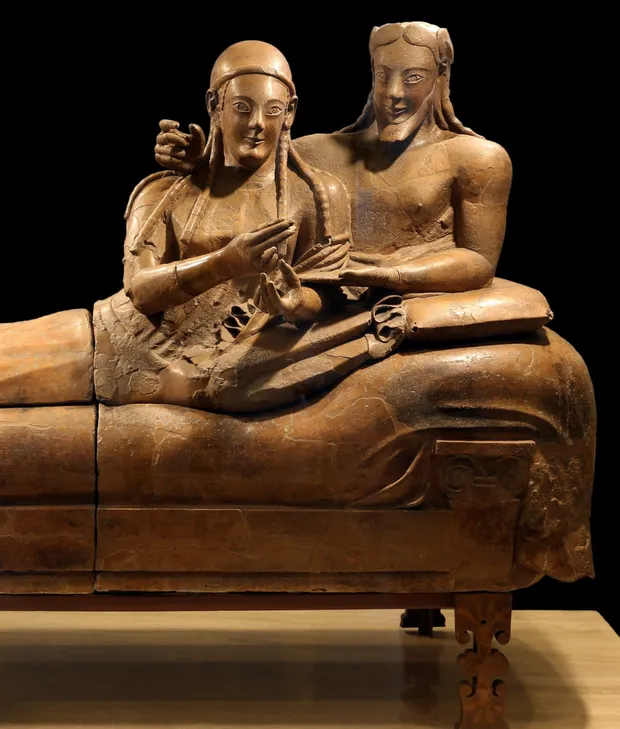
For nearly two and a half millennia, historians, classicists, and archaeologists have been locked in a fierce, seemingly intractable debate regarding the origins of the Etruscans. This highly advanced, non-Indo-European-speaking civilization dominated the region of Etruria—encompassing modern-day Tuscany, western Umbria, and northern Lazio—from the 8th to the 3rd centuries BCE. Long before Rome grew into an imperial superpower, the Etruscans built wealthy, highly fortified city-states, pioneered sophisticated metallurgical techniques, established vast maritime trade networks across the Mediterranean, and created an enigmatic artistic tradition famous for its expressive funerary banquets and terracotta sarcophagi.
Yet, despite their overwhelming cultural influence on early Rome—including the architectural layout of temples, the introduction of the toga, and the development of gladiatorial combat—the Etruscans themselves remained a profound historical anomaly. Their language was a complete isolate, entirely unrelated to the Indo-European tongues spoken by their immediate neighbors, such as the Latins, Oscans, and Sabines. This stark cultural and linguistic divergence birthed the ancient world’s longest-running academic deadlock, dividing ancient authors and modern scholars into two fiercely opposed camps.